
Article
Decoding Rose Bay Property Types and Lending Rules This Year
A practical, decision‑grade guide to how banks see different Rose Bay property types – from Art Deco apartments to harbourside homes and small commercial spaces – and what that means for your borrowing this week.
Key Takeaway
This guide explains how Australian lenders treat different Rose Bay property types and the lending rules that apply, from Art Deco apartments to harbourside prestige homes and small commercial spaces. It notes that well‑maintained older blocks can be easier to finance than defect‑risk new builds and that harbourside prestige properties may be capped at 60–70% LVR. The key actionable insight is to align pre‑approval, lender choice, and valuation checks to the specific blocks and streets you’re targeting before you make offers.
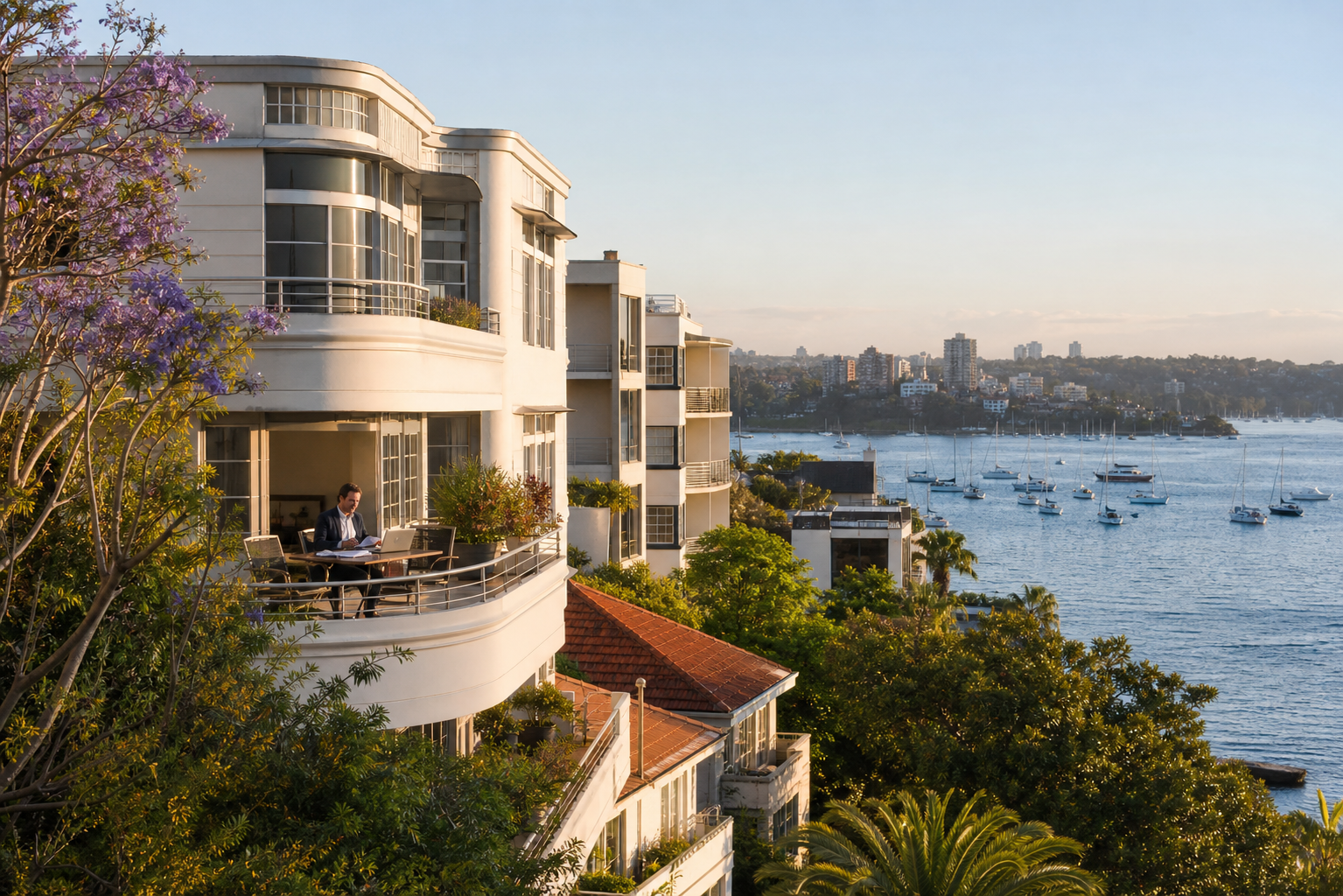
Buying, refinancing or investing in Rose Bay isn’t just about picking a nice property and hoping the bank says yes. Different local property types – Art Deco walk‑ups, small strata blocks, harbourside homes, mixed‑use buildings – are all treated differently by lenders, with distinct rules on LVR, valuations, strata, income and risk.
If you understand how banks categorise Rose Bay properties and the lending rules that follow, you can: (1) target blocks and streets your borrowing profile actually suits; (2) avoid nasty valuation surprises; and (3) negotiate with confidence this week, not after finance falls over.
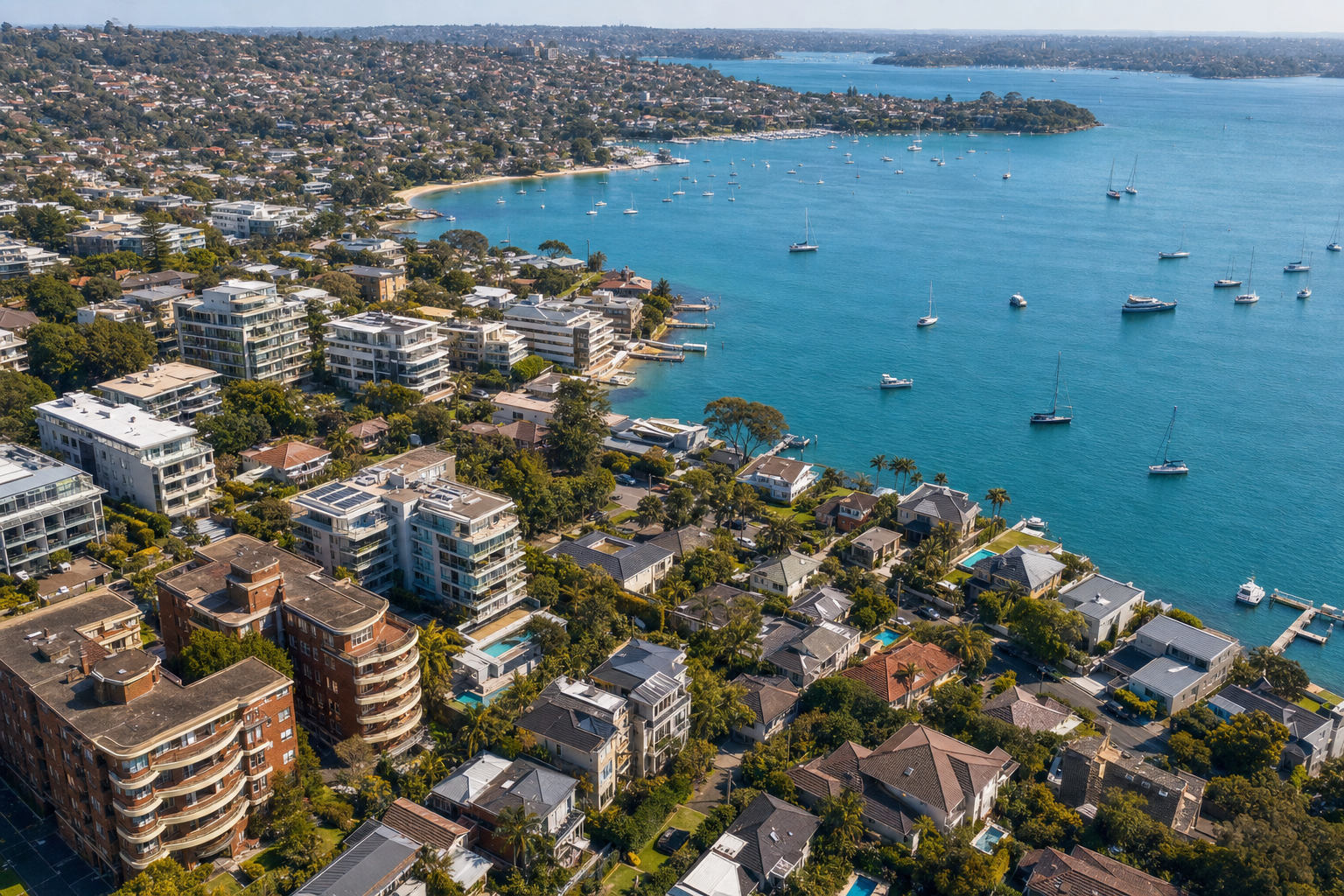
Rose Bay’s mix of older blocks, newer apartments and harbourside homes drives very different lending rules.
1. How lenders see Rose Bay in one glance
From a bank’s perspective, Rose Bay sits in a high‑income, high‑price, low‑risk LGA (Woollahra) with strong demand and limited land. That’s positive for finance, but it also means large loan sizes, tight serviceability and closer scrutiny of certain building types.
Key features that shape lending decisions:
- High property and rent levels – Woollahra’s 2021 median rent was $695 per week versus $470 Greater Sydney, signalling strong rental backing and investor interest.
- A lot of medium and high‑density housing – especially older Art Deco and mid‑century blocks plus pockets of newer apartments.
- Large share of professionals and self‑employed – great incomes, but often complex for serviceability and documentation.
- Prestige waterfront and harbourside pockets – sometimes treated as “luxury” or “specialised security” with tighter LVR caps.
In practice, this means:
- Standard houses and mainstream apartments in solid blocks are usually easy to fund at up to 80–90% LVR (sometimes higher with LMI, depending on your profile).
- Very high‑value, harbourside, or quirky properties can face lower LVRs, tougher valuations and a smaller pool of lenders.
- Small apartments, mixed‑use and commercial stock (shops, suites) are often assessed under stricter rules than a typical home.
The rest of this guide unpacks each property type and what you can do this week to line up the right finance.
2. Main Rose Bay property types and what banks like
2.1 Older Art Deco and mid‑century strata blocks
Rose Bay is famous for its Art Deco and mid‑century walk‑ups – often in small, tightly‑held blocks with strong land value.
From a lending perspective, that’s often a plus:
- More land per unit than many newer complexes.
- Proven long‑term buyer and tenant demand.
- Less exposure to modern building defect issues.
As we explain in more detail in /insights/rose-bay-older-blocks-vs-new-builds-finance, well‑maintained older blocks with healthy sinking funds can actually be easier to finance than shiny new towers.
Banks will look closely at:
- Strata records – evidence of proactive maintenance and realistic levies.
- Sinking fund – enough to cover upcoming works (e.g. roofs, common plumbing, façade).
- Building condition – no major structural or water ingress issues flagged.
Indicative lending settings (illustrative only):
- Max LVR: often 80–90% for strong borrowers.
- LMI: usually required above 80% LVR.
- Valuation: can be strong if recent comparable sales exist in the same street or block.
2.2 Newer apartments and boutique developments
Newer Rose Bay apartments and boutique projects can look lower‑maintenance, but lenders can be more cautious.
Common bank concerns include:
- Building defects and cladding – any history of waterproofing, structural or combustible cladding issues is a red flag.
- Developer track record – thin sales history or legal disputes can worry valuers.
- Investor concentration – buildings dominated by investors can be treated as higher risk.
Typical lending impact:
- Extra questions at credit if there’s any hint of defects, litigation or cladding.
- Valuation haircut if the valuer is conservative about resale risk.
- Some lenders may simply decline certain buildings entirely.
This is where property‑by‑property pre‑approval matters. Your limit might be fine on paper, but the bank may still say no to a particular building once the valuation comes back.
2.3 Small apartments, studios and 1‑bedders
Smaller apartments can be a more affordable way into Rose Bay, especially for singles and investors. But lenders commonly restrict appetite for very small units, often those with less than about 50 m² internal area.
Potential issues:
- Lower maximum LVR – for example, some lenders may cap at 70–80% LVR for small units.
- Fewer lender options – some banks have minimum size rules; others price small units slightly higher.
- Resale risk – valuers may shade values if the local market prefers larger stock.
If you’re targeting a small apartment:
- Confirm internal area from strata plans, not listings.
- Have your broker check minimum size and LVR rules with each lender before you bid.
- Assume you may need a larger deposit than for a standard 2‑bedder.
2.4 Townhouses, villas and garden apartments
Low‑rise townhouses, garden apartments and villas in Rose Bay often sit in small complexes and feel more “house‑like”. Lenders generally like them because there’s:
- More land content per dwelling.
- Often better owner‑occupier appeal.
- Flexible resale to both families and downsizers.
Most mainstream lenders treat these similarly to standard apartments, with:
- Max LVR up to 80–90% for strong borrowers.
- Full‑doc income evidence and APRA’s 3% serviceability buffer applied to your loan rate.
Watch out for:
- Exclusive use courtyards that aren’t on title.
- Unapproved improvements (decks, pergolas) that might bother valuers.
2.5 Freestanding houses and semis
Detached houses and semis in Rose Bay – especially on decent land – are usually the easiest collateral type for banks.
Positives:
- High land value and strong underlying demand.
- Flexible for families, downsizers and investors.
- Straight‑forward to value using comparable sales.
Indicative settings:
- Max LVR: often 80–90% (or higher with LMI if your profile supports it).
- Strong borrowers may access interest‑only terms for investments, or P&I for homes.
What can complicate things:
- DA potential or major renovations – if you’re planning a big project, lenders may prefer a construction loan rather than a simple top‑up. See /insights/financing-rose-bay-renovations-extensions-rebuilds for how to fund those safely.
- Heritage constraints that affect valuation uplift from renovations.
2.6 Harbourside prestige and waterfront properties
Rose Bay’s harbourside strip – especially absolute waterfronts or properties with deep‑water access – can cross into prestige / luxury lending territory.
Once a property’s value climbs into the upper end of the market (e.g. $5m–$10m+), some lenders treat it as specialised security:
- Lower maximum LVR, sometimes in the 60–70% range.
- Fewer lenders willing to take the security at high LVRs.
- Higher bar for income, asset backing and liquidity.
Extra factors banks may examine:
- Seawall and foreshore works, licences and maintenance obligations.
- Boat sheds, jetties and encroachments onto Crown land.
- Flood, erosion or climate‑related risk.
If you’re looking at this end of the market, it’s worth reading /insights/structuring-premium-property-purchases-companies-trusts-smsfs and getting your accountant, lawyer and broker aligned before you negotiate.
2.7 Mixed‑use and small commercial spaces
On and around New South Head Road and key corners you’ll find shops, medical suites and mixed‑use buildings.
These are often assessed under commercial or specialist residential policies, not standard home loan rules.
Typical lending differences:
- Max LVR usually around 60–70% (sometimes lower for pure commercial).
- Interest rates can be higher than home loans and terms shorter (e.g. 15–25 years).
- Lenders scrutinise lease strength, tenant quality and vacancy risk.
If you run a local business and want to own your premises, structure and tax treatment matter just as much as the property. A properly structured commercial loan can sit alongside your home loans without jeopardising your family security.
Older Art Deco blocks can be easier to finance than some new builds if the strata and maintenance history stack up.
3. Key lending rules that hit Rose Bay buyers hardest
3.1 LVR bands, LMI and “harbourside” caps
Broadly, the key LVR bands you’ll see are:
- Up to 80% LVR – often no LMI; easier approvals if income is solid.
- 80–90% LVR – LMI usually payable; stronger scrutiny of income and conduct.
- Above 90% LVR – fewer lenders, stricter conditions, especially in high‑price postcodes.
For prestige and harbourside pockets, some lenders tighten further:
- 60–70% LVR caps on very high‑value, unique or trophy homes.
- Lower appetite for cash‑out against prestige homes for unrelated purposes.
3.2 Serviceability and the APRA 3% buffer
Lenders must apply at least a 3% serviceability buffer to your actual interest rate (APRA guideline). If your rate is 6.0%, they test affordability at 9.0%+.
In a suburb where even modest homes can cost $3m+, this buffer bites hard.
For example (illustrative only):
- Purchase price: $3.0m
- 20% deposit: $600k
- Loan: $2.4m over 30 years
- At 6.0% P&I, repayment ≈ $14,390/month.
- With a 3% buffer, the bank models your ability to pay ≈ $19,300/month.
If your income or existing debts don’t comfortably support that, your borrowing capacity will come in below the price you’re targeting.
3.3 Strata, sinking funds and building risk
For apartments and townhouses, lenders lean heavily on strata documents. Red flags include:
- Underfunded sinking funds despite obvious upcoming works.
- Ongoing disputes or litigation with the builder or developer.
- Major works without clear funding arrangements.
Conversely, a building with:
- A decent sinking fund balance;
- Recent, well‑managed upgrades; and
- Realistic levies
is often a smoother run through credit.
3.4 Postcode and building‑specific restrictions
Because some Sydney postcodes have large volumes of new units or risk issues, lenders can adopt postcode policies – e.g. capping LVRs or avoiding certain buildings.
Rose Bay doesn’t have CBD‑level density, but specific buildings can still be flagged for:
- Cladding or fire safety issues.
- Significant defect histories.
- Recurring water ingress or structural problems.
Local knowledge really matters here. A broker who sees multiple valuations and applications across the suburb will know which addresses need careful handling.
3.5 Quick comparison: property types vs typical lending treatment
| Property type | Typical max LVR* | Lending comfort level | Common issues banks watch |
|---|---|---|---|
| Art Deco / mid‑century apartment | 80–90% | Generally strong | Sinking fund, maintenance, access |
| Newer apartment (non‑defect) | 80–90% | Case‑by‑case | Defects, cladding, investor mix |
| Small unit / studio (<50 m²) | 70–80% | More cautious | Resale risk, minimum size rules |
| Townhouse / villa / garden apartment | 80–90% | Generally strong | Unapproved works, encroachments |
| Standard house / semi | 80–90% | Strong | Heritage, renovation plans |
| Harbourside prestige / waterfront | 60–80% | Specialised | Unique features, valuation risk |
| Mixed‑use / small commercial | 60–70% | Commercial policy | Lease strength, vacancy, use |
*Illustrative only – actual limits depend on lender, your profile and live policy.
Matching pre-approval and lender choice to property type is critical in Rose Bay.
4. Self‑employed, investors and small business owners
4.1 Self‑employed in a high‑price suburb
Rose Bay has a large share of professionals, practice owners and business operators. For self‑employed borrowers, two realities collide:
- Property prices and loan sizes are high.
- Income on paper (after tax planning) can look low.
Lenders will typically want:
- 2 years of business financials and personal tax returns.
- Add‑backs for legitimate non‑cash or one‑off expenses.
- A clear story if recent years differ materially.
Alt‑doc options exist, but in a high‑price market they can limit LVR or increase pricing. It’s usually worth doing a full‑doc clean‑up well before you upgrade or invest.
4.2 Investors and rental income shading
Given Woollahra’s high rents, investment property can look very attractive. But lenders commonly shade rental income to around 70–80% when assessing serviceability.
Implications:
- Don’t rely on the full advertised rent to carry the loan in calculators.
- High strata, water and council rates in harbourside suburbs eat into assessed surplus.
If you already hold multiple properties, it’s crucial to separate each investment into its own loan split. That keeps deductibility clean and makes refinancing or selling individual assets far easier down the track.
4.3 Small business owners buying premises
Buying your own Rose Bay shop, suite or office can:
- Lock in occupancy costs.
- Help with long‑term wealth building.
- Offer potential tax advantages when structured correctly.
Lenders will look at:
- Business financials and cashflow stability.
- Existing and proposed lease terms (even if you’re your own tenant).
- Your overall exposure – home, investments and business debt together.
Loan structures can involve:
- Borrowing in a company or trust with personal guarantees.
- Combining commercial and residential securities for sharper pricing.
Specialist advice is essential here, but getting indicative numbers this week is usually quite straightforward.
5. Finance tactics by goal: what to do this week
5.1 First or next Rose Bay home
For a detailed roadmap, see /insights/first-next-home-strategies-rose-bay. At a high level this week:
- Benchmark your borrowing capacity under a realistic rate plus 3% buffer.
- Pick 1–2 target property types (e.g. 2‑bed Art Deco vs newer 2‑bed) and sense‑check how lenders treat them.
- Decide whether you must stay under key LVR bands (e.g. 80%) to avoid LMI.
- Gather your docs: payslips, tax returns, existing loan statements, strata minutes for any serious options.
5.2 Upgrading, downsizing or staying in the area
If you’re selling one Rose Bay property to buy another, there are usually three paths (sell first, bridging, or keep and rent the existing place). Each has different serviceability and risk outcomes.
For this week:
- Get a current valuation or agent appraisal on your existing property.
- Calculate usable equity (commonly 80% of value minus your current loan balance).
- Map how much deposit and buffer you can take into the next purchase without over‑stretching.
5.3 Investors adding Rose Bay to a portfolio
For investors, Rose Bay’s key appeal is resilient demand and tight rental markets.
Actions for this week:
- Review your existing loans and separate each investment into its own split if needed.
- Check that new borrowing keeps you under sensible LVRs across the portfolio.
- Get clarity on after‑tax cashflow, not just gross yield, given local outgoings.
5.4 Renovators and rebuilders
If you’re eyeing a tired house or older apartment with renovation potential:
- Start with a valuation and equity check on your current property.
- Map total project costs, contingencies and timeframes.
- Decide whether you need a construction loan versus a simple top‑up.
The article /insights/financing-rose-bay-renovations-extensions-rebuilds walks through worked examples and how banks release funds in stages.
6. Making your pre‑approval match Rose Bay reality
A generic online pre‑approval that just spits out a number is rarely enough in Rose Bay. You want something closer to “auction‑proof” pre‑approval, built around the actual streets and buildings you’re considering.
Key elements:
- Fully assessed – a credit officer has reviewed your documents, not just a computer.
- Conservative assumptions – interest rate buffer, realistic rental assumptions, no heroic add‑backs.
- Property‑type alignment – lender is comfortable with the specific blocks or property types you’re targeting.
The guide /insights/rose-bay-auction-home-loan-pre-approval breaks down how to engineer this, and /insights/auctions-off-market-fast-deals-rose-bay shows how to use it in auctions, off‑market purchases and fast 66W deals.
7. A one‑week checklist for Rose Bay property finance
If you want to move from “thinking about it” to “finance‑ready” this week, work through:
Day 1–2: Clarify your target
- Decide if you’re chasing home, investment or business premises.
- Shortlist 2–3 property types (e.g. Art Deco unit, family semi, small commercial suite).
- Note any obvious quirks: small floor area, mixed‑use zoning, waterfront, major renovation plans.
Day 3–4: Run the numbers
- Get an indicative borrowing capacity based on your income, debts and a realistic rate.
- Test LVRs and deposits for each target property type using sample price points.
- If self‑employed, pull together 2 years of financials and tax returns.
Day 5–6: Property and building checks
- For apartments/townhouses, request strata reports and sinking fund details.
- For houses, gather any available building and pest reports; note heritage restrictions.
- Ask your broker to check for any postcode or building‑specific lender issues.
Day 7: Lock in lender fit and next steps
- Choose a preferred lender short‑list that matches your property type and profile.
- Progress to a fully‑assessed pre‑approval, not just an online calculator.
- Decide whether you need extra conversations this month – with an accountant (for structure), a lawyer (for contract risk), or a broker who knows local buildings.
Once these pieces are in place, you can inspect, offer and bid in Rose Bay knowing your finance strategy matches the actual property in front of you.
FAQs
1. Are older Art Deco blocks in Rose Bay harder to finance than new builds?
Not necessarily. Well‑maintained older Art Deco and mid‑century blocks with strong sinking funds and proven demand are often easier to finance than some newer buildings with defect or cladding issues. Lenders focus on building condition, maintenance history and strata health, not age alone.
2. Will a very small Rose Bay apartment hurt my borrowing options?
It can. Many lenders are wary of apartments under about 50 m² internal area, sometimes capping LVR at 70–80% or declining them altogether. Always confirm internal size from strata plans and have your broker check lender size policies before you commit to a contract or bid.
3. Do banks treat harbourside Rose Bay homes differently?
Yes. Very high‑value or unique harbourside and waterfront properties can be treated as prestige or specialised securities. Lenders may impose lower LVR limits (for example, 60–70%), require stronger income and asset backing, and rely heavily on conservative valuations.
4. How does being self‑employed affect my ability to buy in Rose Bay?
Self‑employed borrowers are common in Rose Bay, but banks usually require at least two years of business financials and personal tax returns. Good tax planning can reduce taxable income, which may limit borrowing capacity, so it’s wise to review your structure and financials with your accountant and broker well before you upgrade or invest.
5. Can I use a standard home loan to buy a Rose Bay shop or mixed‑use property?
Often you can’t. Many mixed‑use and commercial properties are assessed under commercial lending policies, with lower LVRs (commonly around 60–70%), shorter loan terms and different documentation. In some edge cases a predominantly residential mixed‑use property may still qualify for home‑loan treatment, but this needs careful lender selection upfront.
6. How can I avoid my pre‑approval collapsing on a specific Rose Bay property?
Make sure your pre‑approval is fully assessed and tailored to the exact property type and price range you’re targeting. Before you offer, have your broker check building size, use, strata health, any known defect issues and postcode or building restrictions against your chosen lender’s policies, and adjust the lender or structure if needed.
Key takeaways
- Lenders treat Rose Bay property types very differently; Art Deco units, small apartments, houses, harbourside prestige and commercial stock all sit under distinct rules.
- Staying under sensible LVR bands (often 80% for homes, lower for prestige and commercial) can dramatically improve valuation and approval outcomes.
- Self‑employed and investor borrowers need clean, up‑to‑date financials and clearly separated loan splits to keep tax and future refinancing simple.
- Building‑level issues – defects, cladding, sinking funds – can matter more to your bank than the styling or age of the property.
- A fully assessed, property‑type‑aligned pre‑approval is essential before bidding at auction or signing a 66W in Rose Bay.
If you’d like help matching your finance structure to a specific Rose Bay property or short‑list, speak with a broker who understands both local buildings and current lending policy. A 30–45 minute numbers‑first conversation now can save you from failed valuations, rushed restructures and unnecessary risk later.
General advice only.
Frequently asked questions
Talk to a CPA-certified broker
Free consultation, plain-English advice tailored to your situation.
