Ding Financial logo

Article

Financing New vs Used Equipment: What Australian Lenders Allow

Thinking about financing new or second-hand equipment? This guide breaks down what Australian lenders like, what they avoid and the age, condition and policy rules to check before you sign a contract.

Published 12 May 2026Updated 12 May 202614 min read

Key Takeaway

Australian lenders finance both new and used equipment, but they tighten terms as assets age, often capping total age at 10–15 years for vehicles and standard machinery. New assets typically qualify for up to 100% finance, longer terms and lower rates, while older or specialised equipment may need a deposit, valuation and extra security. Business owners should match asset age to loan term, check indicative age limits, and structure finance to protect both cashflow and home loan borrowing power.

Financing New vs Used Equipment: What Australian Lenders Allow

Australian lenders will finance both new and used equipment, but the rules change once an asset gets older, higher‑kilometre or hard to resell. New gear usually gets higher loan‑to‑value ratios (often up to 100% of the purchase price), longer terms and sharper pricing. Used or second‑hand equipment can still be funded, but lenders tighten age limits, terms and conditions, and some assets simply fall into the “no” bucket.

This guide gives you a decision‑grade, plain‑English view of what lenders will and won’t finance for new vs used equipment, and what you can do this week to move forward with confidence.

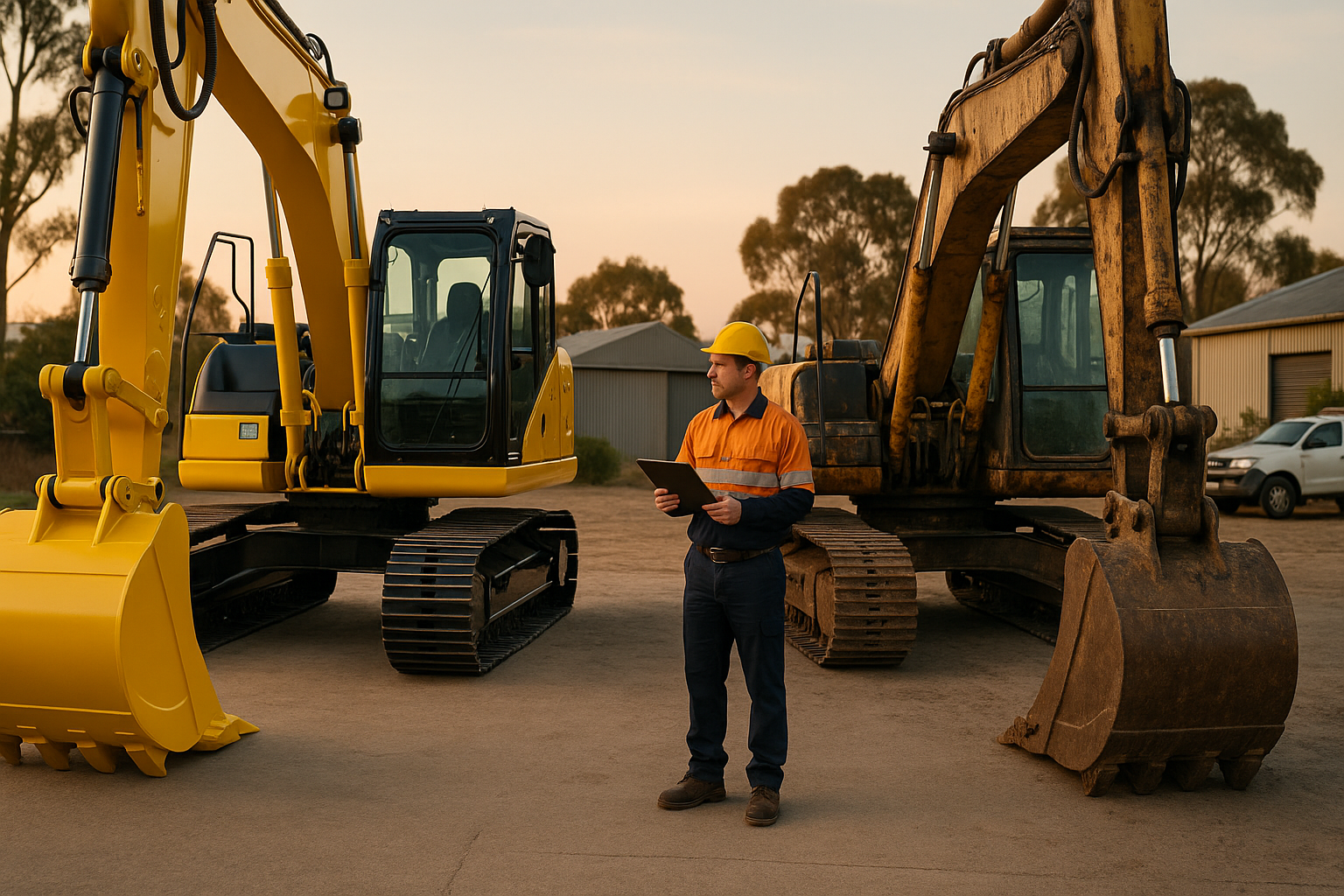
Small business owner comparing new and used equipment finance options Clarify your needs before choosing between new and used equipment.

1. Quick answer: when new vs used equipment works best

If you only read one section, make it this.

New or near‑new equipment usually makes sense when:

  • You want maximum funding (often up to 100% for standard assets).
  • You need the longest possible term to smooth cashflow.
  • Downtime, reliability and warranty support are critical.
  • The asset will clock serious kilometres/hours (trucks, excavators, utes).

Used or second‑hand equipment can make sense when:

  • You can buy a quality asset at a meaningful discount to new.
  • The asset is still well within its effective working life.
  • You’re comfortable with a shorter term and possibly a higher rate.
  • You have some cash to contribute if the lender won’t fund 100%.

Where lenders often say “no” or “only with strong backing”:

  • Very old vehicles or machinery where total age at end of term is too high (often 10–15 years max for standard assets, sometimes less for tech).
  • Obsolete, hard‑to‑resell or highly customised equipment.
  • Assets with poor condition, missing history, or non‑compliant modifications.

For a refresher on how lenders assess your business and the asset overall, see Your practical guide to equipment finance eligibility in Australia.

2. How lenders think about new vs used equipment

2.1 The risk lens: value, re‑sale and working life

For equipment finance, lenders care about three practical questions:

  1. Can your business comfortably afford the repayments? Serviceability is based on actual cashflow after expenses and owners’ drawings, not just turnover (see /insights/equipment-finance-basics-eligibility).
  2. How long will this asset reliably earn income? Terms usually follow the asset’s effective working life – commonly 3–7 years for vehicles and standard machinery.
  3. If it all goes wrong, what could the lender sell the asset for? This is where new vs used, condition and age really matter.

New gear is easier to sell, has a clearer value and is less likely to break down. Older or heavily used equipment is harder to value and re‑sell, so lenders protect themselves by:

  • Reducing the maximum term.
  • Requiring a deposit or extra security.
  • Charging a higher rate to reflect higher risk.

2.2 Terms aligned to total age, not just loan start

One of the most important – and often misunderstood – rules: lenders usually look at total age at the end of the term, not just age at purchase.

Example:

  • You’re buying a 7‑year‑old truck.
  • Lender’s policy: maximum 12 years total age at the end of the term.
  • That means the longest term they’ll offer is 5 years (7 + 5 = 12).

For a near‑new truck (say 1 year old), the same lender might offer a 6–7 year term because total age at expiry still fits their comfort zone.
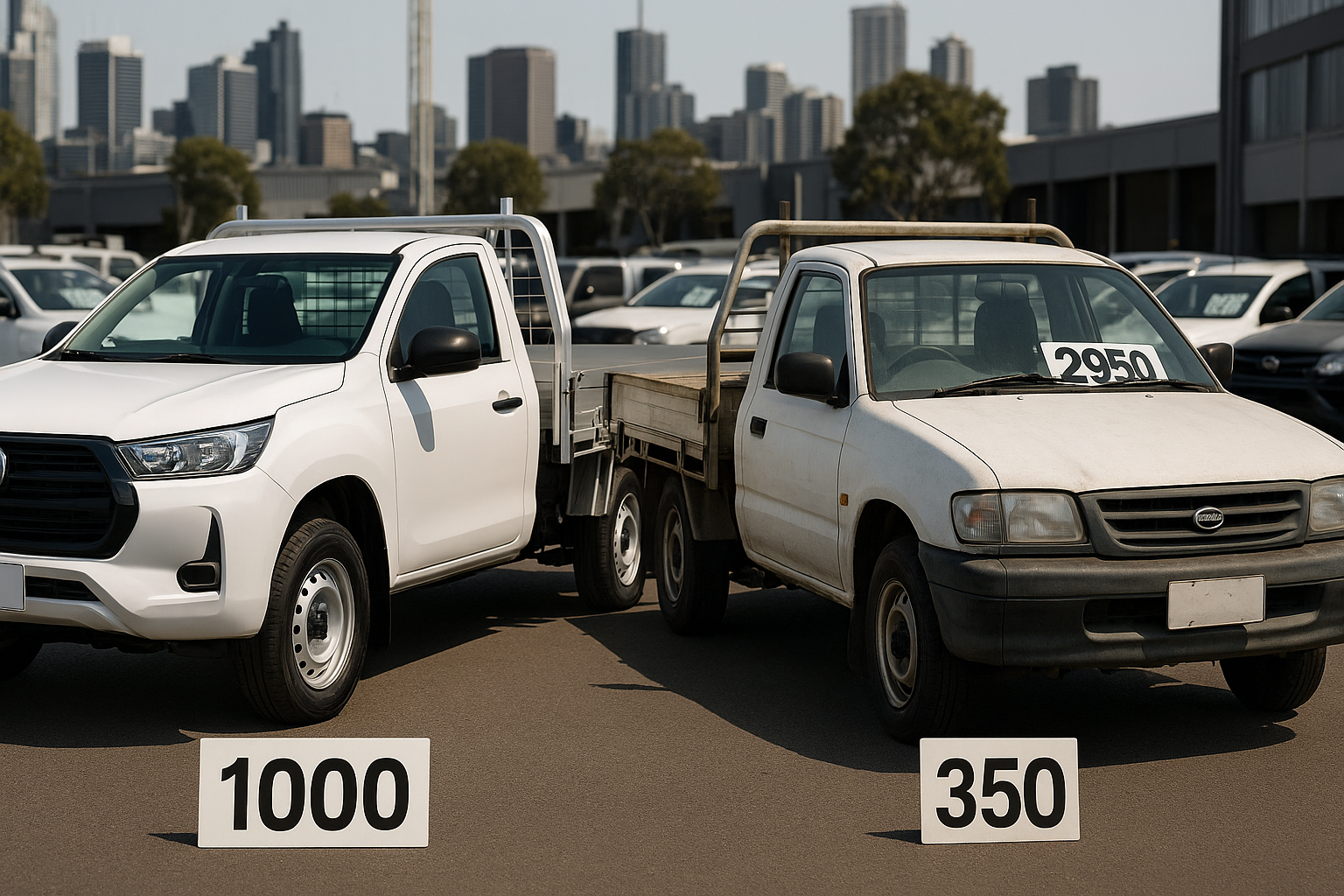
New and used work utes in an Australian commercial car yard Asset age and condition drive lender rules on terms and LVRs.

3. What lenders like funding: new and near‑new assets

3.1 Typical rules for new equipment

While every lender is different, new or near‑new assets often share these settings (indicative only):

  • Age at purchase: brand new to 2 years.
  • Maximum term: 5–7 years for standard vehicles and machinery.
  • Funding: up to 100% of the purchase price for established, profitable businesses.
  • Security: the asset itself is usually enough for mainstream items.
  • Seller: dealer sales are simplest; some lenders also accept private sales with extra checks.

This is why many businesses will push for new gear even if the sticker price is higher: the combination of longer term, higher LVR and sharper pricing can keep repayments very manageable.

3.2 Examples of “easy” new equipment

Lenders are generally comfortable with new or near‑new:

  • Work vehicles – utes, vans, light trucks.
  • Heavy vehicles – prime movers, tippers, rigid trucks.
  • Yellow goods – excavators, loaders, skid steers.
  • Standard manufacturing machinery.
  • Medical and dental equipment from recognised brands.

If you’re weighing up vehicle options specifically, it’s worth reading Smart vehicle finance options for tradies and small businesses alongside this guide.

3.3 Worked example: new ute vs used ute

Assume you’re comparing:

  • New ute from a dealer – $60,000 inc GST.
  • Used ute (4 years old) – $35,000 private sale.

Indicative finance assumptions only:

  • New ute: 6‑year term, 7.5% p.a. rate, 0% deposit.
  • Used ute: 4‑year term (asset will be ~8 years old at expiry), 9.5% p.a. rate, 10% deposit required.

Approximate repayments:

  • New ute: $60,000 over 6 years @ 7.5% ≈ $1,031/month.
  • Used ute: $31,500 financed (after 10% deposit) over 4 years @ 9.5% ≈ $788/month.

The used ute is cheaper per month and overall, but the shorter term and deposit requirement may strain cashflow if your business is tight. The new ute’s longer term and 100% funding might be more attractive even though you pay more interest in total.

4. Financing used equipment: key rules and age limits

4.1 Typical age and term limits for used gear

Below is an illustrative guide to how some Australian lenders think about age, term and LVR for used equipment. These are not live policies – just realistic ballparks.

Asset typeNew/near‑new indicative termMax total age at end of term (used)Typical max LVR newTypical max LVR used
Light vehicles/utes5–7 years10–12 yearsUp to 100%80–100%
Trucks/buses5–7 years12–15 yearsUp to 100%70–100%
Yellow goods5–7 years12–15 yearsUp to 100%70–90%
Manufacturing plant5–7 years10–12 years90–100%60–80%
IT/office equipment3–5 years5–7 years90–100%50–70%

How to read this:

  • A 7‑year‑old excavator may be fine on a 5‑year term (total 12 years).
  • A 6‑year‑old laptop is already past where many lenders want to be by end of term, so funding is difficult.

4.2 Condition, hours and kilometres really matter

For second‑hand machinery, lenders move beyond age and ask:

  • How many hours or kilometres has it done? A 5‑year‑old excavator with 3,000 hours is very different to 5 years and 12,000 hours.
  • What work has it done? Light metro deliveries are lower risk than heavy off‑road or mine‑site work.
  • Has it been regularly serviced with records? Invoices, logbooks and dealer servicing all help.
  • Any structural damage or major rebuilds? This can help or hurt depending on quality.

Expect to be asked for photos, service records and, for higher‑value assets, an independent valuation or inspection report.

4.3 Extra documentation for used equipment

Compared with new equipment, lenders may also ask for:

  • A formal valuation for older or higher‑value gear.
  • PPSR checks to confirm there’s no existing finance or security interests.
  • Proof of ownership history (bills of sale, rego history, import docs).
  • Engineer reports or compliance certificates where modifications are involved.

The more unusual or older the asset, the more evidence they’ll want before they write the cheque.

Mechanic inspecting used truck for finance assessment Used equipment often requires more documentation and condition checks for finance approval.

5. What lenders usually won’t finance – or only with strong backing

5.1 Common “too hard” categories

While nothing is universal, lenders often decline or heavily restrict finance for:

  • Very old vehicles or machinery, where total age at end of term is beyond ~10–15 years.
  • Obsolete tech – old servers, computers or medical equipment with no ongoing support.
  • Highly customised or single‑purpose gear that has a tiny re‑sale market.
  • Assets with unclear ownership or missing serial/ID numbers.
  • Unregistered road vehicles that can’t be registered without significant work.

This doesn’t mean you can’t buy these assets – just that you might need to use cash, a general business loan or offer other security (such as property or newer equipment).

5.2 Private sales, imports and related‑party purchases

Some lenders are cautious around used assets bought:

  • Privately (e.g. from another tradie, not a dealer).
  • From overseas without clear compliance or history.
  • From a related party (e.g. buying a truck from your own family company).

Expect more questions and conditions, such as:

  • Independent valuations.
  • Roadworthy or compliance certificates.
  • Larger deposits or lower LVRs.
  • Shorter terms.

A broker can often match you with lenders who are comfortable with private sales for common assets like utes and trucks, provided the documentation is solid.

6. New vs used: cost, cashflow and tax comparison

6.1 Worked example: new vs used excavator

Assume you’re choosing between:

  • New excavator – $150,000 inc GST.
  • Used excavator – $90,000 inc GST, 5 years old, 6,000 hours.

Indicative finance assumptions only:

  • New: 5‑year term, 7.0% p.a., 0% deposit.
  • Used: 4‑year term, 9.0% p.a., 20% deposit.

Loan amounts:

  • New: $150,000 financed.
  • Used: $72,000 financed (after $18,000 deposit).

Approximate repayments:

  • New: $150,000 over 5 years @ 7.0% ≈ $2,970/month.
  • Used: $72,000 over 4 years @ 9.0% ≈ $1,794/month.

Other costs to consider:

  • Repairs and downtime: older gear may have more unplanned maintenance.
  • Fuel and efficiency: new machines are often cheaper to run.
  • Resale value: the new excavator may still be worth significantly more at the end of term.

If the new machine lets you take on more work or reduce downtime, the higher repayment can still be the smarter move.

6.2 Balloons and residuals – handle with care

You can sometimes use a balloon (also called a residual) on both new and used equipment to reduce monthly repayments. Remember:

  • Balloons lower repayments but usually increase total interest over the life of the loan.
  • The balloon must be realistic vs expected end‑of‑term value – especially critical for used assets that depreciate faster.
  • You’ll need a plan to pay out, refinance or sell the asset to clear the balloon.

Over‑optimistic balloons on ageing equipment can leave you stuck at the end of term, with more owing than the gear is worth.

6.3 Tax angles (high‑level only)

From a tax perspective, the key points are:

  • With structures like chattel mortgages and commercial loans, you usually claim depreciation and interest, and often the GST upfront (subject to ATO rules and your registration status).
  • With leases, you generally claim the rental payments instead.
  • Whether the asset is new or used, the ATO’s effective life rules determine how quickly you can depreciate it.

The tax treatment can be complex and changes over time (for example, instant asset write‑off thresholds). Always get tailored advice from your accountant before you sign anything.

For more on structures and their impact, cross‑check with Smart vehicle finance options for tradies and small businesses.

7. How equipment loans affect your home loan borrowing power

Many business owners forget that equipment finance can flow through to their personal borrowing capacity when they next buy or refinance a home.

7.1 How home lenders view business equipment loans

When a bank assesses a home loan, they often:

  • Treat business loans, vehicle loans and equipment finance as ongoing commitments.
  • Use the full repayment in their calculator – sometimes at a higher “assessment rate” to build in buffers (APRA currently expects banks to use at least a 3% buffer on home loan rates).
  • Consider limits on credit cards, overdrafts and leases, not just the balances.

As explained in Business Debts, Credit Cards and Car Loans: Protect Your Borrowing Power, every dollar of monthly repayment on business and personal debts can reduce how much you can borrow for a home.

7.2 Strategies to protect your future borrowing power

If you’re planning to buy or refinance a home in the next 1–3 years:

  • Don’t over‑gear on equipment terms or balloons just to make repayments look cheap.
  • Consider timing major purchases so big repayments don’t overlap with home loan applications.
  • Where possible, keep equipment loans in the business name only with clear separation – but assume lenders may still count them.
  • Clean up other hidden facilities like BNPL, overdrafts and trade accounts several months before a home loan application (see Hidden Debts: How BNPL, Overdrafts and Trade Accounts Hurt Home Loans).

The goal is balance: enough equipment to grow your business, without strangling your future property plans.

8. One‑week action plan: choosing and financing new vs used

If you know you need a new asset soon, here’s a practical plan you can execute this week.

Day 1–2: Clarify what you actually need

  • Write down exactly what the asset must do: capacity, features, hours per week, and where it will work.
  • Decide whether reliability and uptime are mission‑critical or if you can live with some downtime.
  • Shortlist both new and used options that meet the brief.

Day 3: Reality‑check lender appetite

  • Check the age of any used options and estimate how old they’ll be at the end of the term you want.
  • Use the table in Section 4 as a rough guide: if total age will be above 10–15 years (or 5–7 years for tech), expect pushback.
  • For unusual assets, collect brochures, serial numbers and photos so a broker or lender can assess them quickly.

Day 4–5: Run the numbers

  • Get written quotes on purchase price and any extras (delivery, attachments, on‑road costs).
  • Ask for indicative repayments for:
    • A new option.
    • A used option.
    • Different terms (e.g. 4 vs 5 vs 6 years).
  • Factor in insurance, rego, servicing and likely downtime.
  • Speak with your accountant about tax treatment and cashflow impact.

Day 6–7: Get application‑ready

Pull together the documents most lenders will want:

  • Recent financial statements, BAS or bank statements (full‑doc or alt‑doc options may be available).
  • ABN/GST registration details and proof of trading history.
  • Quotes or contracts of sale for the asset.
  • For used assets: photos, service records, PPSR search and any valuations.

If you want to understand broader eligibility settings while you do this, cross‑check against Your practical guide to equipment finance eligibility in Australia.

Then have a targeted conversation with a broker:

  • “Here’s the exact asset I’m looking at and its age/hours.”
  • “Here’s my approximate budget for monthly repayments.”
  • “Here’s my home loan and property plans over the next 1–3 years.”

That’s usually enough for a broker to outline realistic options and flag any lender policy red flags before you sign a contract.


FAQs: new vs used equipment finance in Australia

1. Can I get 100% finance for used equipment?

Sometimes, but it depends heavily on the asset and your business. For standard, re‑saleable used assets (like late‑model utes and trucks) and a profitable, established business, some lenders may still offer close to 100% finance. Older, specialised or harder‑to‑resell gear usually needs a deposit or extra security, often bringing the LVR down to 60–80%.

2. What’s the maximum age lenders will finance for second‑hand machinery?

For common gear, lenders often work backwards from a maximum total age at end of term of around 10–15 years for vehicles and standard machinery, and 5–7 years for tech or IT. If your used asset would be older than that at the end of the loan, expect a shorter term or a decline. Very old machinery may need to be bought with cash or secured against property instead.

3. Will lenders finance equipment bought privately, not from a dealer?

Many will, particularly for common assets like work vehicles, trucks and yellow goods, but they usually require more checks. Expect to provide a PPSR search, proof of ownership, photos, service records and sometimes a valuation or roadworthy certificate. A few lenders only fund dealer sales, so it’s worth checking policy before you commit to a private purchase.

4. Can a start‑up business get finance for used equipment?

It’s possible, but harder. Start‑ups are riskier because there’s limited trading history, and used assets offer less security to the lender. You may need to provide a larger deposit, offer additional security (such as a property guarantee), or accept a shorter term or higher pricing. Having strong personal credit and a clear, realistic business plan helps.

5. Are balloons a good idea on older equipment?

They can work, but you need to be conservative. A balloon reduces your monthly repayments, which can help cashflow, but it assumes the asset will still be worth at least that much at the end of the term. With older or fast‑depreciating assets, it’s easy to end up owing more than it’s worth. Only use balloons where you’ve stress‑tested resale values and have a clear exit plan.

6. Is it easier to get a loan for new equipment than used?

Generally yes. New equipment is easier to value, usually comes with warranties, and is more attractive security if the lender ever needs to sell it. That often translates into higher LVRs, longer terms and better pricing. Used equipment can still be financed, particularly if it’s well within its working life and in good condition, but you should expect more questions and potentially tighter terms.


Key takeaways

  • Lenders will fund both new and used equipment, but they tighten age, term and LVR rules as assets get older or harder to resell.
  • Most policies are based on total age at the end of the term, commonly capping vehicles and standard machinery around 10–15 years and tech around 5–7 years.
  • New and near‑new assets generally attract higher LVRs, longer terms and sharper pricing, making them easier on cashflow despite a higher purchase price.
  • Used equipment often requires deposits, valuations, extra documentation and sometimes additional security, especially where condition or history is unclear.
  • Equipment loans can materially reduce your home loan borrowing power, so plan major purchases around your property goals and keep overall repayments manageable.

If you’re weighing up a specific new vs used purchase, the fastest way to get clarity is to talk through the exact asset, age and price with a broker who understands both business finance and home lending. That conversation can save you from buying the wrong asset, on the wrong terms, at the wrong time for your broader goals.

General advice only.

Frequently asked questions

Sometimes, but it depends on the asset and your business profile. Standard, late‑model used assets like utes and trucks may still qualify for high LVRs if your business is stable and profitable. Older, specialised or hard‑to‑resell equipment usually requires a deposit or extra security, reducing the LVR to somewhere around 60–80%.

Talk to a CPA-certified broker

Free consultation, plain-English advice tailored to your situation.

Your details are kept confidential. We’ll never share them.