
Article
Building a Resilient Property Portfolio in Green Square and the Inner South
A decision-grade guide for investors and portfolio builders looking at Green Square and Sydney’s inner south. Learn what to buy, how to structure loans, manage risk, and what steps to take this week to move from vague plans to an actionable portfolio strategy.
Key Takeaway
Investors targeting Green Square and Sydney’s inner south should prioritise loan structure, building quality and cashflow resilience over chasing short‑term gains. With APRA’s 3% serviceability buffer and lenders shading rental income to around 70–80%, many portfolios now hit borrowing limits faster. The article explains practical ways to avoid cross‑collateralisation, ring‑fence your home, and use usable equity safely, ending with a one‑week action plan to progress an investor loan review and property shortlist.

Investors targeting Green Square and Sydney’s inner south should treat this area as a long‑term, growth‑biased play that demands careful loan structuring and building selection, rather than a quick-flip strategy. The combination of high density, complex strata, higher property prices and tighter lending rules means your portfolio plan, not just the postcode, will determine your results. This guide gives you decision‑grade detail so you can act on your strategy this week.
We’ll walk through what kind of assets make sense in Green Square, how to structure loans without cross‑collateralising, and how to manage cashflow and risk in the current rate cycle.
1. Why Green Square and the Inner South Attract Portfolio Builders
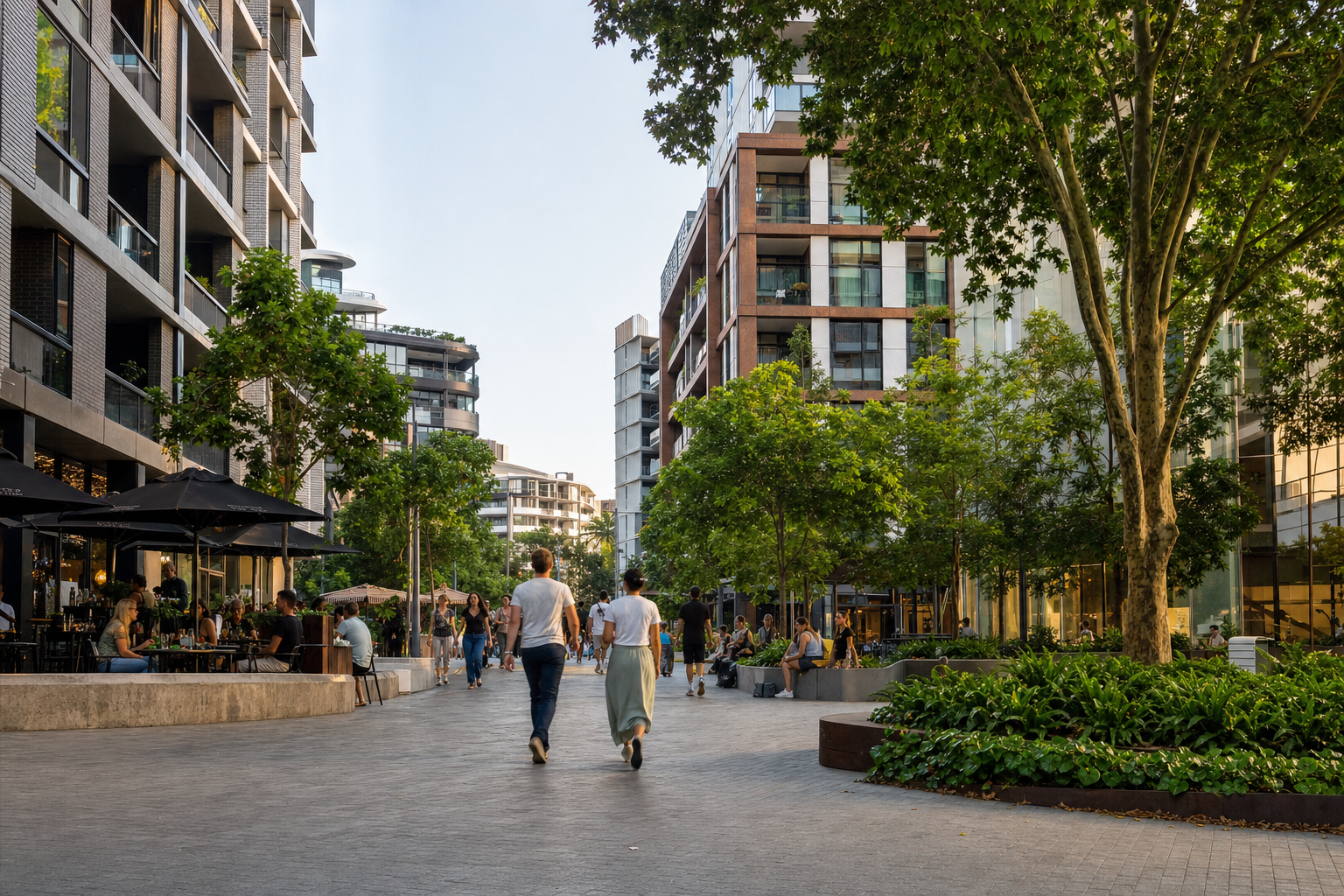
Green Square, Zetland, Waterloo, Rosebery and the inner south sit at the intersection of lifestyle, transport and employment hubs. For investors, that usually means strong underlying tenant demand and long‑term capital growth potential, but not always outstanding yields.
Key drivers that matter to portfolio builders:
- Population growth and density – Thousands of new residents have moved into Green Square over the past decade, with more apartments still being delivered.
- Proximity to jobs – CBD, airport, university and tech/creative precincts are a short commute. This supports rental demand across cycles.
- Infrastructure – Green Square station, bus links, cycleways and ongoing amenity upgrades make the area attractive to higher‑income renters.
For investors and small business owners, that usually translates to:
- Better long‑term growth prospects than many fringe suburbs.
- Moderate rental yields relative to purchase price.
- Higher entry costs and more complex lending and strata risk.
If your mindset is “hold for 10+ years and build a portfolio”, Green Square can make sense. If you need high cashflow from day one or you’re heavily leveraged, you may need to blend this area with other, higher‑yielding markets.
2. What Sort of Investor Strategy Actually Works Here?
2.1 Focus on long‑term capital growth, not speculation
Green Square and the inner south are now established inner‑urban precincts, not undiscovered bargains. The biggest gains typically go to investors who:
- Buy quality, well‑located assets.
- Hold through multiple interest rate and economic cycles.
- Avoid forced sales by keeping buffers and conservative loan‑to‑value ratios (LVRs).
Trying to pick short‑term price spikes in a high‑density area is closer to speculation than investing.
2.2 Working with high prices and moderate yields
Prices for townhouses and terraces in the inner south often sit well into seven figures, and even apartments can feel expensive relative to rent. Many investors therefore:
- Use Green Square as a growth anchor in their portfolio.
- Offset lower yields here by adding stronger cashflow properties in other suburbs or states.
- Treat any tax benefits (like negative gearing) as a buffer, not the core strategy.
Our guide on equity strategies for property investors explains how to use growth assets to fund future, more cashflow‑friendly purchases.
2.3 Balancing apartments with house‑like assets
In a precinct dominated by apartments, concentration risk is real. Prudent portfolio builders usually:
- Limit the percentage of their portfolio value tied up in one building or even one suburb.
- Consider diversifying into larger apartments, townhouses or terraces where budget allows.
- Weigh up strata fees, lift maintenance and future capital works against land value and scarcity.
A balanced inner south strategy might be:
- 1–2 quality apartments in Green Square/Zetland.
- A townhouse or small house in a nearby or complementary suburb.
- One or more higher‑yield assets in other Sydney regions or interstate.
3. Selecting the Right Assets: Buildings, Lots and Layouts
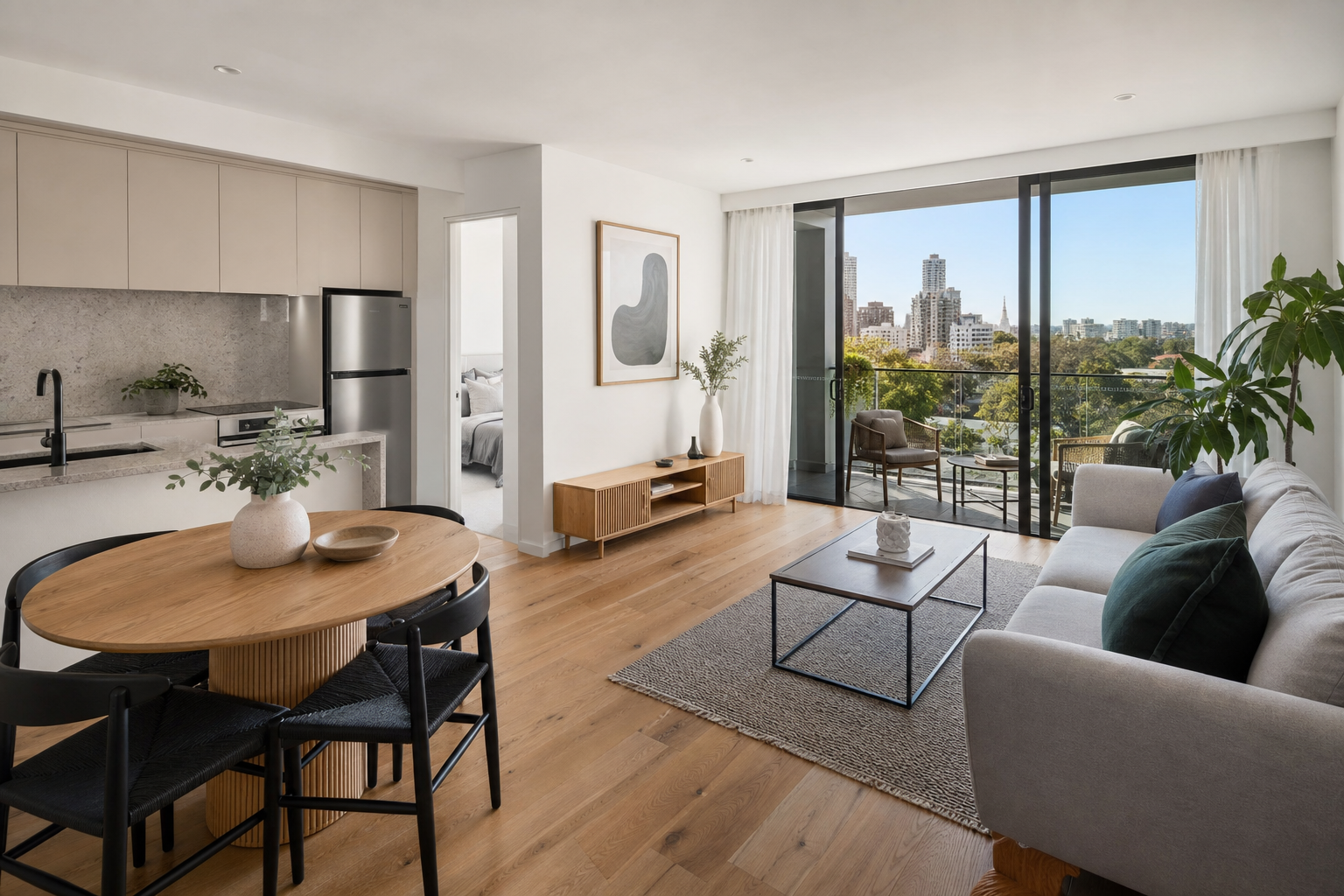
In Green Square, choosing the right building is as important as choosing the right street. Lenders and valuers scrutinise building quality heavily because of past defect and cladding issues across Sydney.
3.1 Building risks that matter to lenders and valuers
When you speak with a Green Square investment property broker, expect them to ask about:
- Age and builder reputation – Newer doesn’t always mean better. Past defect history and rectification records matter.
- Cladding and fire safety – Buildings with unresolved cladding or fire issues may be unacceptable to many lenders.
- Mixed‑use developments – Retail or commercial under residential can limit lender appetite, especially with late‑night venues.
- Unit size and layout – Many lenders dislike very small units (often <50 m² internal). Awkward layouts can also hurt resale and valuation.
A local broker who knows which buildings are on which lender’s “watch lists” can save you from finance knockbacks. Our piece on why Green Square buyers often need a truly local mortgage broker goes deeper on this.
3.2 Off‑the‑plan vs established apartments
Off‑the‑plan apartments are common in Green Square. They can work for some investors, but they introduce extra risk:
- Valuation risk at settlement – If the market softens or lots of similar apartments settle at once, valuations can come in low.
- Defect risk – You cannot fully assess build quality until after completion. Clear defect liability clauses are important.
- Timing risk – Delays can help or hurt you depending on the interest rate and price cycle.
Established apartments in well‑run buildings usually offer:
- Actual, rather than projected, rent and strata cost data.
- A track record of how the building ages and how the owners’ corporation behaves.
- Less risk of nasty surprises at settlement.
3.3 Micro‑locations: Zetland, Waterloo, Rosebery, Alexandria, Mascot
Each pocket of the inner south has its own profile:
- Zetland / Green Square core – High density, strong amenity, newer stock. Good for professionals and young families.
- Waterloo – Mix of public and private housing; some excellent buildings, some with more complex reputational issues.
- Rosebery – Increasingly gentrified, more low‑rise and warehouse conversions, strong café culture.
- Alexandria – Townhouses, terraces and warehouse conversions command premiums but often have stronger owner‑occupier appeal.
- Mascot – Good transport links; aircraft noise and some high‑profile building issues mean careful building selection is critical.
A portfolio builder might start with an apartment in Green Square, then add a townhouse in Rosebery or Alexandria to diversify dwelling type and tenant profile.
4. Structuring Your Loans for a Multi‑Property Inner South Portfolio
Loan structure can make or break an investor targeting Green Square and the inner south. In higher‑value markets, mistakes around cross‑collateralisation and security can trap you quickly.
4.1 Avoid cross‑collateralisation in Green Square
Cross‑collateralisation means using multiple properties as security for one combined loan or group of loans. It can:
- Make it harder to sell or refinance one property without renegotiating the entire portfolio.
- Give the bank more control over how sale proceeds are applied, especially in a downturn.
- Increase stress if valuations fall in just one building.
Where possible, aim for stand‑alone loans:
- Each property funded by its own loan (or clearly labelled splits).
- Equity released via separate, unsecured‑by‑other‑properties splits.
This approach, discussed in detail in our guide to restructuring loans for growing portfolios, usually gives you more flexibility and cleaner tax records.
4.2 Stand‑alone vs cross‑collateralised: a quick comparison
| Feature/Issue | Stand‑alone security structure | Cross‑collateralised structure |
|---|---|---|
| Selling one property | Usually straightforward; loan on that property is paid out | Often requires lender consent and revaluation of portfolio |
| Control over sale proceeds | More control; excess can be kept or used strategically | Lender may demand a large portion to reduce combined LVR |
| Refinancing a single loan | Easier to move one property to a new lender | Harder; lender may insist on moving all securities |
| Tax and record‑keeping | Cleaner; each loan split matches each property | Messy; interest and purposes mixed across properties |
| Risk during downturns | Problems more contained to specific assets | Issues in one property can affect the entire portfolio |
A key goal for many investors is to avoid cross‑collateralisation in Green Square so that a future building‑specific issue doesn’t drag down the rest of their portfolio.
4.3 Using equity from Green Square to buy elsewhere
If you already own in the inner south, you may be able to tap usable equity to fund your next purchase. Usable equity is usually calculated by applying a target LVR (often 80%) to your property’s value and subtracting the current loan balance.
Example:
- Zetland apartment value: $1,050,000 (bank valuation).
- Target LVR: 80% → $1,050,000 × 80% = $840,000.
- Current loan: $620,000.
- Usable equity ≈ $220,000 (before costs).
You might then:
- Set up a separate investment loan split secured by this property for, say, $200,000.
- Use those funds as deposit and costs for a second property, ideally with a separate loan secured only by the new property.
Our article on smart equity strategies walks through more worked examples.
4.4 Ring‑fencing your home and business from investment risk
Many Green Square investors are professionals, business owners or self‑employed. A common objective is to protect the family home from investment and business risks.
In practice this often means:
- Minimising or ultimately removing investment and business loans secured by your home.
- Using separate securities for business equipment or fit‑out finance, rather than bundling everything under one “mega” loan.
- Gradually shifting risk away from the home as your portfolio and business mature.
Our broader guide on how smart mortgage brokers help portfolio builders explains how this fits into long‑term planning.
5. Serviceability, Cashflow and Risk Management in Today’s Rate Cycle
The current interest rate environment makes careful cashflow planning non‑negotiable, especially in higher‑price areas like the inner south.
5.1 How lenders assess you now
Several settings matter for investors:
- APRA’s 3% serviceability buffer – Lenders must test if you can afford your loans at 3 percentage points above the actual rate.
- Shading rental income – Many lenders count only 70–80% of expected rent when assessing your capacity.
- HEM and living expenses – Household Expenditure Measure benchmarks and your disclosed spending both feed into the numbers.
With RBA cash rate moves from 0.10% during COVID to over 4% in subsequent years (RBA, 1990–2026 decisions), many borrowers have already felt the impact of higher repayments. That makes buffers and realistic rent assumptions critical.
5.2 Building buffers and planning for vacancies
Inner‑city apartments can experience short periods of elevated vacancy, especially when lots of new stock completes at once or when international student numbers or travel patterns shift.
Practical risk controls:
- Keep 3–6 months of total loan repayments in offset across your portfolio.
- Stress‑test your cashflow at higher interest rates than today.
- Assume some rent discounts or incentives in softer markets.
- Consider landlord insurance for loss of rent and damage.
5.3 Staging your purchases sensibly
Portfolio building in inner Sydney isn’t a race. Sensible sequencing might look like:
- Stabilise your home loan and make sure it’s efficiently structured.
- Add one well‑chosen Green Square or inner south investment.
- Allow 12–24 months to bed down the cashflow.
- Reassess borrowing capacity and risk before moving again.
A structured approach, combined with a periodic investor loan review in Zetland or your current suburb, can highlight whether your existing loans are still fit for purpose, or whether you need to restructure before buying again.
6. Working With a Green Square‑Focused Broker (Without Wasting Time)
For many investors, the choice is not “broker or no broker” but what kind of broker. Green Square and the inner south reward local pattern recognition.
A Green Square investment property broker who works these postcodes daily can help you:
- Identify lender appetite for specific buildings or unit types.
- Avoid wasting time on lenders likely to decline your property or income type.
- Structure separate loan splits so your tax and portfolio records stay clean.
Our guide on whether to use a local Green Square broker or your bank explains when a specialist local broker adds real value beyond a generic bank channel. For many investors, especially self‑employed or multi‑property borrowers, the extra nuance is worth it.
If you’re time‑poor, see also why using a mortgage broker saves time, stress and money – then decide what level of support you actually need this year.
7. A One‑Week Action Plan for Green Square‑Focused Investors
You don’t need to solve everything at once. You do need to move from vague intention to clear, testable steps.
Day 1–2: Clarify strategy and numbers
- Decide whether your primary goal for Green Square is capital growth, diversification, or accessing equity for other purchases.
- List all existing properties, values and loan balances.
- Roughly calculate usable equity on each property using an 80% LVR and current values.
- Note any loans that are clearly cross‑collateralised or have mixed purposes.
Day 3–4: Asset and building shortlisting
- Shortlist 3–5 buildings or streets in Green Square and the inner south that fit your budget and tenant profile.
- For each, note:
- Approximate price range and strata fees.
- Likely rent range.
- Any known building issues, cladding or defect history.
- Sense‑check whether you’re over‑concentrating your exposure in one building or micro‑area.
If you already own in the area, gather recent leases, strata minutes and valuations to prepare for a review.
Day 5–7: Book a focused loan and strategy review
By the end of the week, aim to:
- Book a targeted investor loan review (e.g. “current loans + potential purchase in Zetland/Green Square”).
- Ask the broker to map each loan to specific properties and purposes, highlighting where cross‑collateralisation exists.
- Discuss:
- Whether your current structure supports future purchases in or beyond the inner south.
- How to restructure into clean, property‑specific splits over time.
- Which lenders have more appetite for your preferred buildings.
Even if you don’t buy this month, clarifying structure and capacity now means you can move quickly when the right property appears.
FAQs
Is Green Square still a good place to buy an investment apartment?
It can be, if you’re selective about the building and realistic about yields. Focus on well‑located, better‑quality complexes with strong tenant demand and a solid maintenance record. Treat it as a 10‑plus‑year growth play, not a short‑term flip, and avoid over‑concentrating in one building or very small units that lenders may dislike.
How many Green Square or inner south properties is too many in one portfolio?
There’s no fixed number, but concentration risk is real in high‑density areas. Many prudent investors cap any one suburb at less than half their total portfolio value and diversify by dwelling type and geography. If more than 50% of your net property wealth is in one postcode, it’s worth intentionally adding assets elsewhere over time.
How often should I review my investor loans in Zetland or Green Square?
In a relatively volatile rate environment, a 12–24 month review cycle is sensible. You want to check that rates, structures and repayments still align with your goals and that your loans aren’t unnecessarily cross‑collateralised. A review is also a good trigger to reassess usable equity, rental performance and whether it’s time to buy, hold or consolidate.
Can I safely use Green Square equity to buy interstate or in regional areas?
Yes, provided you keep total LVRs sensible and avoid tying multiple properties into one security pool. Many investors use inner‑city growth assets to fund higher‑yield regional or interstate purchases. The key is to release equity via separate loan splits, keep each new purchase on its own security, and maintain cash buffers in offset accounts.
Should I buy off‑the‑plan in Zetland or Waterloo as an investor?
Off‑the‑plan can work, but it carries extra valuation, defect and timing risks in high‑density precincts. If you go this way, prioritise developers with a strong track record, legal advice that tightens defect protections, and a clear plan for funding settlement even if valuations come in lower. Many investors prefer established apartments in proven buildings where the numbers and build quality are more transparent.
Key takeaways
- Green Square and the inner south suit long‑term, growth‑focused investors who can manage moderate yields and higher entry prices.
- Asset selection is building‑specific; cladding, defects, unit size and mixed‑use issues can all affect lending and resale.
- Structuring stand‑alone, property‑specific loans and avoiding cross‑collateralisation gives you more flexibility and cleaner tax outcomes.
- Strong cash buffers, realistic rent assumptions and staged purchases help manage risk in a higher‑rate environment.
- A focused review with a Green Square‑savvy broker can align your loans, equity and next purchase within a single, coherent plan.
If you’re serious about building a portfolio around Green Square and the inner south, your next step this week is simple: map your current loans to each property, shortlist target buildings, and book a structured strategy and loan review with a broker who works these postcodes every day.
General advice only.
Frequently asked questions
Talk to a CPA-certified broker
Free consultation, plain-English advice tailored to your situation.