
Ding Financial logo

Article

Understanding Business Equipment Finance in Australia Today

Business equipment finance lets Australian SMEs fund vehicles, machinery, tech and fit‑outs over 3–7 years using the asset as security, instead of draining cash. This guide explains the main structures, how repayments and balloons work, what lenders check, and a clear one‑week plan to move from idea to approval‑ready.

Published 12 May 2026Updated 12 May 202614 min read

Key Takeaway

Business equipment finance in Australia works by funding vehicles, machinery, technology and fit-outs with the asset itself as security, usually over 3–7 years, instead of using cash or an overdraft. Mainstream lenders can often fund up to 100% of the purchase price for standard, resaleable assets. Understanding the structures, how terms and balloons affect repayments, and what lenders check on cashflow and credit helps small businesses choose the right option and prepare an approval-ready application this week.

Understanding Business Equipment Finance in Australia Today

How business equipment finance really works in Australia

Business equipment finance in Australia lets you buy or use vehicles, machinery, technology and fit‑outs over time while the asset itself secures the debt. Instead of paying the full price upfront, a lender funds most or all of the cost, you make fixed repayments over 3–7 years, and you own or control the asset during that period depending on the structure. Done well, it preserves cashflow, can be tax‑effective and avoids tying up your home.

This guide breaks down the main finance types, how repayments and balloons are calculated, what lenders actually look at, and a practical one‑week plan to get moving.
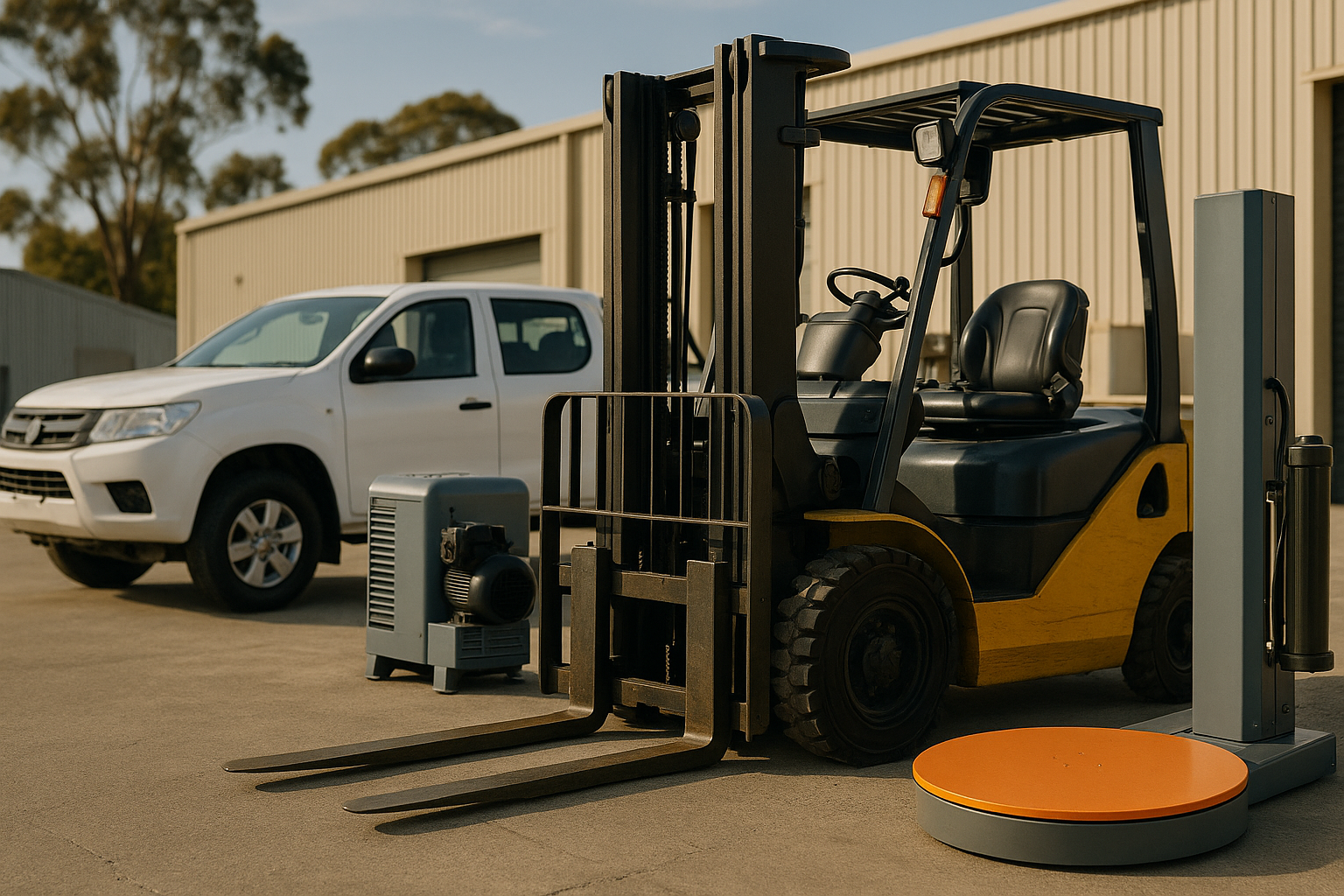
Range of business equipment such as a ute and machinery in an Australian warehouse. Business equipment finance can cover vehicles, machinery, technology and more.

1. What is business equipment finance, exactly?

Equipment finance is a business funding facility used to acquire income‑producing assets – think utes, trucks, excavators, CNC machines, commercial ovens, medical equipment, IT systems or office fit‑outs.

Instead of a generic unsecured loan, the lender takes security over the specific asset (and sometimes extra security as well). Because the asset reduces the lender’s risk, you can usually:

  • Borrow a higher percentage of the purchase price, sometimes up to 100% for standard assets (indicative only)
  • Access sharper pricing than unsecured business loans
  • Align the loan term to the asset’s effective working life (commonly 3–7 years for vehicles and standard machinery [3])

1.1 What kinds of assets can you finance?

Most lenders prefer assets that are:

  • Standard and resaleable – vehicles, yellow goods, mainstream machinery, common medical and dental equipment, major brand IT
  • Income‑producing – the asset helps generate revenue or reduce costs
  • Durable – a working life long enough to support a multi‑year loan

Highly customised, niche or hard‑to‑resell equipment is still financeable, but often needs stronger financials, a bigger deposit or extra security such as property [7].

1.2 How is this different from using cash or an overdraft?

Compared with paying cash:

  • You preserve working capital for wages, materials and marketing
  • You can usually claim interest and depreciation or lease payments as deductions (ATO rules apply; get tax advice)
  • The cost is spread over the period you use the equipment

Compared with an overdraft or generic business loan:

  • The asset itself secures the debt
  • Terms are aligned to the asset’s life instead of being on‑demand
  • Pricing is typically sharper for the same risk profile

For a deeper dive into how lenders look at your business and the asset, see our practical guide to equipment finance eligibility.

2. Common equipment finance structures (in plain English)

There are several ways to structure equipment finance. The right one depends on how you use the asset, how you’re taxed and whether you want ownership from day one.

2.1 Chattel mortgage / equipment loan

This is the workhorse structure for many SMEs.

  • Your business owns the asset from settlement
  • The lender takes a mortgage (security interest) over the asset
  • You make principal and interest repayments, often with an optional balloon at the end

Tax‑wise, businesses usually claim interest and depreciation, and may claim the GST on the purchase price in their BAS (subject to ATO rules and thresholds like instant asset write‑off when available).

2.2 Finance lease / commercial hire purchase

Here, the lender (or lessor) owns the asset during the term and your business has the right to use it.

  • You pay regular rentals/repayments
  • Often there’s a residual value at the end
  • Ownership may transfer when you pay the residual or a nominal amount, depending on structure

This can suit businesses wanting to keep debt off certain parts of their balance sheet or align payments closely with usage.

2.3 Operating lease / rental

An operating lease is closer to an equipment rental arrangement.

  • You don’t aim to own the asset
  • The term may be shorter than the asset’s life
  • You may have options to extend, upgrade or hand back the equipment

These can work for fast‑moving technology or equipment that dates quickly, where flexibility is more important than ownership.

2.4 Quick comparison of structures

Below is a simplified comparison. Actual tax outcomes depend on your structure, turnover and the law at the time – always check with your accountant.

FeatureChattel mortgage / equipment loanFinance lease / hire purchaseOperating lease / rental
Who owns asset during term?Your businessLender/lessorLender/lessor
Typical term3–7 years3–7 years2–5 years
Balloon/residual at end?Optional balloonOften a set residualSometimes (or hand-back/upgrade)
How repayments are treatedPrincipal + interestLease/hire paymentsRental/lease payments
SecurityAsset (plus sometimes extra)AssetAsset
Common usesVehicles, plant, machineryVehicles, plant, machineryIT, tech, short-life equipment

For vehicle‑specific options, including novated leasing if you pay yourself a salary, see smart vehicle finance options for tradies and small businesses.

Notebook showing loan, lease and rental options for equipment finance. Choosing the right structure affects ownership, tax and cashflow.

3. How the numbers really work: terms, balloons and repayments

Lenders design equipment finance around three main levers: loan amount, term and balloon/residual. Your cashflow, tax position and future plans should drive how you pull these levers.

3.1 Typical terms and why asset life matters

Australian equipment finance terms are usually aligned with the asset’s effective working life [3]:

  • Vehicles and utes: often 3–5 years, sometimes 6–7
  • Yellow goods / heavy machinery: typically 4–7 years
  • IT and office tech: commonly 2–4 years
  • Fit‑outs: often 3–5 years, sometimes shorter if the lease term is short

Financing equipment over longer than its useful life is a red flag. You risk still paying off a 7‑year loan on gear that needs replacing after 4 years.

3.2 Balloons and residuals – cashflow now vs total interest

A balloon (on a chattel mortgage) or residual value (on a lease) is a lump sum due at the end of the term. It reduces your monthly payments but:

  • Increases total interest over the life of the loan [4]
  • Must be realistic compared with the asset’s expected market value at the end
  • Needs a plan: refinance, pay cash, or sell/upgrade the asset

If you set the balloon higher than the likely resale value, you risk negative equity and limited options at the end.

3.3 Worked example: financing an $80,000 excavator

Assume:

  • Purchase price: $80,000 (ex‑GST, for simplicity)
  • Term: 5 years (60 months)
  • Interest rate: 10% p.a. fixed (illustrative only, not a quote)

Option A – No balloon

  • Amount financed: $80,000
  • Term: 60 months
  • Monthly repayment: around $1,700–$1,750
  • Total repayments over 5 years: around $102,000–$105,000

Option B – 30% balloon ($24,000)

  • Amount financed: $80,000
  • Balloon: $24,000 due in month 60
  • Monthly repayment: around $1,300–$1,350
  • Total monthly repayments over 5 years: around $78,000–$81,000, plus $24,000 balloon
  • Combined total: around $102,000–$105,000 (slightly more than Option A due to higher average balance)

You gain roughly $350–$450 a month in cashflow in Option B, at the cost of:

  • A $24,000 lump sum to deal with in year 5
  • Slightly higher total interest

The right answer depends on your cashflow profile, upgrade cycle and what your accountant recommends.

3.4 Fixed vs variable repayments

Most term equipment loans and leases are fixed rate, giving predictable repayments over the term. That helps with budgeting and serviceability tests, especially when lenders are already applying a 3% (or more) buffer rate to your obligations on the personal side.

Variable‑rate or revolving facilities are more common for working capital, not for classic equipment finance.

4. The equipment finance process: step‑by‑step

The process is usually faster and simpler than a full property loan, particularly for standard assets and established businesses.

4.1 Step 1 – Clarify what you need and why

Before you talk to lenders, be clear on:

  • What equipment you need and how it will generate revenue or savings
  • Whether it replaces or adds capacity
  • What it costs (ex‑GST and inc‑GST)
  • How long you realistically expect to use it

This drives the right structure, term and balloon.

4.2 Step 2 – Choose the asset and supplier

Lenders generally want:

  • A formal quote or invoice from the supplier
  • Clear asset details – make, model, age, hours/kilometres, serial/VIN
  • For used or private‑sale equipment, extra checks like valuations or condition reports

Standard, new assets from known suppliers are usually quicker to approve than niche, customised or private‑sale gear.

4.3 Step 3 – Get your documents in order

For established, low‑risk deals, lenders might rely on:

  • 3–6 months of business bank statements
  • BAS statements
  • Latest financials and tax returns (for higher amounts)

Low‑doc or alt‑doc equipment finance can rely more on BAS, bank statements or an accountant’s declaration instead of full financials, but pricing can be higher or the maximum amount lower [2]. If you’re self‑employed, the logic is similar to picking between full‑doc and alt‑doc home loans – see documentation pathways for the general trade‑offs.

4.4 Step 4 – Apply and get assessed

When you apply, the lender or broker will look at:

  • Business cashflow after expenses and owners’ drawings, not just turnover [1]
  • Existing debts and commitments (including personal facilities that the business effectively pays)
  • How critical the asset is to generating income
  • Whether the asset is standard and resaleable
  • Your credit history and conduct on current facilities

For many simple deals, decisions can be made within 24–72 hours once documents are complete.

4.5 Step 5 – Settlement and delivery

Once approved:

  • Documents are issued for signing (often electronically)
  • The lender either pays the supplier directly or reimburses you if you’ve already paid (depending on structure)
  • The equipment is delivered, and your loan or lease starts

The lender will also register their security interest, usually on the PPSR, and any required insurances must be in place.

4.6 Step 6 – During the loan

Your responsibilities typically include:

  • Making repayments on time
  • Keeping the equipment insured and properly maintained
  • Not selling or materially changing the asset without consent

If your situation changes, refinancing, early payout or restructuring may be possible, but check fees and any tax consequences first.

Business owner reviewing equipment finance repayments and cashflow projections. Match finance terms and balloons to realistic business cashflow.

5. What lenders really look at (and how to stack the odds)

Understanding the credit lens helps you prepare an application that’s easy to approve.

5.1 Business strength and cashflow

Lenders focus on serviceability – your ability to meet repayments from business cashflow after expenses and owners’ drawings [1]. They’ll look at:

  • Trading history and stability (time in business, industry risk)
  • Trends in revenue and profit over the last 1–3 years
  • The impact of the new equipment on income and expenses

For growing businesses, good narrative matters: linking existing numbers to credible forecasts.

5.2 Asset quality and security

Standard, easily resold assets (utes, trucks, mainstream machinery) are easier to finance and often attract high loan‑to‑value ratios – sometimes up to 100% of the purchase price for strong applicants [5].

For highly customised or niche equipment [7], lenders may require:

  • A deposit (say 10–30%)
  • Shorter terms
  • Extra security, such as a property mortgage or director guarantees

The better the asset’s resale value, the less pressure there is on your property or other collateral.

5.3 Credit history and conduct

Mainstream lenders usually want clean credit. However, specialist equipment lenders can still help many clients with paid historic issues, especially if:

  • Defaults are explained and resolved
  • There’s at least 6–12 months of clean conduct since [6]
  • Current facilities (cards, loans, leases) are well‑managed

If your goal is also to refinance or increase your home loan, cleaning up business and personal debts is essential – see Business Debts, Credit Cards and Car Loans: Protect Your Borrowing Power.

5.4 Self‑employed, contractors and complex income

If your income is lumpy or tax‑planned, what you “really earn” and what shows on paper can look different. Lenders still have to use what they can verify.

This is similar to the challenges high‑income self‑employed borrowers face with home loans – see home loans for high‑income self‑employed professionals. The key moves are:

  • Keep business and personal finances cleanly separated
  • Lodge tax returns on time
  • Be ready to explain any big one‑offs or recent changes

A good broker can position your application so the story and the numbers line up.

6. Strategy: fit equipment finance into your bigger picture

Equipment finance is not just about getting a “yes” today. It needs to work alongside your home plans, investment goals and risk appetite.

6.1 Protect your home and future borrowing power

Because equipment loans and leases are usually in your name or your company’s name, home‑loan lenders will count the repayments when working out your borrowing power.

That means:

  • A $1,500 monthly equipment repayment can materially reduce how much you can borrow for a home or investment property
  • Balloon amounts may also be factored in future serviceability calculations

Structuring equipment finance sensibly – realistic terms, affordable repayments, no unnecessary personal guarantees – helps avoid your business starving your home goals of borrowing capacity.

6.2 Cashflow first, tax second

Tax deductions are useful, but they shouldn’t drive the whole decision.

  • Stretching terms too long to “max tax deductions” can leave you paying off obsolete gear
  • Oversized balloons can hurt you if cashflow tightens just as the lump sum falls due
  • The ATO can change rules (like instant asset write‑off thresholds) – you shouldn’t bank on today’s rules forever

Start with cashflow realism – what you can comfortably afford if income dips – then optimise the tax within that.

6.3 New vs used, standard vs specialised

New, standard equipment usually:

  • Is easier and cheaper to finance
  • Qualifies for longer terms
  • Needs less paperwork

Used or private‑sale items, or highly bespoke gear, can still be funded but may mean:

  • Larger deposits
  • More evidence of condition and value
  • Shorter terms and slightly higher pricing

One way to stay flexible is to use finance for standard, easily resold gear, and keep more cash available for highly specialised, business‑specific assets.

6.4 Red flags to avoid

Watch for:

  • Loan terms longer than the realistic life of the equipment
  • Balloons higher than what the gear will likely be worth at the end
  • Structures that tie up your home for relatively small business assets
  • Complex vendor‑arranged deals where the finance cost is buried in the “package”

If you’re unsure, ask a broker to show you a simple, apples‑to‑apples comparison of total cost and risk across your options.

7. A one‑week action plan to move forward

If you’re thinking about new equipment, here’s a focused plan you can execute this week.

Day 1–2: Clarify the need and numbers

  • List the assets you need now and in the next 12–24 months
  • Get quotes (ex‑GST and inc‑GST) for each
  • Estimate the extra revenue or cost savings they’ll create

Day 3–4: Get finance‑ready

  • Pull your last 6–12 months of business bank statements
  • Gather BAS statements and latest financials/tax returns
  • Check your personal and business credit reports for surprises

Read through the practical guide to equipment finance eligibility to see how your current position stacks up.

Day 5–7: Compare options and choose a path

  • Talk with a broker or adviser about structures (chattel mortgage vs lease vs rental)
  • Ask for worked examples with and without balloons
  • Stress‑test repayments against a “bad month” scenario

If vehicles are part of the picture, line this up with your broader vehicle strategy using smart vehicle finance options for tradies and small businesses.

By the end of the week, many SMEs can be application‑ready for at least the first stage of their equipment plan.


FAQs

How does equipment finance affect my ability to get a home loan?

Home‑loan lenders usually count your business equipment repayments when assessing your personal borrowing power, even if the debt is in a company name. Every dollar of ongoing repayment reduces how much you can borrow for a home or investment property. Planning equipment loans with realistic terms and avoiding unnecessary personal guarantees helps protect your future home‑lending options.

Can a start‑up or very young business get equipment finance?

It’s harder, but not impossible. Lenders will lean more on the strength of the directors (experience, personal assets, credit history) and the quality of the asset. You may need a larger deposit, extra security or to start with smaller facilities and build up a track record before accessing larger amounts.

Is it better to lease or buy equipment for tax purposes?

There’s no one‑size‑fits‑all answer; it depends on your turnover, structure and current tax rules. Buying via a chattel mortgage usually means claiming interest and depreciation, while leasing generally means claiming lease or rental payments. The ATO also changes incentives like instant asset write‑off from time to time, so you should get tailored advice from your accountant before deciding.

Can I pay out or upgrade equipment finance early?

In many cases, yes, but there may be break costs, interest adjustments or fees, especially on fixed‑rate loans and leases. If you’re likely to upgrade early, a shorter term or more flexible structure (such as certain leases or rentals) may make sense. Always ask the lender or broker to explain early‑payout costs before you sign.

What happens if the equipment breaks or becomes obsolete during the term?

You’re still responsible for the finance contract, even if the asset fails or becomes outdated. Insurance may cover some events (like damage or theft), but not obsolescence. This is why matching the term to the realistic working life of the asset and avoiding overly long contracts on fast‑moving tech is crucial.

Do I need to use my home as security for equipment finance?

Not always. Many standard, resaleable assets can be financed purely against the equipment itself, particularly for established, profitable businesses. Property security is more commonly requested for large amounts, higher‑risk industries, start‑ups or highly specialised assets. If a lender insists on using your home, it’s worth exploring whether an alternative lender or structure could keep business and personal risks separate.


Key takeaways

  • Equipment finance lets you acquire business assets using the equipment itself as security, usually over 3–7 years.
  • The main structures are chattel mortgages, finance leases and operating leases, each with different tax and ownership outcomes.
  • Balloons and residuals lower monthly repayments but increase total interest and must be realistic relative to future asset value.
  • Lenders assess serviceability from business cashflow, asset quality and your credit conduct, not just turnover.
  • Good structuring protects your cashflow, tax position and personal borrowing power at the same time.
  • With the right preparation, many SMEs can move from idea to application‑ready within a week.

If you’d like help testing scenarios and structuring equipment finance that supports both your business and personal goals, a broker who understands tax, lending policy and small‑business realities can save you a lot of trial and error.

General advice only.

Frequently asked questions

Equipment finance in Australia lets a business buy or use income-producing assets, such as vehicles, machinery or technology, while the lender takes security over the asset. You repay the debt over 2–7 years through a loan or lease structure, often with fixed repayments. Terms, balloons and tax treatment differ by structure, so it’s important to match the facility to your cashflow and upgrade plans.

Talk to a CPA-certified broker

Free consultation, plain-English advice tailored to your situation.

Your details are kept confidential. We’ll never share them.