
Ding Financial logo

Article

Dover Heights borrowers: local broker, big bank or online lender?

For most Dover Heights borrowers, a strong local mortgage broker will beat a bank branch or non‑local broker on lender fit, valuation management and long‑term structuring. This guide shows who should use which option – and what to do this week.

Published 1 June 2026Updated 1 June 202615 min read

Key Takeaway

For most Dover Heights borrowers, a local mortgage broker who works the suburb daily is usually a better first call than a bank branch or non-local broker, particularly for higher-value homes and complex incomes. With 28.2% of Australian mortgage holders now ‘At Risk’ of stress, according to Roy Morgan, lender choice, policy fit and realistic valuations matter more than ever. The actionable insight: map your situation and speak to a Dover Heights-focused broker before lodging any loan application.
Dover Heights borrowers: local broker, big bank or online lender?

Dover Heights borrowers: local broker, big bank or online lender?

For most Dover Heights buyers, upgraders and investors, a strong local mortgage broker will usually beat a bank branch or non‑local broker on lender fit, valuation management and long‑term structuring. Banks and simple online options can still work for very straightforward PAYG loans where you value speed and sticking with your existing lender, but they rarely give you the best overall outcome in a high‑value, nuanced market like Dover Heights.

According to Roy Morgan, 28.2% of Australian mortgage holders were already ‘At Risk’ of mortgage stress in early 2026, with more pressure expected if interest rates rise further. In that environment, the decision about who you speak to first – local broker, bank or online lender – is not just about a headline rate; it’s about risk, flexibility and how well they understand Dover Heights.

This guide is written so you can make a decision this week, not “one day”.

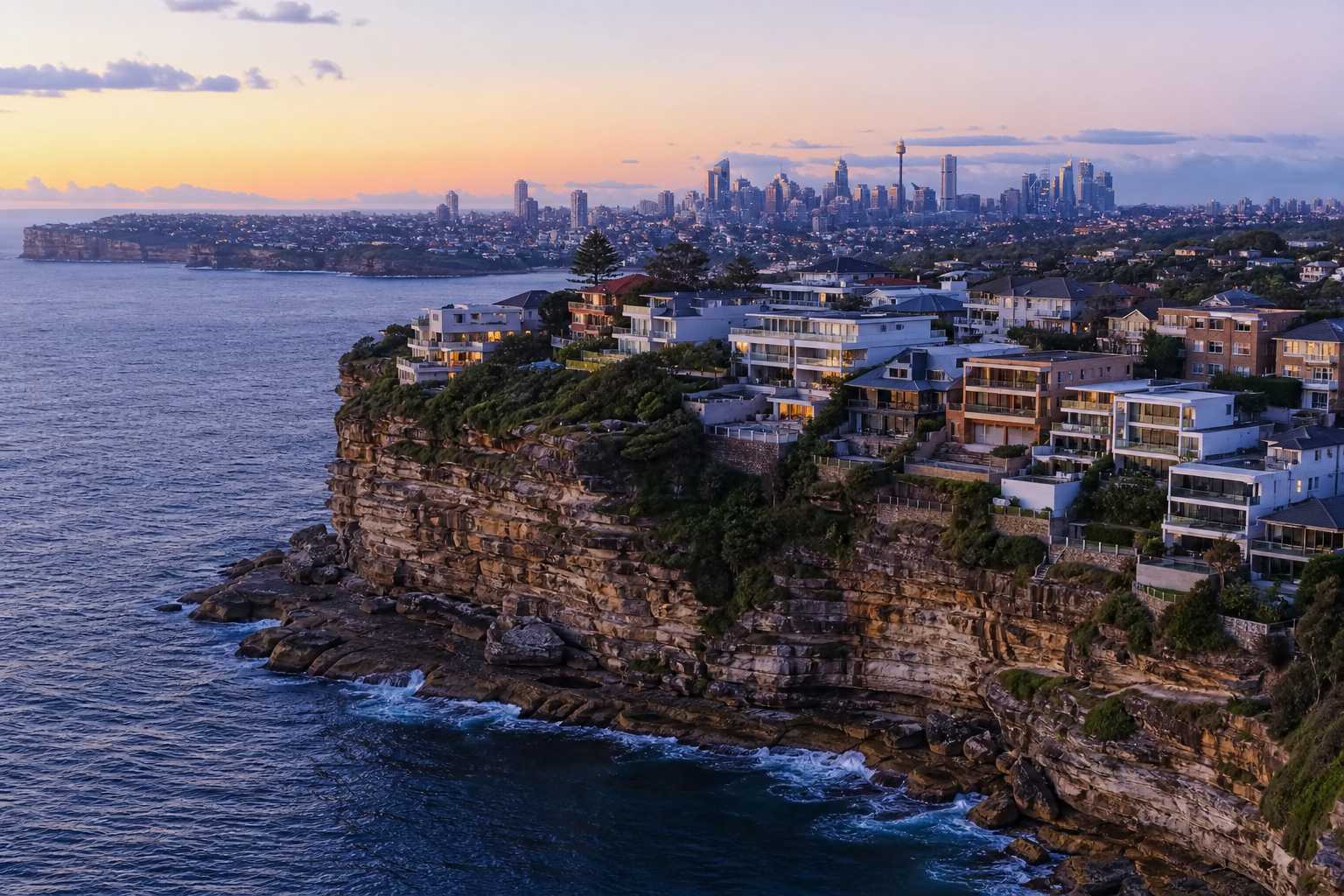
Dover Heights street with coastal homes and ocean views In Dover Heights, high property values and varied streetscapes make lender and valuation choice critical.


1. The real decision: who should you talk to this week?

When you strip away the marketing, you’re choosing between three broad options:

  1. A Dover Heights–focused local broker – independent, usually accredited with 20–40 lenders, and bound by Best Interests Duty for consumer loans.
  2. Your main bank – one lender’s products and policies, with staff not subject to Best Interests Duty.
  3. A non‑local or online broker/app – broader lender access than a bank, but often with weaker local valuation insight and less tailored structuring.

Quick rule-of-thumb

You probably lean local Dover Heights broker if:

  • You’re buying or refinancing a $2m–$6m home or investment locally.
  • You’re self‑employed, a professional with variable income or own a small business.
  • You expect to upgrade, convert a home to an investment, or build a portfolio over the next 5–15 years.
  • You’ve had a knock‑back or low valuation from a bank before.

You might lean your bank if:

  • You’re PAYG, borrowing at a low LVR (e.g. ≤60–70%).
  • Your income, property and plans are all straightforward.
  • Your current lender is already offering sharp pricing and you value simplicity over optimisation.

If you’re unsure, reading how local and non‑local options differ across the Eastern Suburbs more broadly in /insights/boutique-broker-vs-banks-eastern-suburbs and /insights/rose-bay-mortgage-broker-vs-banks-non-local will help you triangulate your situation.


2. How a Dover Heights-focused broker actually differs from your bank

A lot of people still think the main broker vs bank difference is just “who has the best rate”. That’s only one piece – and often not the decisive one.

2.1 Lender choice, policy fit and Best Interests Duty

Most established Australian mortgage brokers are accredited with roughly 20–40 lenders, including major banks, second‑tier banks and non‑banks (Fact 1). That means a Dover Heights broker can:

  • Match your income type (PAYG, self‑employed, trust distributions, bonuses) to lenders that treat it most generously.
  • Work around quirks like existing investment debt, HELP, car loans or business facilities.
  • Avoid wasting time with lenders whose credit policy will clearly say no (Fact 11).

By contrast, your bank can only ever offer its own products. If its policy doesn’t like your income, property type or postcode, the answer is effectively “no”, even if five other lenders would happily say yes.

Since 1 January 2021, brokers arranging consumer home loans must comply with a statutory Best Interests Duty, while bank staff are not (Fact 5; see /insights/mortgage-broker-myths-australia). Practically, this means a Dover Heights broker must be able to explain:

  • Why they shortlisted certain lenders for you.
  • Why they’re recommending one over another.
  • How it aligns with your long‑term goals, not just today’s rate.

Also important: broker commissions are built into lenders’ distribution costs whether or not you use a broker, so going straight to the bank rarely leads to a “cheaper because no broker” rate (Fact 8).

2.2 Local valuation know‑how in a clifftop market

Dover Heights is not a vanilla suburb. You have:

  • Dramatic clifftop and harbour views where small differences in outlook can shift value by hundreds of thousands.
  • Streets with very different buyer demand and depth.
  • Older homes with knock‑down potential beside high‑spec architectural builds.

In similar high‑value suburbs like Rose Bay, valuation outcomes and lender appetite for specific streets and buildings can materially change borrowing capacity and LVR‑driven costs like LMI (Fact 12). Dover Heights is no different.

A local broker who works these streets week in, week out will generally know:

  • Which lenders’ valuation panels tend to be more conservative or realistic here (Fact 15).
  • Where a desktop or kerbside valuation is likely to come in low – and when to push for a full internal inspection with better comparables.
  • How to frame the property’s features in the valuation request to support a fair market value.

A 3–5% valuation difference on a $3m Dover Heights property is $90k–$150k – enough to:

  • Push your LVR above 80% and trigger LMI.
  • Reduce or increase how much equity you can safely access.
  • Change which lenders will touch the deal at all.

2.3 Structuring for future upgrades, investments and tax

A local boutique broker is more likely to design loan structures that anticipate you later converting a home to an investment or adding properties, keeping deductible and non‑deductible debt clearly separated from day one (Fact 6; see /insights/boutique-broker-vs-banks-eastern-suburbs).

Done well, this looks like:

  • Separate splits for your current home, each investment property and any equity used for future deposits (Facts 17 and 18).
  • Clear labelling of each split by purpose (home, investment, business).
  • Offsets aligned with non‑deductible debt to prioritise cash savings in the right place.

For self‑employed owners or professionals running a practice, a broker who understands both residential and business lending can also structure separate loan splits for home, investment and business purposes to preserve future interest deductibility and flexibility (Fact 10; see /insights/specialist-support-self-employed-professionals-eastern-suburbs).

Many bank staff simply default to “one big loan” or put business and personal borrowings in the wrong bucket – fine in year one, costly by year ten.

Mortgage broker meeting Dover Heights clients in office A Dover Heights-focused broker can match your situation with lenders that understand local values.


3. Local Dover Heights broker vs non-local or online brokers

What if you’re already convinced you prefer a broker to a bank – does it really matter whether they’re local to Dover Heights?

In a word, yes.

3.1 Postcode knowledge and credit risk appetite

Different lenders look at postcodes differently:

  • Some see high‑value coastal suburbs as premium and resilient.
  • Others apply quiet internal caps or extra scrutiny because loan sizes are higher.

A Dover Heights‑focused broker will know from experience which lenders are:

  • Comfortable with $2m+ loans on owner‑occupied homes in 2030/2031 postcodes.
  • Edgy about certain property types (e.g. older apartments without parking, large sloping blocks near the cliff edge).
  • Faster or slower in turning around pre‑approvals for Eastern Suburbs postcodes.

Non‑local brokers or app‑based models often run on generic algorithms and national averages. That can produce conservative, mismatched results for Dover Heights borrowers compared with a broker who’s seeing local approvals – and declines – every week.

3.2 Managing valuation surprises, LVR and LMI

Most Australian lenders apply an interest rate buffer of at least 3 percentage points above the actual rate when testing serviceability (Facts 19 and 20). In a rising‑rate environment this can slash borrowing capacity, so a poor valuation can be a double hit:

  • You’re tested at a high buffer rate; and
  • The maximum loan is a percentage of a lower valuation.

A local broker can:

  • Pre‑empt which properties are likely to be problematic for certain valuers.
  • Suggest small changes – timing, lender sequence, loan structure – to keep your LVR below key thresholds (e.g. 80%, 70%).
  • Escalate or contest valuations more credibly with better local comparable sales.

In practice, this can be the difference between:

  • Buying the Dover Heights home you actually want; or
  • Having to downgrade to a different suburb, or inject more cash than planned.

3.3 Complex income and business needs

Dover Heights has a high concentration of:

  • Self‑employed professionals and business owners.
  • Partners in law, accounting and medical firms with profit share, bonuses and distributions.
  • Investors with trust structures and multiple properties.

A local broker who understands these patterns – and the specific banks that like them – can usually:

  • Translate your financials, tax returns and trust deeds into lender‑friendly language.
  • Position your case with lenders that give you maximum credit for your true income.
  • Avoid “computer says no” outcomes from non‑local brokers who misread your structure.

The detail of how this works for self‑employed borrowers in the east is unpacked in /insights/specialist-support-self-employed-professionals-eastern-suburbs. For Dover Heights, the stakes are simply higher because loan sizes and property values are larger.


4. When going straight to your bank still makes sense

Despite all that, there are situations where going to your bank first is reasonable.

4.1 Situations where a bank can be fine

Your existing lender can be a decent first port of call when:

  • You’re PAYG, no dependants, no other debts, and borrowing at a low LVR.
  • You’re taking a small top‑up for a renovation using existing equity and have no plans to invest or restructure.
  • You’ve already negotiated a sharp rate and mainly need a quick limit increase.
  • You’re time‑poor and comfortable that a “good enough” outcome is fine.

4.2 The hidden trade-offs

Even in those scenarios, be clear on the trade‑offs:

  • You’re getting one lender’s opinion on your borrowing capacity and risk.
  • You’re accepting their default view on structure, which may not suit later investments or tax planning.
  • You might miss better long‑term pricing or features elsewhere.

A pragmatic approach for many Dover Heights borrowers is:

  1. Ask your bank what they can do.
  2. Take those numbers to a local broker and say, “Beat or justify this.”

The guide /insights/benefits-using-mortgage-broker-australia walks through how a good broker adds value even when the first offer looks decent on paper.


5. How the choice plays out in real numbers

Concrete numbers help you see why lender and channel choice matters so much in Dover Heights.

5.1 Valuation and LVR example – upgrader buying in Dover Heights

Assume you’re upgrading to a $3.2m home in Dover Heights.

  • You have $800k cash/equity available for the deposit and costs.
  • You’re seeking a $2.4m loan.

If the valuation comes in at $3.2m:

  • LVR = $2.4m ÷ $3.2m = 75%.
  • You’re likely under 80%, so no LMI, and more lenders will compete for your business.

If a conservative valuer (used by Lender A) says it’s only worth $3.0m:

  • LVR = $2.4m ÷ $3.0m = 80%.
  • You may now be on the cusp of LMI and some lenders may apply tighter policy.

If a more locally informed valuer (used by Lender B) lands at $3.3m:

  • LVR = $2.4m ÷ $3.3m ≈ 72.7%.
  • More comfortable for the lender, more options for sharper pricing.

On a $2.4m loan at an indicative 5.8% p.a. P&I over 30 years, repayments are about $14,080 per month (illustrative only). If a stronger valuation opens up a lender at 5.5% instead, repayments drop to roughly $13,630 per month – a difference of about $5,400 per year.

A Dover Heights broker focused on managing valuation risk gives you a better shot at the higher, defensible valuation that keeps LVR and pricing in your favour.

5.2 Serviceability example – self-employed couple vs one bank

Imagine a self‑employed couple in Dover Heights:

  • Combined taxable income last year: $320k, but with add‑backs (depreciation, one‑off costs) their true cash flow is closer to $380k.
  • Existing home loan: $1.4m at 5.9%.
  • They want to borrow another $1.1m for an investment property.

Bank X, approached directly, tests serviceability at 3% above the actual rate, assumes conservative income, and declines the application.

A good local broker instead:

  • Places them with a lender that gives more credit for add‑backs and consistent multi‑year income.
  • Optimises existing debt by splitting the home loan and aligning offsets with non‑deductible portions.
  • Structures the new investment loan with interest‑only for the first 5 years (subject to appropriateness) to preserve cash flow.

Result: borrowing capacity improves enough for the $1.1m approval, even with the same APRA‑style buffer in place.

Stories like this are common in areas with many self‑employed professionals and business owners. If you recognise yourself here, weigh up whether a non‑specialist bank or broker will really do the heavy lifting; /insights/specialist-support-self-employed-professionals-eastern-suburbs explains what a specialist should be doing for you.


6. Local broker vs bank vs non-local broker: side-by-side

FactorDover Heights-focused brokerYour main bankNon-local / online broker
Lender options20–40 lenders, curated to your situation1 lender only20–40 lenders, but often generic selection
Best Interests DutyYes, for consumer home loansNoYes, for licensed brokers
Local valuation insightHigh – knows streets, valuers and buyer demandVariable, depends on staff experienceLow–medium, relies on generic data
Complex income handlingStrong if broker is a local specialistPolicy‑driven, less flexibleVaries widely, often process‑driven
Loan structuring for futureTypically strong in boutique local firmsOften basic (single loan, limited future planning)Varies; may not anticipate long‑term portfolio moves
Face‑to‑face accessEasy – local meetings or home visitsBranch dependentUsually digital only
Credit enquiriesOne targeted application across multiple lenders (Fact 13)One per bank approachedRisk of multiple enquiries if you “shop around” alone
Cost to youUsually paid by lender; no direct fee in most casesIncluded in bank pricingUsually paid by lender; some may charge extra fees

This table is a simplification, but it shows why Dover Heights borrowers with anything beyond a very plain PAYG loan usually tilt towards a strong local broker.

For more detail on what separates a good broker from an average one, and red flags to avoid, see /insights/signs-of-a-good-mortgage-broker-red-flags.


7. How to choose a Dover Heights broker you can actually trust

Not all brokers are created equal. You’re looking for quality and fit, not just a local postcode on their website.

7.1 Non‑negotiable traits

A high‑quality broker should (see /insights/signs-of-a-good-mortgage-broker-red-flags):

  • Start with your goals and timeframes, not products.
  • Explain how banks will see you – strengths, weaknesses and likely roadblocks.
  • Show a shortlist of lenders with pros and cons tailored to you.
  • Be transparent about how they’re paid and any additional fees.
  • Talk about future moves (upgrading, investing, downsizing) from day one.

Red flags include:

  • Rate‑only conversations with no discussion of structure, risk or strategy.
  • Pressure to borrow to your absolute maximum.
  • Rushed paperwork and little interest in your broader financial picture.

7.2 One-week action plan for Dover Heights borrowers

If you want to move this forward in the next seven days:

  1. Map your position – property values, loans, income, business interests, plans for the next 5–10 years.
  2. Call your bank for a rate review or rough borrowing estimate – purely as a reference point.
  3. Shortlist 1–2 local brokers who clearly work in Dover Heights and the Eastern Suburbs, not just “Sydney‑wide”.
  4. Use the question checklists in /insights/mortgage-broker-myths-australia and /insights/specialist-vs-generalist-mortgage-brokers to interview them.
  5. Choose the broker (or bank) who gives you the clearest explanation of your options and a written game plan, not just a rate quote.

You don’t have to lock into anything this week, but having those conversations will sharpen your decision dramatically.


FAQs: Dover Heights broker vs banks and non-local options

1. Is a Dover Heights mortgage broker more expensive than using my bank?

In most cases, no. For standard residential loans, brokers are usually paid by the lender and you don’t pay them directly. Those costs are already built into the bank’s distribution budget whether or not you use a broker, so going direct rarely produces a cheaper rate just for “cutting out the middle person”. Some brokers may charge a fee for very complex or commercial work – they should disclose this clearly upfront.

2. Can a local broker actually get better rates than my bank?

Sometimes yes, sometimes the real advantage is access and structure. Because brokers can compare 20–40 lenders, they can often find sharper pricing than what your bank is offering you as a walk‑in customer. Even when the headline rate is similar, a broker might recommend a lender with better long‑term discounts, offset features or policy that lets you borrow what you need without overstretching.

3. How does a local broker help with refinancing in Dover Heights?

A Dover Heights broker will start by checking whether your current lender can sharpen your rate and structure without needing a full refinance. If switching makes sense, they’ll manage the process with a preferred lender and valuation panel that understands local values. They should also run a proper breakeven analysis so you can see how long it takes savings to outweigh any costs like discharge fees, registration or LMI.

4. I’m self-employed in Dover Heights and my bank said no. Can a broker still help?

Quite possibly. Different lenders treat self‑employed income, add‑backs and company structures very differently, so a decline from one bank doesn’t mean everyone will say no. A specialist broker can recut your financials, highlight stable income trends and target lenders whose policies are more flexible with self‑employed borrowers. They can also separate business and home borrowings into clearer splits to preserve tax deductibility and future flexibility.

5. Do I need to meet a Dover Heights broker in person, or is online fine?

You don’t have to meet in person, but the broker should have deep local knowledge. Many local brokers work happily via video calls, email and phone, which suits busy professionals. The key is that they regularly write loans for Dover Heights and broader Eastern Suburbs properties and can talk confidently about typical values, lender appetite and local valuation patterns – not just generic national trends.

6. How early should I talk to a broker before buying in Dover Heights?

Ideally 3–6 months before you plan to purchase. That gives time to clean up any credit issues, restructure existing debts, and gather documents so your pre‑approval is strong. In a high‑value market like Dover Heights, early planning also lets your broker sense‑check your target price range against realistic borrowing capacity under today’s rates and APRA’s serviceability buffers, rather than relying on rough online calculators.


Key takeaways

  • In Dover Heights, the combination of high loan sizes, valuation sensitivity and complex incomes means a local, high‑quality broker will usually beat a bank or non‑local broker on overall outcome.
  • Your bank can still work for very simple, low‑LVR PAYG loans, but you’re accepting one lender’s view on pricing, policy and structure.
  • A Dover Heights broker adds value through lender selection, valuation management, smart structuring and long‑term planning, not just chasing a headline rate.
  • Non‑local and online brokers can access many lenders but often lack the postcode‑level insight that matters most in clifftop and harbour‑view suburbs.
  • The most effective next step this week is to test both your bank and one strong local broker, then choose the adviser who gives you the clearest, strategy‑driven plan.

If you live, work or invest in Dover Heights and want to stress‑test your current loans or a planned purchase, speaking with a broker who sees local deals every week can compress months of research into a single, clear conversation.

General advice only.

Frequently asked questions

In most cases, no. For standard residential loans, brokers are usually paid by the lender and you don’t pay them directly. Those costs are already built into bank pricing whether or not you use a broker, so going direct rarely makes the loan cheaper. Some brokers may charge a separate fee for very complex or commercial work, but they should disclose this clearly upfront.

Talk to a CPA-certified broker

Free consultation, plain-English advice tailored to your situation.

Your details are kept confidential. We’ll never share them.