
Ding Financial logo

Article

Should You Use a Rose Bay Mortgage Broker or Your Bank?

Weighing up a Rose Bay mortgage broker versus your own bank or a non‑local online broker? This guide explains the real trade‑offs on rates, valuations, borrowing capacity and long‑term strategy so you can decide who to speak to in the next week.

Published 28 May 2026Updated 28 May 202612 min read

Key Takeaway

This article explains when a Rose Bay-focused mortgage broker is a better choice than going direct to a bank or using a non-local online broker, especially given local median prices above $3m and APRA’s 3% serviceability buffer. It compares lender choice, valuation risk, complex income handling, and long-term structuring. The guide ends with clear, action-oriented checklists so Rose Bay borrowers can decide who to contact this week based on their goals and complexity.

Insights

Should You Use a Rose Bay Mortgage Broker…

D
Ding Financial

Should You Use a Rose Bay Mortgage Broker or Your Bank?

If you’re buying, refinancing or investing in Rose Bay, choosing between a local mortgage broker, your bank and non‑local online brokers can easily change your borrowing capacity, approval odds and long‑term flexibility. In suburbs with multi‑million‑dollar price tags, a Rose Bay‑focused broker who understands both local property and lender policy will usually give you a better outcome than going straight to one bank, while simple PAYG loans can still be fine with your existing lender.

Below is a practical comparison so you can decide who to speak to this week – and what to ask them.

1. What’s different about borrowing in Rose Bay?

Rose Bay is not a “standard” market in lender eyes. High prices, a mix of prestige houses and tightly‑held apartments, and a lot of self‑employed and professional borrowers all make the finance piece more nuanced.

1.1 High prices mean bigger loans and bigger mistakes

A modest family home in Rose Bay can easily sit in the $3m–$5m range. That flows straight through to loan sizes and lenders mortgage insurance (LMI) risk.

Consider a $3m purchase:

  • At 80% LVR, your loan is $2.4m and you’ll generally avoid LMI.
  • At 88% LVR, your loan jumps to $2.64m. Deposit is smaller, but LMI can easily run into tens of thousands of dollars.

As we’ve seen in other Eastern Suburbs work, even an 80% vs 88% LVR decision in a suburb like Rose Bay can mean a six‑figure difference in total cash outlay and LMI over time (src: /insights/first-next-home-strategies-rose-bay).

1.2 APRA buffers crunch borrowing capacity more in high‑priced areas

Australian lenders generally test your loan at an interest rate at least 3 percentage points higher than what you actually pay, in line with APRA’s guidance (src: /insights/mortgage-broker-process-step-by-step). On a large Rose Bay mortgage, that buffer bites hard.

A local broker who knows which lenders are relatively more generous for your income type can make the difference between:

  • Buying in Rose Bay this year, or
  • Settling for a cheaper suburb or waiting.

1.3 Local property quirks matter for valuation and approval

Rose Bay has:

  • Older apartments with varying strata quality.
  • High‑end renovations where cost doesn’t always match bank valuation.
  • Unique blocks close to the water, sometimes with corrosion or damp issues.

Just as buyers in Green Square often need a truly local broker who understands specific buildings (src: /insights/local-green-square-broker-building-knowledge), Rose Bay borrowers benefit from someone who knows which lenders and valuers are comfortable with:

  • Small blocks vs large complexes.
  • Older buildings with strong sinking funds.
  • High‑end fit‑outs and extensions.

1.4 Many Rose Bay borrowers have complex income

In Rose Bay you’ll find a high proportion of:

  • Self‑employed professionals and business owners.
  • Company directors with dividends and trust distributions.
  • High‑income PAYG professionals with bonus and equity components.

Different lenders treat that income very differently. One bank might shade your bonus to 60%, another might take 80–100% if the history is strong. A decline from one lender doesn’t mean all will decline (src: /insights/approval-odds-credit-policy-mortgage-brokers).

A broker who specialises in Eastern Suburbs self‑employed and professional clients can structure your application and loan splits with both tax and future borrowing in mind (src: /insights/specialist-support-self-employed-professionals-eastern-suburbs).
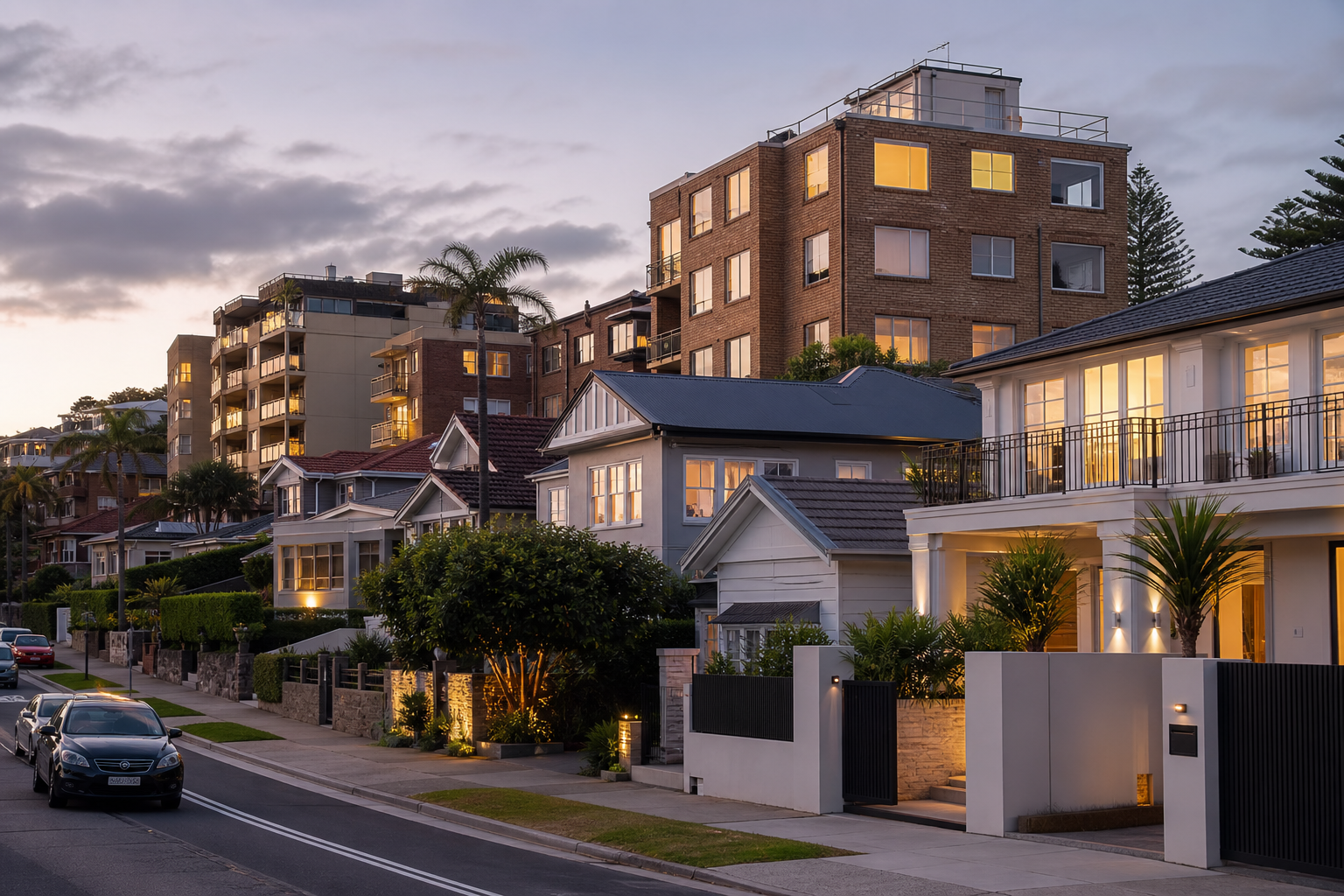
Rose Bay street with mix of houses and apartments Rose Bay’s mix of prestige homes and older apartments makes lender choice more nuanced.

2. Rose Bay mortgage broker vs your bank vs non‑local brokers

Let’s put the main options side‑by‑side.

2.1 Key differences at a glance

FactorRose Bay‑focused brokerYour bank (branch/online)Non‑local or online broker
Lender choiceAccess to ~20–40 lenders, tailored shortlist (src: /insights/signs-of-a-good-mortgage-broker-red-flags)One lender, one policyMultiple lenders, but may be more generic
Local property insightKnows Rose Bay price brackets, streets, blocks, valuersDepends on individual banker; often limitedUsually limited; relies on generic data
Complex income handlingRegularly works with self‑employed, trusts, company directors in the areaPolicy can be rigid; may not understand your structureVaries widely by broker; not always local‑market savvy
Valuation risk managementCan pre‑screen buildings/streets against lender appetite; choose valuer panels carefullyLittle control over valuer selectionSome control, but less building‑specific knowledge
Time and adminOne application, broker manages the legwork with multiple lendersYou manage everything, especially if you shop aroundBroker manages, but may miss local nuances
Long‑term structuringDesigns for future upgrades and investments in Eastern Suburbs (src: /insights/boutique-broker-vs-banks-eastern-suburbs)Often focused on this deal onlyDepends on broker’s skill and business model
Cost to youUsually paid by lender; must disclose commissionsIncluded in bank marginsUsually paid by lender; quality varies
Ongoing reviewGood brokers review annually and at key life eventsAd‑hoc, you usually have to chaseVaries; some are one‑and‑done

2.2 How banks think vs how local brokers think

A bank can only offer what’s on its own shelf. Even a good banker is constrained by one policy set, one appetite for Rose Bay postcodes, and their internal systems.

A Rose Bay‑focused broker is usually accredited with roughly 20–40 lenders (src: /insights/how-brokers-improve-rates-products-lenders). Their value is not just comparison – it’s matching your specific income, property and goals with the 2–3 lenders most likely to:

  1. Approve you under today’s policies and serviceability rules.
  2. Price you competitively for your risk profile.
  3. Support your next move (upgrade, invest, renovate) without having to unwind everything.

2.3 When the bank can still be fine

Your current bank may still be a reasonable first call if:

  • You’re PAYG with stable salary, minimal debts and strong surplus.
  • The loan is comfortably within your borrowing capacity even with the 3% buffer.
  • You’re buying well below your max budget, with at least 20% deposit.
  • You value simplicity and are not planning major changes (e.g. converting home to investment) any time soon.

Even then, it’s often smart to sense‑check the offer with a broker or at least understand what a wider lender panel could mean for you (see /insights/boutique-broker-vs-banks-eastern-suburbs).

3. Local Rose Bay broker vs non‑local or online brokers

You might be tempted by an online broker or a friend’s adviser from another city. The fee structure may look similar, but the local knowledge gap is real.

3.1 Valuations and building risk

In high‑value suburbs, valuation outcomes can determine whether your deal flies.

A Rose Bay‑focused broker will typically:

  • Know which buildings and streets have had valuation issues in the past.
  • Understand where banks have tightened policies due to cladding, construction, or flood/coastal risk.
  • Choose lenders whose valuer panels tend to be more realistic for certain property types.

A non‑local broker may not spot these issues until a valuation comes in low – which, in an off‑the‑plan or auction situation, can be disastrous.

3.2 Auction and negotiation support

Most Rose Bay homes sell by auction or private treaty with strong competition. A local broker will:

  • Coordinate pre‑approval timelines with realistic auction dates.
  • Stress‑test your limit at higher assessment rates so you don’t over‑commit.
  • Help your buyer’s agent or solicitor understand any finance constraints.

That’s harder to do from a call centre or with someone who doesn’t regularly work to Rose Bay auction rhythms.

3.3 Local portfolio strategy

If you plan to build a portfolio including Rose Bay, neighbouring Vaucluse, Bellevue Hill or Double Bay, local knowledge helps with:

  • Sequencing purchases and refinances so each property stands alone in its own loan split (src: /insights/equity-strategies-property-investors).
  • Avoiding over‑reliance on one bank for all securities, which can restrict future equity release.
  • Designing structures that work with local rental yields and land tax thresholds.

A non‑local broker might understand investment theory but miss how Eastern Suburbs specifics change the numbers.

Comparison between local broker, bank and online broker options Comparing a local broker, your bank and non-local brokers helps clarify this week’s best move.

4. Who should actually choose each option this week?

Let’s make this concrete. Below are typical Rose Bay scenarios and which option tends to work best.

4.1 First‑home buyers and upgraders in Rose Bay

You probably lean towards a local Rose Bay broker if:

  • You’re stretching to borrow close to your maximum under APRA’s 3% buffer.
  • You’re bidding at auction and need a realistic ceiling, not just a pre‑approval number.
  • You might convert this home to an investment in a few years and want the loan structured with that in mind (e.g. interest‑only period, offset account, clear split for non‑deductible debt).

A bank might be adequate if your numbers are simple, deposit is strong and you’re buying well within your means. Even then, use a guide like /insights/benefits-using-mortgage-broker-australia to sanity‑check the time and money trade‑offs.

4.2 Refinancers and repricing in Rose Bay

If your loan is already large – say $2m+ – even a 0.50% rate reduction can save thousands over a few years (src: /insights/how-to-tell-if-your-home-loan-rate-is-uncompetitive-2026).

A Rose Bay broker adds value by:

  • Testing multiple lenders at higher assessment rates to see who genuinely improves your position after costs.
  • Running a breakeven analysis for refinancing, dividing total switch costs (including any LMI and break fees) by annual savings (src: /insights/real-costs-of-refinancing-break-fees-lmi-gotchas).
  • Considering whether you might upgrade or invest soon, and ensuring today’s refinance doesn’t box you in.

If your current bank is already sharp and structure is clean, your broker may recommend simply repricing with your existing lender – and manage that for you.

4.3 Self‑employed and small business owners

This group almost always benefits from a specialist broker, ideally one who also places business and commercial lending.

A broker who understands both residential and business lending can:

  • Separate home, investment and business debt into distinct splits, preserving interest deductibility (src: /insights/specialist-support-self-employed-professionals-eastern-suburbs).
  • Present your financials in “lender language” to maximise usable income.
  • Choose lenders more comfortable with your industry and structure (company, trust, partnership).

Banks often struggle here. Policy is rigid, and bankers are rarely across both tax consequences and lending rules.

For more detail, see /insights/specialist-vs-generalist-mortgage-brokers – most Rose Bay self‑employed borrowers fall squarely into the “specialist is worth it” camp.

4.4 Investors and portfolio builders

If Rose Bay is part of a longer‑term investment plan, a local broker helps with:

  • Choosing lenders with favourable investment and interest‑only settings.
  • Keeping each property in its own, stand‑alone split so future sales or refinances are easy (src: /insights/investors-portfolio-builders-green-square-inner-south).
  • Managing equity releases safely, with each drawdown in a clearly labelled split by purpose (src: /insights/equity-strategies-property-investors).

Banks tend to look at each loan in isolation and may cross‑collateralise properties, which can be painful to unwind later.

5. How a Rose Bay‑focused broker actually works with you

Working with a good broker should feel structured, not salesy. Most quality engagements follow six stages (src: /insights/mortgage-broker-process-step-by-step):

5.1 Discovery

You explain your goals in plain English: buy, upgrade, refinance, renovate, invest. A good broker starts with questions about your life plans, not product features.

5.2 Fact find

You provide income documents, existing loan statements, basic expenses. The broker translates this into lender format, taking into account benchmark expenses like HEM plus your real lifestyle.

5.3 Strategy and lender selection

The broker:

  • Runs borrowing capacity across multiple lenders with the APRA buffer applied.
  • Designs loan splits (home vs investment, offset vs redraw, P&I vs IO).
  • Shortlists 2–3 lenders from their 20–40+ panel, and explains why.

5.4 Pre‑approval

For purchases, they obtain a written pre‑approval, making clear it’s not an absolute guarantee – income, rates and policies can change (especially if you’re buying off‑the‑plan).

5.5 Formal approval and settlement

They manage valuation, conditions and lender queries, then coordinate with your solicitor/conveyancer through to settlement.

5.6 Post‑settlement review

Good brokers will:

  • Check in annually and when your situation changes.
  • Review rates and structure when RBA cash rate cycles shift.
  • Help assess when to fix, reprice or refinance without over‑trading your loans.

For a fuller walkthrough of the process, see /insights/mortgage-broker-process-step-by-step.

6. What to ask a potential Rose Bay broker (or your bank)

Before you commit, you want to know you’ve found a high‑quality adviser. Use these questions this week.

6.1 Questions for any broker

  • How many lenders are you accredited with, and which do you use most for Rose Bay clients like me?
  • How do you get paid, and do any lenders pay you more than others?
  • What’s your plan if my preferred lender declines – who’s next and why?
  • How will this structure work if I convert my home into an investment in 5–10 years?

Compare their answers with the checklist in /insights/signs-of-a-good-mortgage-broker-red-flags.

6.2 Extra questions for banks and non‑local brokers

For your bank:

  • What other lenders have sharper policies or pricing for a profile like mine – and why are you still best?
  • How will you help if I want to build a portfolio across Rose Bay and nearby suburbs?

For non‑local brokers:

  • Which Rose Bay buildings and streets have you had valuations on in the last 12 months?
  • What are the common valuation issues you see in Rose Bay – and how do you manage them?

7. Worked examples: why local structuring matters in Rose Bay

Let’s tie this together with a couple of simplified scenarios.

7.1 Upgrader buying a $3m home

  • Purchase price: $3,000,000
  • Option A – conservative: 80% LVR loan = $2,400,000
  • Option B – stretch: 88% LVR loan = $2,640,000

Assume (illustrative only):

  • Rate: 5.8% p.a. P&I over 30 years
  • LMI at 88%: say $60,000–$70,000 (broad indication, actuals vary by lender)

Monthly repayments (approx.):

  • $2,400,000 @ 5.8% over 30 yrs ≈ $14,070/month
  • $2,640,000 @ 5.8% over 30 yrs ≈ $15,480/month

Difference: ~$1,410/month plus the one‑off LMI.

A local broker will walk you through:

  • Whether your budget can safely absorb the higher repayment under APRA’s buffer.
  • Whether paying LMI makes sense to get in sooner, or if renting another year in Rose Bay and saving a bigger deposit is safer.
  • How to set up offsets and splits so, if this becomes an investment later, you’ve maximised future deductibility.

7.2 Self‑employed buyer with company and trust

Assume:

  • Rose Bay townhouse purchase: $2.4m
  • You draw salary, dividends and trust distributions.

A bank may:

  • Ignore parts of your income, or average down due to one softer year.
  • Decline because their policy doesn’t like your industry.

A specialist Eastern Suburbs broker may instead:

  • Present two full years of company and trust financials, normalising one‑off expenses.
  • Choose a lender who looks at your full group position and retains more of your income for serviceability.
  • Structure: one split for owner‑occupied P&I with offset, separate split if you plan a later business‑purpose equity release.

Outcome: higher usable borrowing capacity, more appropriate repayments, and clearer tax treatment.

7.3 Investor releasing equity from a Rose Bay unit

Assume:

  • Existing Rose Bay unit value: $1.6m
  • Current loan: $900k (56% LVR)

You want to release equity for a second property. A local broker may recommend:

  • Capping total LVR at 80% to avoid LMI – so max lend ≈ $1.28m.
  • Available equity ≈ $380k before costs and buffers.
  • Setting up a new, separate split for the equity release, labelled “Investment deposit and costs”.

Most lenders still assess this at a rate at least 3% above the actual rate (src: /insights/releasing-equity-from-your-home-safely). A good broker will:

  • Test borrowing capacity under that buffer.
  • Ensure the new split is stand‑alone and not mixed with personal spending, preserving deductibility and refinancing flexibility later (src: /insights/equity-strategies-property-investors).

Key takeaways

  • In a high‑value suburb like Rose Bay, small differences in structure, lender choice and valuation handling can easily add up to six figures over time.
  • A Rose Bay‑focused broker usually beats a single bank for complex incomes, tight borrowing capacity, and long‑term portfolio plans.
  • Banks can still be fine for simple, well‑within‑capacity PAYG loans where you value simplicity over optimisation.
  • Non‑local or online brokers often miss building‑specific and valuation nuances that matter in Rose Bay.
  • Use targeted questions and a one‑week action plan to decide who you’ll actually call and what you want from them.

If you’re weighing up your options for a Rose Bay purchase, refinance or investment, the next practical step is a structured chat with a broker who works this postcode every week – with your most recent statements, tax returns and a rough property budget in hand.

General advice only.

Frequently asked questions

For most Rose Bay borrowers with more than a very simple PAYG situation, a good local broker is usually better than going straight to one bank. They can compare multiple lenders, manage valuation risk on high-priced properties, and structure your loan for future upgrades or investments. Banks can still work for plain vanilla loans where you’re well within capacity and value simplicity over optimisation.

Talk to a CPA-certified broker

Free consultation, plain-English advice tailored to your situation.

Your details are kept confidential. We’ll never share them.