
Article
Off-the-Plan Apartment Finance: What Happens From Contract to Keys
Clear, step‑by‑step guide to how off‑the‑plan apartment finance works from contract to settlement, including approvals, valuations, buffers and what to do if things change before completion.
Key Takeaway
Off-the-plan apartment finance in Australia runs through four key stages: pre-approval, contract and deposit, the build/wait period, and final approval plus settlement, with lenders reassessing income, debts and property value shortly before completion. Because build times can stretch 18–36 months and APRA’s 3% serviceability buffer applies, borrowers must plan for higher rates and possible valuation shortfalls. The actionable step is to treat the build period as preparation time: reduce debts, build cash buffers, and line up a backup lender or structure early.
Watch the short answer
Can I get a home or business loan with a 12‑month-old business?
Working through off‑the‑plan steps and timeframes? This video shows how lenders look at newer business income when assessing a loan.
Read the transcript
Started a wildly successful business 12 months ago? The bank still thinks you're a startup risk. The standard institutional rule is that you need 2 full years of ABN history to get a mortgage, but if your cash flow is booming right now, you shouldn't have to wait another 12 months to buy a house. At Local Knowledge Finance, we have access to specialist alt doc lenders who will approve your loan with just 6 to 12 months of ABN registration and clean bank statements. Your success shouldn't be penalised by arbitrary timelines. DM me the word 'BUSINESS' to bypass the 2-year rule.
General information only, not personal advice. Your situation is assessed before any recommendation.

This topic is covered in full on Tailored Loans Sydney
Clear, step‑by‑step guide to how off‑the‑plan apartment finance works from contract to settlement, including approvals, valuations, buffers and what to do if things change before completion.
Read the full guide on tailoredloans.sydneyOff‑the‑plan apartment finance works in four stages: pre‑approval, contract and deposit, the build/wait period, then final approval and settlement funding. Your early pre‑approval is not a binding promise — lenders will recheck your income, debts, living costs (using HEM) and the final valuation shortly before settlement, using the current interest rate plus at least a 3% APRA buffer. The smart move is to use the build time to prepare, not to relax.
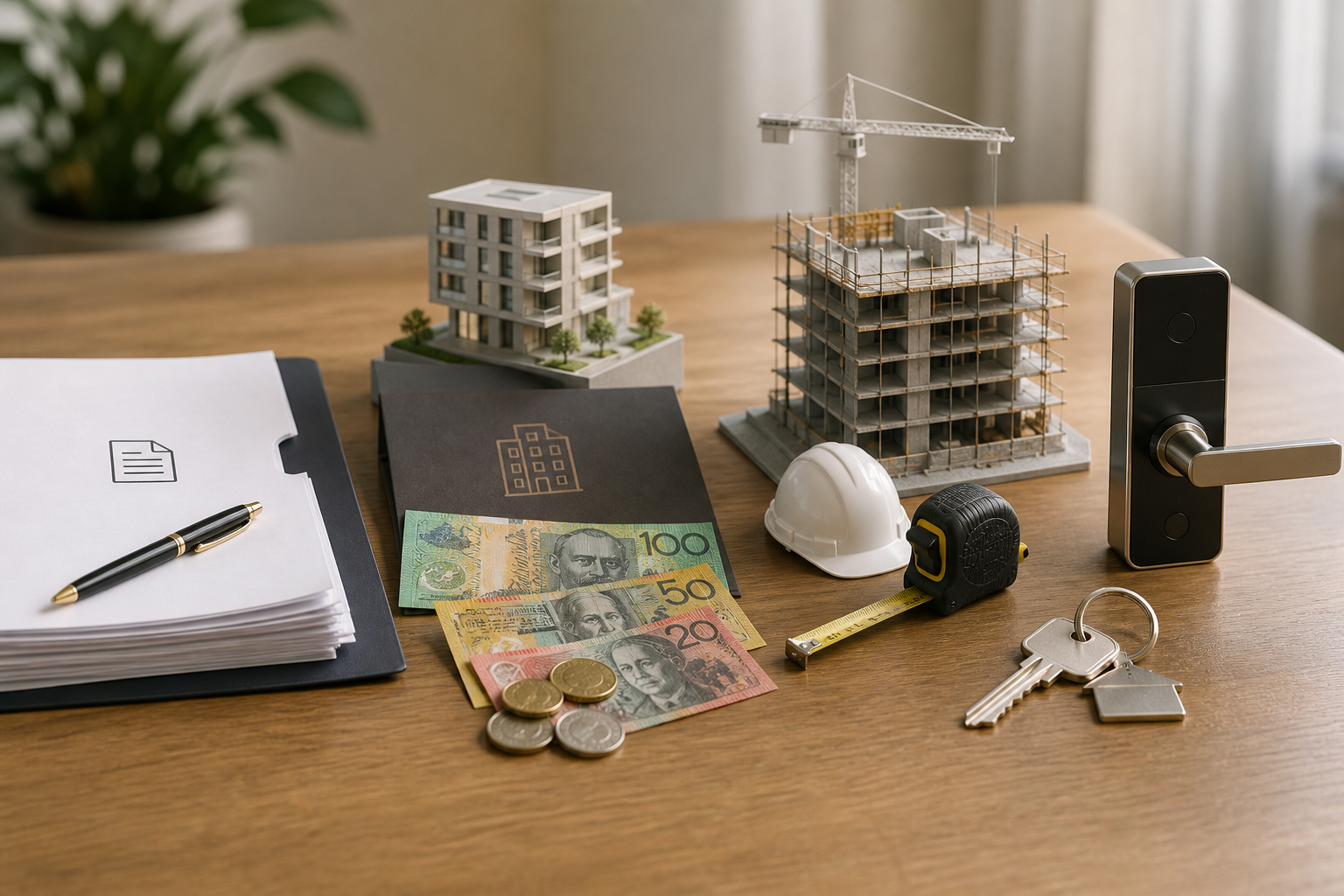
The four finance stages from contract to settlement
1. Pre‑approval before you sign
You want a written pre‑approval from a mainstream lender before paying a 5–10% deposit.
Most lenders will:
- Run a full credit check.
- Test your income and debts with a 3% serviceability buffer.
- Apply a minimum living expense benchmark (HEM).
For example, if today’s rate is 6.2% p.a., the lender may test your repayments at ~9.2% over 30 years.
On a $800,000 purchase (90% LVR loan of $720,000), that’s a tested repayment of roughly $5,900–$6,200 per month (principal and interest), even if your actual starting repayment is lower.
Pre‑approval usually lasts 60–90 days. For long builds, it will expire, but it still tells you what is roughly affordable.
If you know your income might change before completion, pair this with a plan from /insights/locking-in-finance-income-change-before-off-the-plan-settlement.
2. Signing the contract and paying your deposit
Once pre‑approved and your solicitor has reviewed the contract, you:
- Sign the off‑the‑plan contract.
- Pay the deposit (often 5–10%, sometimes via a deposit bond/bank guarantee).
- Lock in your sunset date and estimated completion.
Key finance points at this stage:
- Your loan isn’t formally approved yet. You’re committing to buy in the future.
- Deposit is usually held in trust until settlement.
- If values fall or your situation changes, you still must settle — or risk losing your deposit and being sued for losses.
This is where a short joint call between broker, solicitor and accountant can prevent ugly surprises later, particularly around tax structure and exit options (see /insights/broker-solicitor-accountant-off-the-plan-team).
3. The build / waiting period (12–36 months)
This period is where most buyers either quietly de‑risk… or sleepwalk into trouble.
During the build:
- Your original pre‑approval will lapse.
- Interest rates, APRA rules and your income can all change.
- Construction costs and market prices can move a lot (ABS producer price data shows strong building‑related cost pressure in recent years).
Use this time to:
- Reduce bad debts (credit cards, personal loans, HECS where sensible).
- Keep living expenses tight so you look good against HEM.
- Build a cash buffer in savings/offset — aim for at least 3–6 months of loan repayments and essentials.
- Keep your tax returns and BAS up to date if you’re self‑employed.
If you’re planning to rentvest with the new apartment, think about structure now so you can keep home and investment debt cleanly separated: /insights/rentvesting-green-square-off-the-plan-loan-structures.
The strategy continues below
You've seen the problem and the groundwork — now unlock the exact steps our CPA and Registered Tax Agent-led brokers use, including 3 more sections. Enter your email for instant, free full access.
Free access. No spam — unsubscribe anytime. Your details stay confidential.
Frequently asked questions
When should I talk to a broker about off-the-plan finance?▾
How close to completion will the bank do the final valuation?▾
Can I change lenders between contract and settlement?▾
Request a strategy call
Confidential consultation with a triple-qualified advisor — commercial, SMSF, equipment and development finance.