
Ding Financial logo

Article

Using the First Home Guarantee to Buy Off-the-Plan: A Practical Guide

Yes, you can use the First Home Guarantee for an off-the-plan apartment, but strict timing, valuation and lending rules mean you must structure your deposit and finance carefully. This guide shows you how to do it safely.

Published 16 May 2026Updated 16 May 202615 min read

Key Takeaway

Eligible Australian first-home buyers can use the First Home Guarantee (FHBG) to purchase off-the-plan apartments, provided they meet income and property price caps and the dwelling is ready to move into within set timeframes. The scheme allows as little as a 5% deposit without traditional LMI on up to 95% LVR, but valuation shortfalls and build delays can quickly increase the cash needed at settlement. Buyers should model best‑ and worst‑case numbers early, maintain borrowing capacity through construction, and get lender‑specific advice before signing a contract.

Using the First Home Guarantee to Buy Off-the-Plan: A Practical Guide

Yes, eligible first-home buyers can use the First Home Guarantee (FHBG) to buy an off-the-plan apartment in Australia, but only if the project meets strict timing rules, price caps and owner‑occupier conditions set by Housing Australia. The FHBG lets you buy with as little as a 5% deposit and avoid traditional Lenders Mortgage Insurance (LMI), yet off-the-plan adds extra risks around valuation, build delays and your future borrowing capacity.

This guide walks through how the FHBG works for off-the-plan, what can go wrong, and the exact steps to make a decision you can act on this week.
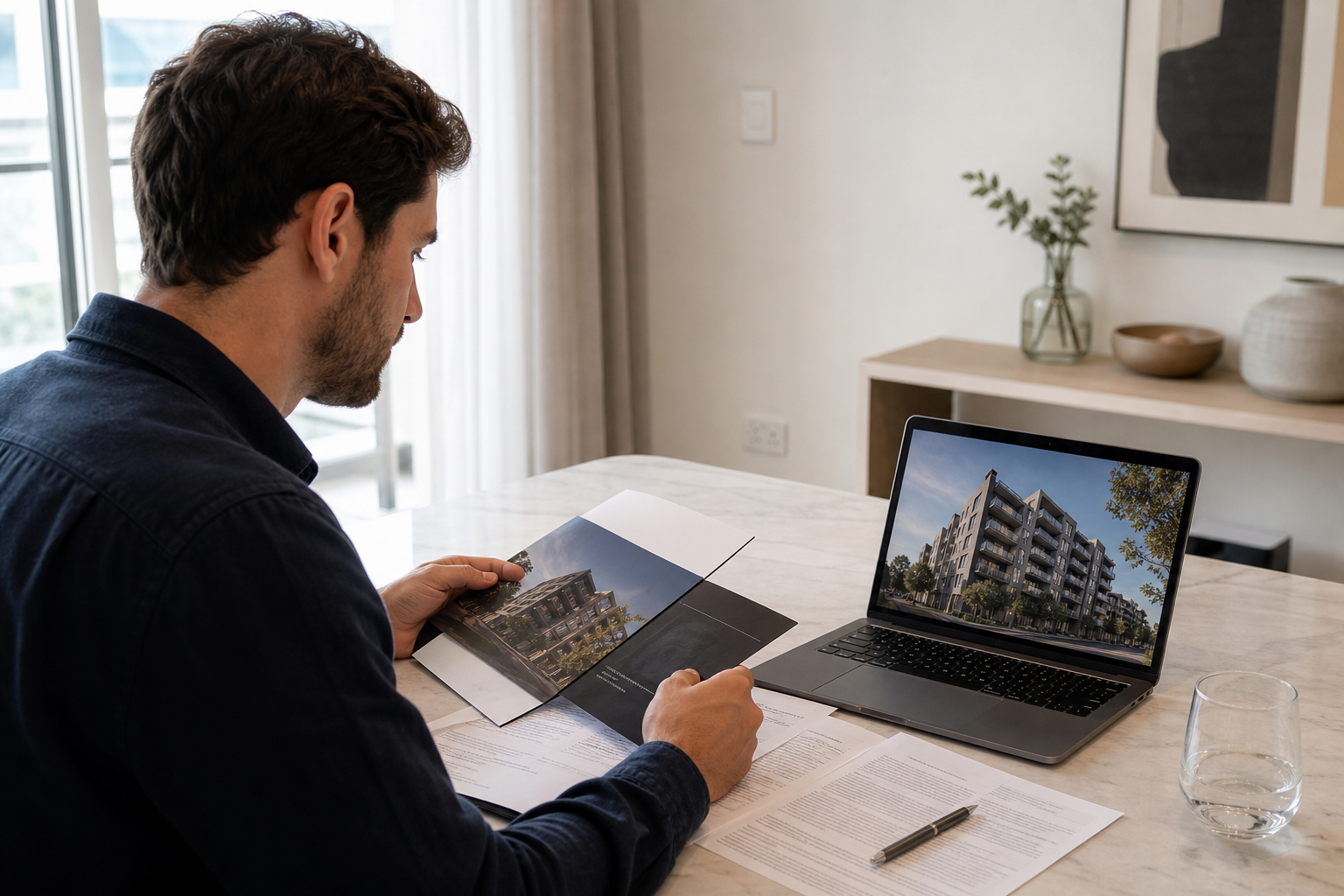
First-home buyer reviewing off-the-plan apartment documents Before you sign anything, understand how the First Home Guarantee interacts with your off-the-plan contract.

1. Quick recap: how the First Home Guarantee actually works

Before you add off-the-plan into the mix, you need a clean picture of the scheme itself.

1.1 What is the First Home Guarantee?

The First Home Guarantee is part of the federal Home Guarantee Scheme, administered by Housing Australia. It allows eligible first‑home buyers to purchase with as little as a 5% deposit, with the government guaranteeing up to 15% of the property value so you can avoid paying traditional LMI.

Key features (indicative, and subject to change):

  • Minimum deposit: normally 5% of the property price (genuine savings usually preferred).
  • Maximum loan-to-value ratio (LVR): up to 95% (your 5% + 15% government guarantee).
  • Owner‑occupier only: you must live in the property; it’s not an investor scheme.
  • No prior property ownership: with some limited exceptions (e.g. certain relationship breakdowns or past ownership more than a set time ago, depending on current rules).
  • Income caps: combined or single income limits apply, which change over time.
  • Price caps: property price caps vary by state and region and are updated periodically.

Using the FHBG can meaningfully shorten your savings time, because you don’t need a full 20% deposit and you avoid traditional LMI premiums that can easily run to many thousands of dollars (facts 1, 2).

1.2 Who can use it – including self-employed buyers

In most cases you’re eligible if:

  • You’re an Australian citizen or permanent resident
  • You haven’t owned property in Australia in the recent past
  • Your income is under the scheme’s cap for your situation
  • You’re buying within the price cap for your area
  • You intend to live in the property as your home

Self-employed first-home buyers can generally access FHBG places if they meet the same income and property rules and can document their income properly (fact 3). Most lenders want two years of tax returns for self-employed borrowers, though some will look at a strong single year (fact 13).

If you run a small business, it’s worth reading /insights/first-home-buyer-small-business-owner-guide in parallel with this guide.

1.3 What types of property are allowed?

Under current rules, the FHBG can usually be used for:

  • Existing dwellings
  • Newly built homes
  • House-and-land packages
  • Land with a separate construction contract
  • Off-the-plan apartments or townhouses

Each category has slightly different timing rules, especially around when the dwelling must be completed and when you must move in. Those rules really matter for off-the-plan and we’ll unpack them next.

2. Can you actually use FHBG for an off-the-plan apartment?

2.1 The simple answer

Yes – the First Home Guarantee can be used to buy off-the-plan in Australia, if:

  1. The apartment price is under your area’s FHBG cap
  2. You meet income and eligibility rules
  3. The project completion timeframe fits within the scheme’s rules
  4. A participating lender is comfortable with the specific development

That means your off-the-plan contract and build schedule must line up with the scheme rules and the lender’s risk appetite – not just your deposit.

2.2 Timing rules for off-the-plan under FHBG

Housing Australia sets specific timeframes for off-the-plan purchases. While the exact wording can change, the structure is broadly:

  • You sign an off-the-plan contract and pay your deposit now
  • The building must be completed and ready to move into within a set window (often around 24 months from signing, but you must check current rules)
  • You must move in within a defined period after settlement (commonly around six months)

If the build drags on beyond the allowed timeframe or your plans change so you no longer intend to live there, you may no longer meet scheme rules – and the lender may not be able to keep your FHBG place.

2.3 How lenders “reserve” your place in the scheme

Banks and other participating lenders get a fixed allocation of FHBG places each year. When they submit your application as an FHBG borrower, they’re effectively reserving one of those places for you.

With off-the-plan, the practical challenges are:

  • The place must align with the build timeline. Lenders have to follow Housing Australia’s deadlines for when the guarantee activates.
  • You still need to qualify at settlement. A pre‑approval today doesn’t guarantee final approval when the building completes (facts 6, 10).
  • Scheme rules can change over multiple years. Your existing reserved place is generally honoured, but lenders will be careful about long, uncertain projects.

This is why some lenders are happier with off‑the‑plan than others, even under the same FHBG rules.

2.4 Off-the-plan is still assessed under normal credit rules

Even with the guarantee in play, your loan is assessed like any other home loan:

  • Income, debts and living expenses (often benchmarked against HEM)
  • A serviceability buffer, typically at least 3 percentage points above the actual rate (facts 7, 9)
  • Credit history and conduct on existing debts
  • The developer, location and project risk (fact 12)

If you’re not sure where you stand today, it’s worth reading /insights/off-the-plan-finance-basics-eligibility alongside this article.
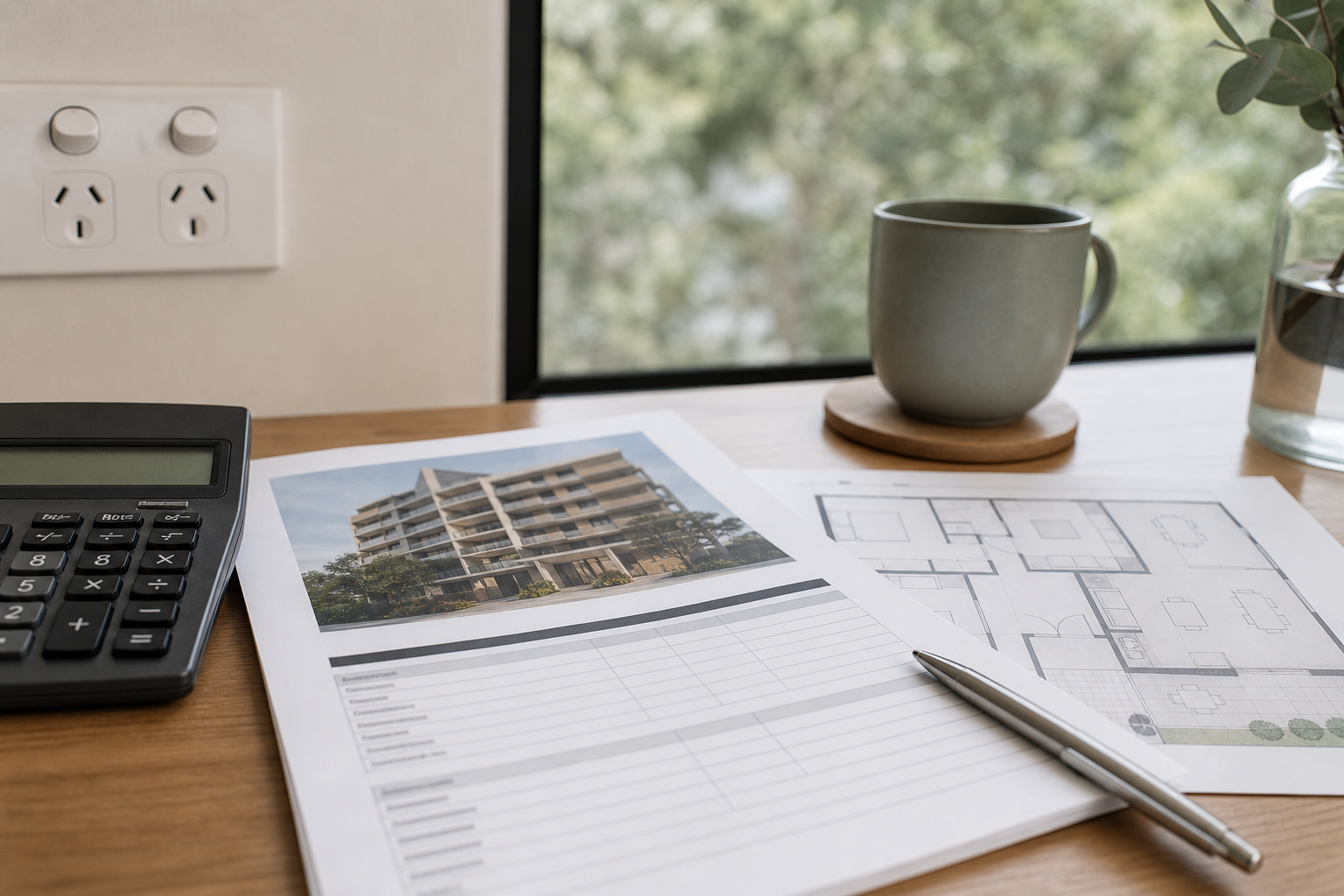
Calculating valuation and deposit needs for off-the-plan Valuation at completion, not just contract price, drives how much you can borrow under the FHBG.

3. Extra risks when you mix FHBG with off-the-plan

Using the FHBG doesn’t automatically make off-the-plan risky. The real risk is how much can change between the day you sign and the day you settle.

3.1 Valuation risk: what if the finished apartment is “worth less”?

When you buy off-the-plan, the bank’s final loan is based on the lesser of:

  • Your contract price, and
  • The bank’s valuation at completion

If the final valuation is lower than your contract price, your effective LVR jumps (facts 8, 11). With an FHBG, there’s a hard ceiling around 95% LVR.

Example: valuation shortfall with FHBG

  • Contract price today: $700,000
  • FHBG purchase with 5% deposit: $35,000
  • Government guarantee: up to 15% ($105,000)
  • Target loan at settlement: 95% of price = $665,000

If the valuer decides the finished unit is only worth $660,000:

  • Max loan at 95% LVR is now 95% × $660,000 = $627,000
  • Your original 5% deposit is still only $35,000
  • Total funds available (loan + deposit) = $627,000 + $35,000 = $662,000
  • But you owe the developer the full $700,000

You’re $38,000 short, plus you still need to cover stamp duty and other costs.

In that situation, your choices are typically:

  • Find extra cash or equity
  • Try a different lender and valuation
  • Renegotiate with the developer
  • Seek legal/tax advice about exiting the contract

See /insights/off-the-plan-valuation-shortfall-what-to-do-next for a deeper playbook if you’re already facing a shortfall.

3.2 Build delays and scheme timeframes

Off-the-plan projects frequently run late. If the delay pushes completion beyond the FHBG’s allowable window, your reserved place may no longer comply with scheme rules.

That can mean:

  • The lender can’t use the guarantee at settlement
  • Your loan reverts to a standard 95% LVR loan with traditional LMI – or is declined
  • You may need a bigger deposit than you planned, or a different strategy altogether

This is why long sunset dates and “to be advised” completion timeframes should ring alarm bells if you’re relying on the FHBG.

3.3 Your borrowing power might shrink while the building goes up

From signing contract to final approval, several things can reduce your borrowing capacity:

  • Interest rates rise, and the 3% serviceability buffer is applied to a higher rate
  • Your income falls or becomes less stable
  • You take on new debts (car loan, credit card, HECS indexation grows)
  • Lender or APRA rules tighten

Your FHBG place doesn’t override these. The lender must still confirm you can afford the loan under current rules at settlement.

The checklist in /insights/off-the-plan-home-loan-eligibility-checklist is designed to help you keep yourself “finance-ready” during a long build.

3.4 Developer and project risk

Even under FHBG, lenders can and do say no to certain projects because of:

  • Oversupply in the area
  • Very small units or unusual layouts
  • High investor concentration in the building
  • Concerns about the developer’s track record or finances

With FHBG off-the-plan, you’re choosing both a property and a project that must pass lender scrutiny. Never assume “if I can pay the mortgage it’ll be fine” – the lender has to be comfortable too.

4. How much deposit do you really need for FHBG off-the-plan?

On paper, the FHBG lets you buy with a 5% deposit plus costs. Off-the-plan, that’s rarely a safe minimum.

4.1 The theoretical minimum

In a textbook FHBG off-the-plan scenario you’d need:

  • 5% of the purchase price as your cash deposit
  • Stamp duty and legal costs (which can’t usually be added to the loan under FHBG)
  • A small buffer for lender, conveyancing and strata inspection fees

For a $700,000 apartment:

  • 5% deposit = $35,000
  • Stamp duty (NSW, first-home buyer, no concession) ≈ $26,000–$28,000 (indicative only)
  • Legal and other costs ≈ $3,000–$4,000

You’re looking at around $65,000–$70,000 in cash, even under FHBG, before allowing for any valuation or settlement surprises.

4.2 A more realistic buffer for off-the-plan

Given valuation and timing risks, most buyers are safer aiming for:

  • 5–8% deposit saved before signing, plus
  • A plan to keep saving during construction (e.g. an extra 2–5% of the contract price), plus
  • A buffer for moving costs and basic furnishing

If the valuation is fine and the build runs on time, that extra cash simply becomes:

  • A lower loan amount, and/or
  • An emergency buffer in your offset account

4.3 Comparing deposit paths for the same apartment

Let’s compare a $700,000 apartment using three different paths.

ScenarioDeposit at exchangeFHBG / LMILoan at settlement (approx.)ProsCons
A. 20% deposit, no scheme$140,000 + costsNo FHBG, no LMI$560,000Strong equity, low risk of valuation issuesLong savings time, harder for first-home buyers
B. 10% deposit + LMI$70,000 + costsTraditional LMI payable~$630,000Faster into market, more lendersLMI can cost $15k–$25k+, tighter servicing
C. 5% deposit + FHBG (off-the-plan)$35,000 + costsGovt guarantee up to 15%~$665,000Lowest deposit, no traditional LMIMore sensitive to valuation drops, must meet scheme & timing rules

This is why many first-home buyers in markets like Sydney choose between 5% with a guarantee, 10% with LMI, or the longer road to 20% (fact 5). For a 2026 Sydney context, see /insights/navigating-sydney-first-home-buyer-market-2026.

5. Step-by-step: structuring your FHBG off-the-plan purchase

Here’s what to do, in order, if you’re seriously considering an off-the-plan apartment using the First Home Guarantee.

5.1 Before you pay any holding deposit

  1. Map your numbers today.
    • Current savings and how much of that you’re prepared to commit
    • Realistic monthly repayments at today’s rates plus a 3% buffer
  2. Check your eligibility.
    • Income under FHBG cap?
    • Buying under price caps for your region?
    • No recent property ownership?
  3. Speak to a broker or lender about FHBG and off-the-plan specifically.
    • Not all participating lenders use the scheme the same way for off-the-plan
    • Ask directly: “Would this project qualify under FHBG with your credit policy?”

If you’re self-employed or a small business owner, line this up with the documentation and timing tips in /insights/first-home-buyer-small-business-owner-guide.

5.2 When you’re ready to reserve a unit

Once you have an indicative lender and you know the project is broadly acceptable:

  1. Negotiate terms in the contract.
    • Sunset date and completion timeframe realistic under FHBG rules
    • Finance clause that gives you enough time for FHBG assessment
  2. Confirm deposit structure.
    • How much is required at exchange? (Typically 10%, but sometimes negotiable)
    • Will part of that be a deposit bond or bank guarantee, and does your FHBG lender accept that?
  3. Get FHBG pre-approval aligned with that specific project.
    • Generic pre-approvals aren’t enough; you want the lender looking at this building

5.3 During the build: keeping yourself “finance-stable”

Over the 12–24 months of construction, your job is to protect your borrowing capacity:

  • Keep your income as stable as possible
  • Avoid taking on new personal debts or Afterpay-style facilities
  • Keep saving towards a higher buffer in case of valuation issues
  • Watch your credit file – no late payments, no unnecessary new credit enquiries

Most lenders reassess your full situation near settlement (facts 6, 10). That means behaving like your loan is “under assessment” the whole time the building is going up.

5.4 Three to six months before completion

As you approach completion:

  1. Trigger an updated assessment and valuation with your lender.
    • Check if the FHBG place is still in play and the project still acceptable
  2. Stress test the numbers yourself.
    • Re‑run your budget at current interest rates plus the 3% buffer
    • Confirm you can handle strata, utilities and emergency costs
  3. Have a Plan B for valuation shortfall.
    • Extra savings
    • Family assistance (if appropriate)
    • Willingness to switch lender if needed

If the numbers no longer work, early action gives you more options to renegotiate or redesign your plan before you’re days away from settlement.

6. FHBG vs no guarantee for off-the-plan: which is right for you?

6.1 When FHBG off-the-plan can make sense

FHBG plus off-the-plan can work well if:

  • You’re confident in stable or rising income over the build period
  • You’re buying in a location with solid owner‑occupier demand, not just investors
  • The developer has a strong track record and realistic timelines
  • You have a plan to keep saving during construction

This path can suit:

  • Singles or couples who want to get into an area that’s out of reach with a 20% deposit
  • Professional women with solid careers but limited time to “fix up” older stock (see /insights/home-loans-single-professional-women-guide)
  • Self-employed buyers with well‑documented income and good cash buffers

6.2 When you should be more cautious

Be extra careful combining FHBG with off-the-plan if:

  • Your income is variable or contract‑based
  • You’re already near the top of your borrowing capacity
  • You have limited savings capacity to build buffers during construction
  • The project has a very long or vague completion timeframe

In these cases, you may be better off:

  • Buying an established dwelling with FHBG (less timing and valuation uncertainty), or
  • Waiting and building a larger deposit, then buying with 10–20% deposit and no scheme

6.3 Thinking ahead to refinancing

Many first-home buyers use FHBG or other schemes to get in, then revisit their loan once they’ve built some equity and income has grown (facts 15, 19).

If you buy off-the-plan with FHBG, it’s worth planning to:

  • Review your rate and lender options after 2–3 years
  • Consider refinancing to sharpen your rate or improve features like offset
  • Keep your home loan clearly separate from any future investment or business borrowings (facts 16, 18)

7. A one-week action plan if you’re considering FHBG off-the-plan

If you want a decision-grade answer this week, here’s a practical sequence.

Day 1–2: Clarify your position

  • Pull together payslips, group certificates or tax returns
  • List current debts and limits (credit cards, HECS, car loans)
  • Check approximate FHBG price caps in your area

Day 3: Run the numbers with buffers

  • Model repayments on your target purchase price at today’s rates +3%
  • Add 1–2% of the purchase price as a “just in case” valuation gap
  • Check if that still fits your budget without stress

Day 4–5: Speak with a broker or lender who does FHBG off-the-plan

  • Confirm your eligibility for FHBG
  • Ask which off-the-plan projects they’re comfortable with, and why
  • Get written scenarios showing required deposit, costs and buffers

Day 6–7: Decide your strategy

  • If the numbers work and risks are understood, proceed to negotiate on a specific project
  • If they don’t, reframe: maybe FHBG on an existing dwelling, or a different path into the market

For broader strategy ideas – especially if you’re targeting 2026 purchases in Sydney – have a look at /insights/sydney-first-home-buyer-market-2026.


FAQs: First Home Guarantee and off-the-plan

Can I use the First Home Guarantee to buy any off-the-plan apartment?

No. The apartment must be under the FHBG price cap for your area, the project must be acceptable to a participating lender, and the build must complete within scheme timeframes. Very small units, high‑risk locations or developments with a poor track record may be rejected by lenders even if they meet price and income rules.

Do I still need genuine savings if I use FHBG for off-the-plan?

Most lenders want to see at least part of your 5% deposit as genuine savings, meaning funds you’ve built up over time. Some will accept portions of grants or gifts in specific circumstances, but relying entirely on non‑savings sources is harder. With off-the-plan, demonstrating consistent saving during construction also reassures the bank you can handle repayments.

Can I combine FHBG with the First Home Super Saver Scheme on an off-the-plan purchase?

Yes, in principle you can use FHBG together with the First Home Super Saver Scheme (FHSSS) if you meet both sets of rules. FHSSS simply changes how you save your deposit (via super), while FHBG changes how much deposit you need and whether you pay traditional LMI. You still need to manage timing carefully so your FHSSS release aligns with contract and settlement dates.

What happens to my FHBG place if the off-the-plan build is delayed?

If delays push the project outside the permitted FHBG timeframes, your lender may no longer be able to apply the guarantee. In practice that can mean your loan becomes a standard high‑LVR loan with traditional LMI, or is declined if you no longer meet credit criteria. This is why it’s critical to choose projects with realistic timelines and to stay in close contact with your lender or broker.

Is off-the-plan with FHBG riskier than buying an existing home with FHBG?

There are more moving parts with off-the-plan: valuation risk, build delays and changes to your borrowing power over time. Buying an existing home under FHBG still has normal property‑market risks, but you remove the construction and timing variables. Whether that extra risk is acceptable depends on your income stability, savings buffer and how much you value a new build.


Key takeaways

  • You can use the First Home Guarantee for off-the-plan, but only if the project, timelines and price caps line up with current scheme rules.
  • The real risk is not the guarantee itself but valuation shortfalls, build delays and changes in your borrowing power between contract and settlement.
  • A bare 5% deposit is rarely enough; you should plan for extra savings during construction and a buffer for potential valuation gaps.
  • Not all lenders treat FHBG off-the-plan the same way, so early, lender‑specific advice is critical before you sign anything.
  • If the risk feels uncomfortable, consider using FHBG on an existing dwelling or pursuing a different deposit path into the market.

If you’re weighing up an off-the-plan contract right now, get your numbers modelled with and without FHBG, including a conservative valuation scenario. A mortgage broker who understands both off-the-plan lending and the Home Guarantee Scheme can help you decide, with clear trade‑offs and a step-by-step plan.

General advice only.

Frequently asked questions

No. The off-the-plan apartment must be under the scheme’s price cap for your area, meet FHBG eligibility rules, and be acceptable to a participating lender. The project also needs to complete within the timeframes set by Housing Australia. Lenders can still decline high-risk developments even if you technically meet FHBG income and price criteria.

Talk to a CPA-certified broker

Free consultation, plain-English advice tailored to your situation.

Your details are kept confidential. We’ll never share them.