
Article
Financing a Knockdown‑Rebuild in Waverley, Randwick or Woollahra
How to finance a knockdown‑rebuild in Waverley, Randwick or Woollahra this week, without over‑stretching or stalling the build halfway through.
Key Takeaway
Financing a knockdown‑rebuild in Waverley, Randwick or Woollahra typically involves combining existing equity in the land with a construction loan, carefully sequenced around DA approval, fixed‑price builder contracts and bank valuations. Because Eastern Suburbs projects often exceed $1.5m total spend, keeping repayments near 25–35% of net income and maintaining a 3–12 month buffer is critical. The most effective step this week is to model costs and borrowing capacity, then structure pre‑approval and valuations before signing build contracts or starting demolition.
Watch the short answer
How ABN age can affect your chances with the banks
While you’re planning a knockdown‑rebuild in the east, this video explains how your ABN age can shape your home and business finance options.
Read the transcript
Most banks have a rigid rule: if your ABN hasn't been active for two full years, you can't get a home loan. But if your trade business has been booming for 12 months, why should your family wait to buy a house? We have direct access to alternative doc lenders who accept 6 to 12 months of active trading backed by clean business bank deposits. Stop waiting for arbitrary timelines. DM me 'GROWTH' to look at your options.
General information only, not personal advice. Your situation is assessed before any recommendation.
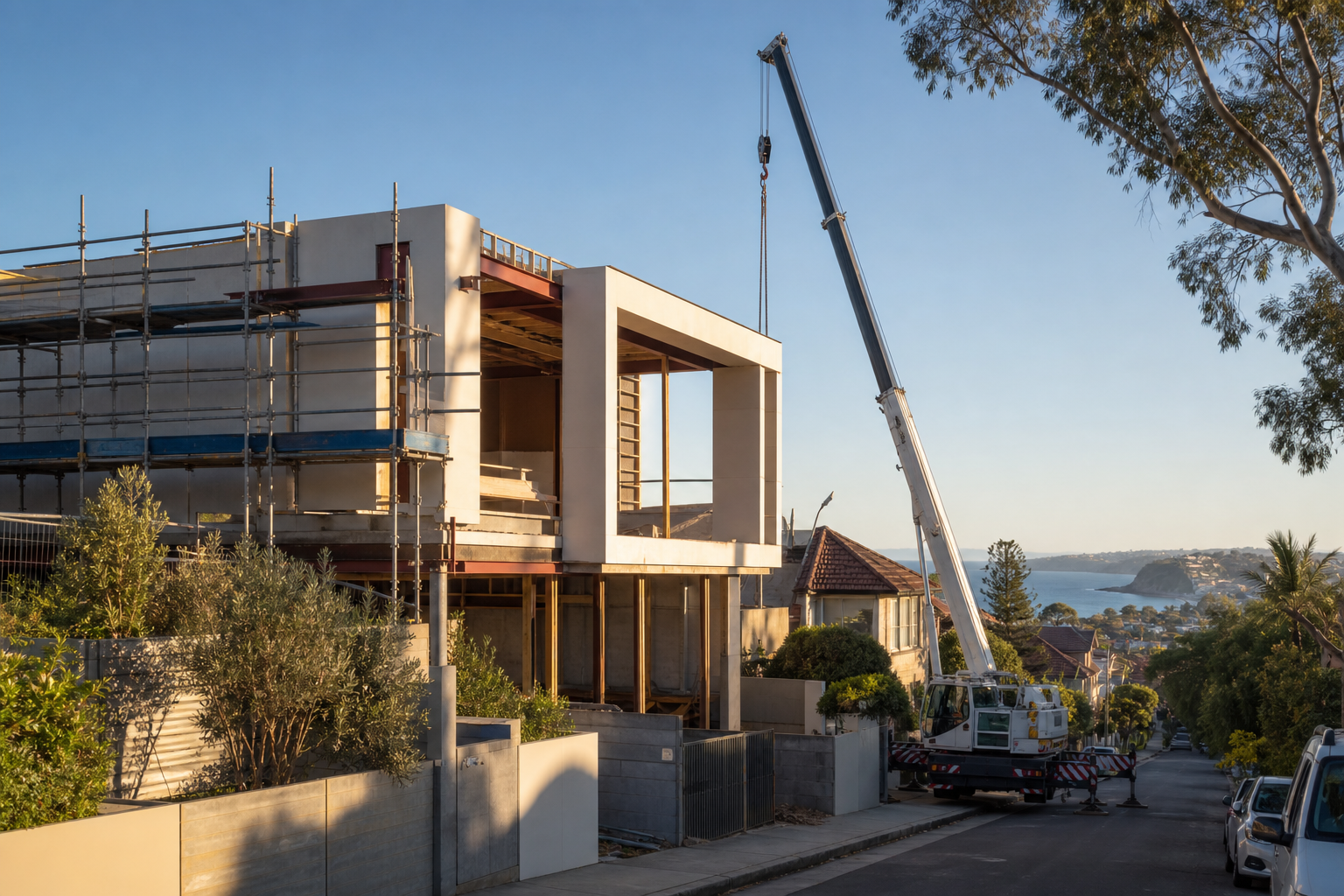
You finance a knockdown‑rebuild in Waverley, Randwick or Woollahra by using your land as security, then layering a construction loan over it—usually after a staged refinance and equity release. The key is sequencing: confirm borrowing capacity, get a realistic build quote and valuation, then lock in structure and buffers before you touch the house.
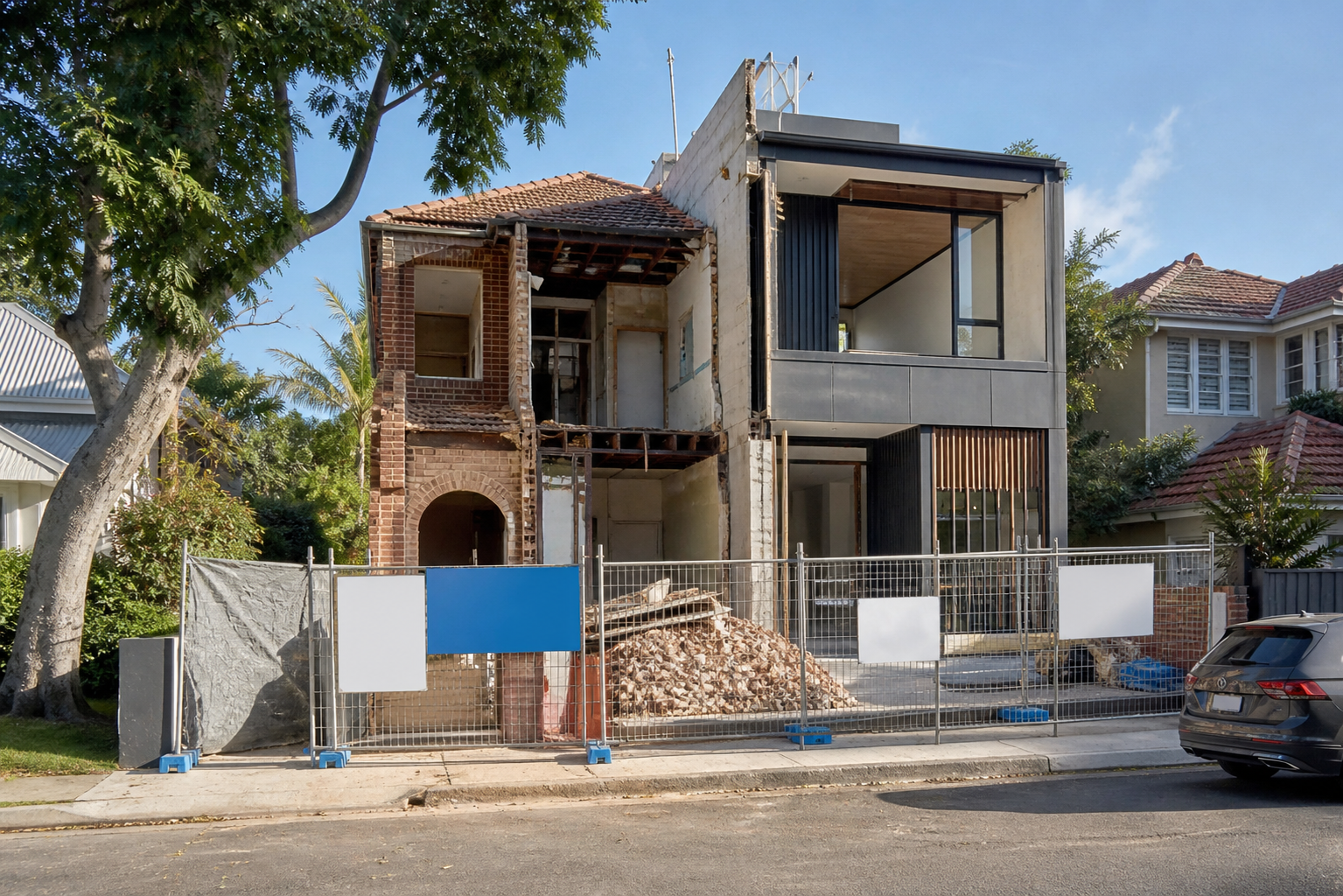
Step 1: Know if your numbers can support a rebuild
In the east, the land is usually the real asset. Lenders will look at:
- Current land value (often via a “as‑is” valuation)
- Existing loan balance
- Proposed build cost and contingency
- Your income, expenses and other debts
A practical safety range is to keep total home and investment repayments around 25–35% of your net household income, even if the bank says you can borrow more (see also /insights/finance-knockdown-rebuild-high-value-eastern-suburbs-block).
Quick example
- Current value (Queens Park semi): $3.2m
- Existing loan: $1.4m
- Proposed build: $1.3m plus $150k contingency = $1.45m
- Total loan needed: around $2.85m
If your net household income is $32,000 per month, a $2.85m loan at an indicative 6.3% P&I over 30 years is roughly $17,600 per month. That’s ~55% of net income—far outside the 25–35% comfort band. You’d either need to scale back the build, increase equity (e.g. from savings or family), or stage the project differently.
The strategy continues below
You've seen the problem and the groundwork — now unlock the exact steps our CPA-certified brokers use, including 5 more sections. Enter your email for instant, free full access.
Free access. No spam — unsubscribe anytime. Your details stay confidential.
Frequently asked questions
How much can I borrow for a knockdown‑rebuild in Waverley, Randwick or Woollahra?▾
Do I need DA approval before I apply for a construction loan?▾
What if build costs blow out during my knockdown‑rebuild?▾
Request a strategy call
Confidential consultation with a triple-qualified advisor — commercial, SMSF, equipment and development finance.