
Article
Choosing Between Duplex, Granny Flat or Knockdown in Sydney’s East
Working out whether to build a duplex, add a granny flat or do a full knockdown‑rebuild in Sydney’s Eastern Suburbs comes down to zoning, numbers and risk. This guide gives you a clear, decision‑grade framework you can apply to your block this week.
Key Takeaway
For Eastern Suburbs blocks, the choice between duplex, granny flat or knockdown‑rebuild depends on zoning (R2/R3/R4), site controls, budget, and risk. Duplex projects can lift total value 15–25% on suitable sites, while compliant granny flats in Sydney often deliver 4–5% gross yield on build cost. Owners should confirm planning controls, stress‑test costs and borrowing at rates 3% higher, and align the build type with their strategy and finance structure before committing.
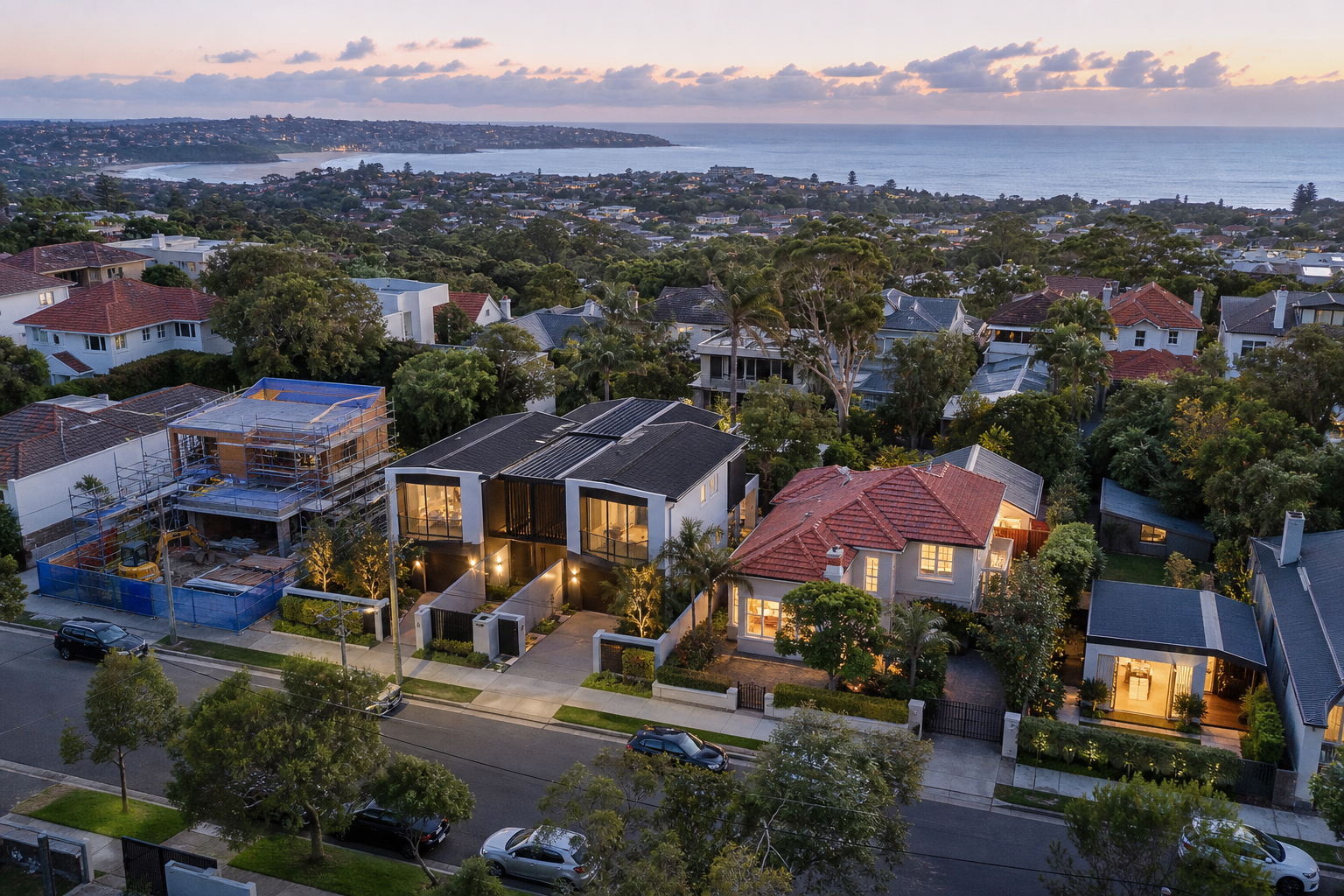
The right call between a duplex, granny flat or knockdown‑rebuild in Sydney’s East comes down to three things: what your zoning allows, how the numbers stack up, and how much risk and disruption you’re willing to take on in the next 12–24 months.
If you want a decision this week, start by confirming your zoning and controls, sketching three rough feasibilities, and sense‑checking which option matches your cashflow, borrowing power and time horizon.
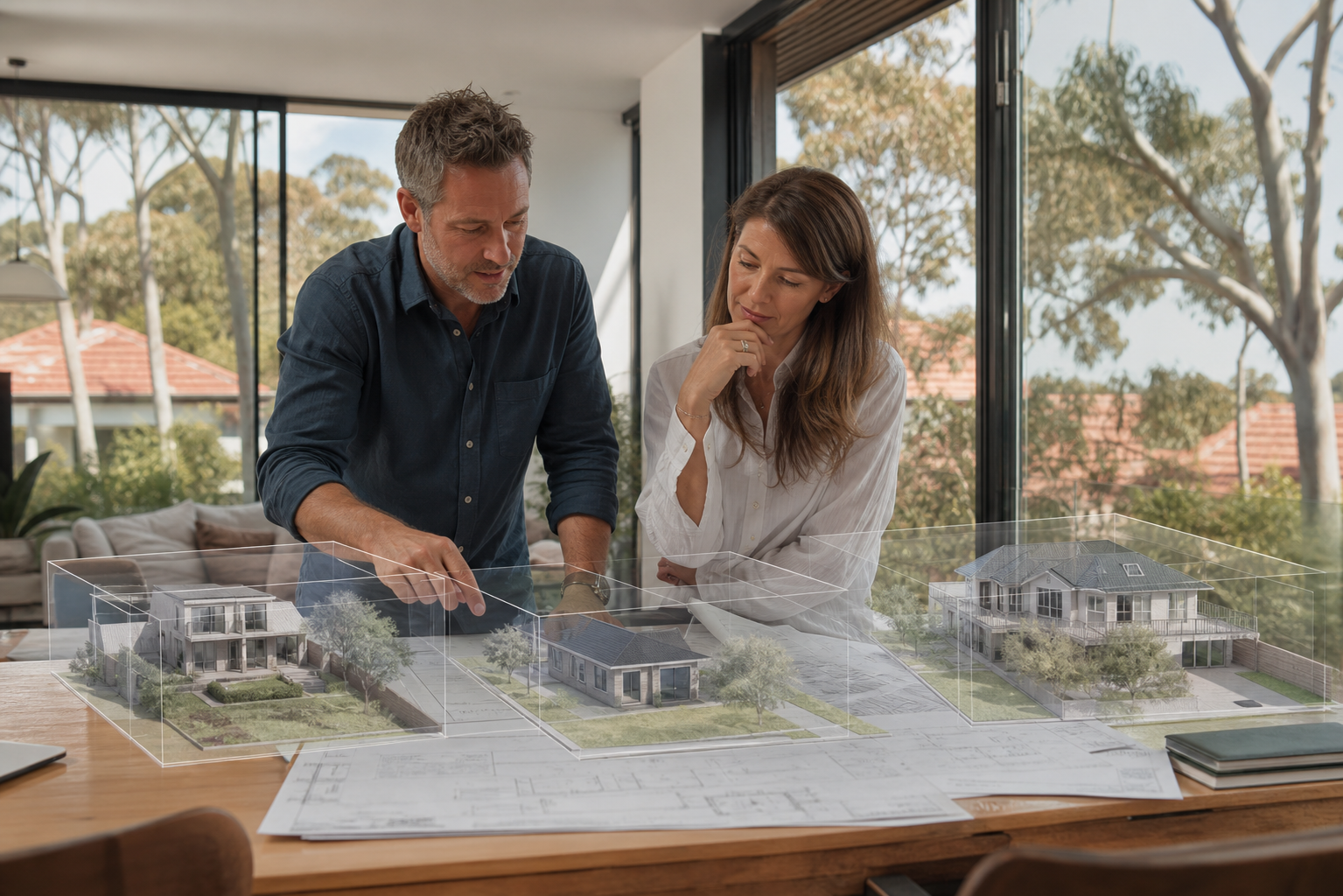
Step 1: Check what your block can legally handle
Before you dream up designs, work out your planning box.
For Bellevue Hill, Bronte, Randwick, Bondi and surrounds, you’ll usually be under Woollahra, Waverley or Randwick LEPs and DCPs.
Key checks:
- Zoning (R2, R3, R4) – controls whether duplex or multi‑unit is possible.
- Minimum lot size and width – critical for dual occupancy/duplex.
- Floor space ratio (FSR) – caps total usable floor area.
- Height limits and setbacks – shapes what two storeys plus attic really means.
- Overlays – heritage, foreshore, flood, bushfire can all add cost.
As a rough rule:
- R2 low‑density – often allows a single dwelling, sometimes attached dual occupancy/duplex if you hit lot size/width rules.
- R3 medium‑density – more scope for multi‑unit or larger dual occ, but stricter design controls.
- R4 high‑density – generally larger projects beyond a simple mum‑and‑dad duplex.
If this feels dense, pair this with our zoning explainer on reading R2, R3, R4 like a valuer (the sibling article in this cluster) before you lock in a path.
Option 1: Duplex or dual occupancy – when it wins
A duplex or dual occupancy on a Bellevue Hill or Bronte site can work very hard if:
- You have a corner or wide block (often 15m+ frontage).
- Zoning and minimum lot size support dual occupancy.
- You’re comfortable running a staged project with two valuations and possibly a construction loan.
Typical duplex use‑cases
- Sell both: pure development play, aiming for uplift after costs.
- Keep one, sell one: sell one to reduce or clear debt on the retained home.
- Keep both: live in one, rent the other for strong income.
Indicative numbers (illustrative only):
- Land: $4.0m Bronte site.
- Build: $1.8m–$2.4m for quality duplex (turnkey).
- All‑in (incl. costs/contingency): say ~$6.0m.
- End value: if each side values at $3.7m, that’s $7.4m total.
That’s ~23% uplift before tax – but only if you control cost blowouts and selling/holding strategy.
Risks:
- Longer timeframe, more moving parts.
- Tighter lender scrutiny, especially on projected end values.
- GST / income tax implications if you’re treated as a developer – this is where having a CPA + tax agent in the conversation helps.
The strategy continues below
You've seen the problem and the groundwork — now unlock the exact steps our CPA-certified brokers use, including 5 more sections. Enter your email for instant, free full access.
Free access. No spam — unsubscribe anytime. Your details stay confidential.
Frequently asked questions
How do I know if my block in the Eastern Suburbs can take a duplex?▾
Is adding a granny flat in Sydney’s East worth it if I don’t need the income now?▾
What’s the biggest finance mistake people make with knockdown‑rebuilds in the Eastern Suburbs?▾
Request a strategy call
Confidential consultation with a triple-qualified advisor — commercial, SMSF, equipment and development finance.