
Ding Financial logo

Article

Clean up your credit file as a small business owner this week

Self-employed and planning a home loan or refinance? As a small business owner, your personal credit file matters more than you think. Here’s how to clean it up, step-by-step, in the next 3–12 months.

Published 9 May 2026Updated 9 May 202613 min read
Clean up your credit file as a small business owner this week

Clean up your credit file as a small business owner this week

If you run a business, your personal credit file does a lot of heavy lifting.

It affects whether you can buy a home, refinance, upgrade a vehicle, or secure business finance with sensible terms. When cashflow has been choppy, it’s easy to end up with late payments, overused credit cards or a couple of defaults — and suddenly every bank is nervous.

In plain terms: you can’t rewrite history, but you can clean up mistakes, settle or restructure problem debts, and build a fresh track record that lenders trust. For most small business owners, a focused 3–12 month clean‑up makes a real difference to both approval odds and borrowing power.

This guide shows you exactly what to do this week — and over the next few months — to get your credit file home‑loan‑ready.
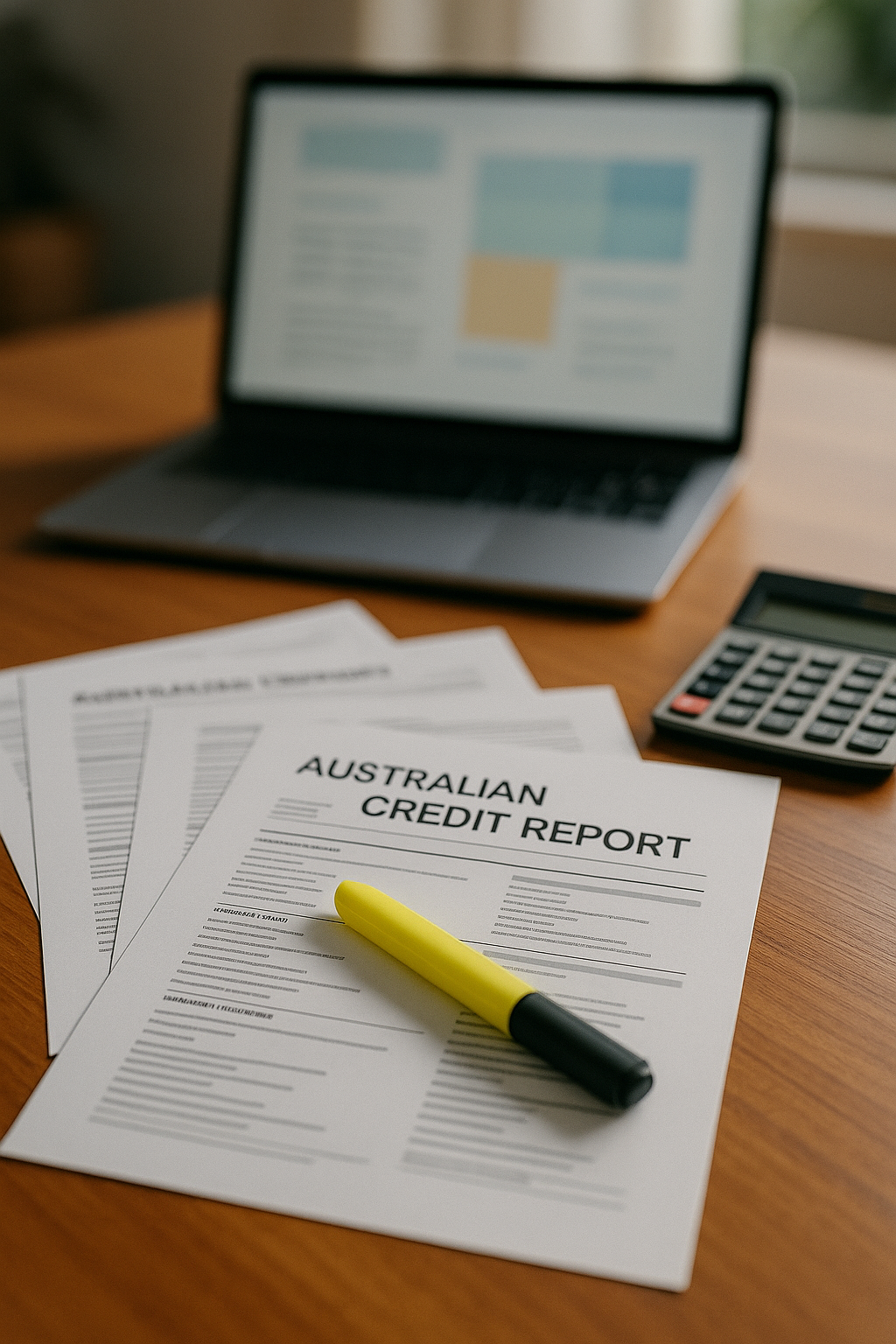
Printed Australian credit reports with highlighter and calculator on desk Start by ordering and reviewing all three of your Australian credit reports.

1. Why your credit file matters more when you’re self‑employed

How lenders use your credit report

When you apply for a home loan, refinance or even equipment finance, lenders typically look at three things:

  1. Can you afford the repayments? (income vs expenses, with APRA’s 3% buffer)
  2. Will you actually pay? (your credit conduct and stability)
  3. What’s the security worth? (property or asset value)

Your credit report sits squarely in bucket two.

For self‑employed borrowers, your income story can already look more complex than a standard PAYG payslip. As explained in From Self‑Employed to Homeowner: Getting a Mortgage Without Payslips, lenders are already working harder to understand your business income. If they see messy credit on top of that, many will simply decline or push you to a more expensive non‑bank lender.

What’s actually on an Australian credit report

Under comprehensive credit reporting (CCR), your personal file can show:

  • Credit enquiries – every time you apply for a card, loan, overdraft, BNPL or post‑paid service
  • Open and closed accounts – cards, personal loans, home loans, some utilities and telcos
  • Repayment history – generally the last 24 months, including any 14+ day late payments
  • Defaults – usually 60+ days overdue and at least $150, listed for up to five years
  • Serious credit infringements – like fraud or “clear‑outs”, listed for up to seven years
  • Court judgements and bankruptcies

Lenders then layer this over your bank statements and debt profile. One isolated late payment with a clear reason is very different from repeated arrears across multiple accounts.

How business credit leaks into your personal file

Many small business facilities are set up in the company or trading name but backed by personal guarantees. Common examples:

  • Business credit cards
  • Overdrafts attached to a business account
  • Equipment or vehicle finance
  • Some trade or fuel cards

These can show up on your personal credit report and are often treated as personal commitments in a home loan application, even if the repayments are made from the business. This is consistent with how lenders treat vehicle finance, as discussed in Smart vehicle finance options for tradies and small businesses.

So cleaning up your credit file isn’t just about past mistakes — it’s also about structuring ongoing business credit so it doesn’t hamstring your personal goals.

Self-employed person calling a creditor to negotiate debt Negotiating with creditors and correcting errors can quickly improve your credit profile.

2. Step one this week: order and read all your credit reports

Get all three reports (for free)

In Australia there are three main credit reporting bodies:

  • Equifax
  • Experian
  • Illion

You’re entitled to a free copy from each at least once a year, or after your application is declined. Order them directly from the bureaus’ websites — you don’t need a paid subscription or a third‑party “credit repair” firm to do this.

Allow a few days for delivery. Put aside an hour with a highlighter and a notepad once they arrive.

What to look for: quick triage

Work through each report and mark four categories:

  1. Errors – accounts you don’t recognise, wrong limits, incorrect dates, enquiries you never made.
  2. Historic negatives – old defaults or judgements that might now be out of date.
  3. Legit but fixable issues – late payments, small defaults, high card limits, over‑used credit.
  4. Serious problems – large unpaid defaults, tax or ATO‑related judgements, multiple recent arrears.

A simple table can help you prioritise:

Issue typeTypical impact on home loanIndicative clean‑up timeframe*
Minor error (wrong limit)Low if corrected2–8 weeks
Single 30–60 day late paymentModerate, depends on recency6–12 months good conduct
Paid default under ~$1,000Moderate, some lenders flexible6–24 months since payment
Multiple unpaid defaultsHigh – many lenders will decline12–36 months after resolving
Court judgements/bankruptcyVery high – major barrierCase‑by‑case, often years

*Indicative only – each lender has its own rules.

Next, get clear on what you’re aiming for:

  • Buying your first home in 12–24 months
  • Refinancing to a sharper rate or consolidating debt
  • Upgrading vehicles or equipment

If your main goal is a home in the next few years, read From start‑up grind to homeowner: a practical five‑year plan alongside this guide. It shows how cleaning up credit fits with building income, savings and a deposit.

One-week action plan checklist for cleaning up credit A focused one-week plan gets your credit clean-up moving without overwhelming you.

3. Fixing mistakes and outdated information

You cannot (legally) remove accurate negative information. You can:

  • Correct mistakes
  • Remove listings that shouldn’t be there
  • Have outdated items cleared

Common credit reporting errors

The same mistakes show up again and again:

  • An account listed twice or under the wrong provider
  • A default that was actually paid years ago but still shows as unpaid
  • A credit card reported with an old, higher limit
  • An enquiry for a loan you never applied for
  • A default that should never have been listed (for example, while you were in a formal hardship arrangement)

Step‑by‑step dispute process

  1. Gather evidence – statements, emails, contracts, settlement letters.
  2. Contact the credit provider first (bank, telco, utility). Explain the error, attach evidence, and ask them to correct the information with all bureaus.
  3. Keep everything in writing – email is ideal.
  4. Timeframe – providers generally have 30 days to investigate and respond.
  5. Confirm in writing once fixed, and re‑order your report if you want to check.

You can also contact the credit reporting body directly, but in practice the fastest path is usually through the provider that listed the information.

When to escalate

If the provider refuses to correct an obvious error, or doesn’t respond, you can lodge a complaint with AFCA (Australian Financial Complaints Authority). This service is free and can require a lender to fix incorrect listings.

You do not need to pay a credit repair company for this. They mostly follow the same process you can do yourself.

4. Dealing with real negatives: late payments, defaults, judgements

Once errors are addressed, you’re left with the hard stuff: legitimate black marks.

Late repayments and arrears

Late payments under CCR usually show as “30”, “60” or “90” days late for the last 24 months.

For home loans and credit cards, many lenders get particularly nervous about:

  • Any 30+ day late in the last 6–12 months
  • Repeated late payments, even if small

You can’t erase these, but you can:

  • Bring everything up to date and keep it there
  • Set up direct debits for minimum payments
  • Build a small buffer in the relevant account so small cashflow swings don’t cause missed payments

Lenders are often willing to make an exception for one-off late payments with a clear explanation (e.g. medical emergency, misapplied payment) backed by otherwise clean conduct.

Defaults: negotiate, then tidy the record

A default is usually listed when you’re 60+ days overdue on at least $150 and the provider has followed the proper notice process.

You generally have three options:

  1. Pay in full – many lenders want to see defaults paid before approving a home loan, especially if they relate to finance (cards, personal loans).
  2. Negotiate a settlement – sometimes you can agree to a reduced lump sum. The listing will usually remain but be marked as “paid” or “settled”.
  3. Payment arrangement – if cash is tight, you might agree to staged payments. This won’t remove the default, but getting it under control is better than leaving it open.

A simple script when you call the creditor:

“I’m a small business owner working to get my finances and credit back on track. I want to resolve this default. I can pay $X as a lump sum this month. If I do that, will you update all credit reporting agencies to show the default as paid in full?”

Always get any agreement in writing before paying.

Court judgements and serious events

Court judgements, bankruptcies and debt agreements are serious red flags. For a mainstream home loan, you’ll usually need:

  • The event to be fully resolved (discharged or satisfied)
  • Several years of clean conduct since
  • A strong overall application (income, savings, equity)

Specialist lenders may consider you sooner, but at higher rates and often with lower maximum LVRs.

If you’re in this territory, speak to a broker early. The right strategy may be to focus on rebuilding for 2–3 years, then refinance out of a specialist loan later.

5. Hidden business debts that quietly hurt your home loan

Cleaning up your file isn’t just about old negatives. It’s also about the live facilities that drag on your score and borrowing power.

As covered in Hidden Debts: How BNPL, Overdrafts and Trade Accounts Hurt Home Loans, lenders often assess:

  • Full limits, not just what you owe today
  • Recent usage, even if you clear it regularly

BNPL, overdrafts and trade accounts

These are common pain points for small business owners:

  • BNPL (Afterpay, Zip, etc.) used for personal or business spending
  • Personal overdrafts that sit close to (or over) the limit
  • Trade accounts (e.g. building suppliers) that are consistently overdue

Even if you argue they’re “business expenses”, many home loan assessors see them as personal risk behaviour.

Clean‑up moves:

  • Close BNPL accounts once paid out.
  • Reduce overdraft limits you no longer need.
  • Bring trade accounts back within terms and keep them there for at least 3–6 months.

Business credit cards and vehicle finance

Business credit cards and vehicle loans in the business name often:

  • Rely on your personal guarantee
  • Show as enquiries or accounts on your personal file
  • Count as monthly commitments in a home loan assessment

Consider:

  • Reducing limits on business cards where possible
  • Refinancing expensive short‑term vehicle loans into a more structured facility (e.g. chattel mortgage) if it improves cashflow and stability

But be careful: as explained in Smart vehicle finance options for tradies and small businesses, stretching terms or adding balloons just to make repayments look smaller can create a future refinancing risk.

ATO debt and small business facilities

Unmanaged ATO debt is a major red flag for lenders. It suggests structural cashflow problems and poor financial control.

If you have tax debt:

  • Get lodgements up to date (late returns alone can derail a home loan).
  • Set up a formal ATO payment plan and stick to it.
  • Consider, with advice, whether future refinancing or consolidation using home equity (as discussed in Demystifying Debt Consolidation: Using Your Home Equity Wisely) could be part of a longer‑term solution.

6. Rebuilding your score and story over 3–12 months

Once the urgent fixes are in motion, the next phase is boring consistency. That’s what lenders reward.

Lock in payment discipline

Set up systems so your future self doesn’t undo today’s hard work:

  • Direct debits for all minimum repayments on cards and loans
  • Calendar reminders for BAS and tax due dates
  • A basic cash buffer in your main transaction account
  • Separate business and personal accounts, so your household spending is clear (also makes your income story simpler for lenders)

Even three months of spotless conduct helps. Twelve months is better.

Optimise card limits and utilisation

Two simple levers can move your score and borrowing capacity:

  1. Limits – lenders often assess repayments on a percentage of the limit, not the balance. Dropping a $20,000 card to $10,000 can materially lift borrowing power.
  2. Utilisation – regularly using more than ~50–70% of your limit can drag on your score. Aim to stay well below that, or shift spending to debit.

Before applying for a home loan:

  • Avoid applying for new credit unless absolutely necessary.
  • Close unused cards and BNPL.
  • Reduce limits on remaining cards where it won’t hurt your day‑to‑day operations.

Timing your application

Lenders care about recency. A 30‑day late payment last month is much worse than one from three years ago.

If your file has recent negatives, the best move is often to wait and rebuild for 6–12 months while:

  • You demonstrate perfect repayment history
  • Business income stabilises and tax returns are lodged
  • Personal and business debts are brought under control

Align this with a broader plan like the one in From Self‑Employed to Homeowner: Getting a Mortgage Without Payslips, which explains how to present your income in the best possible light.

7. One‑week action plan to clean up your credit file

You’re busy. Here’s what a practical first week can look like.

Day 1–2: Get the facts

  • Order your Equifax, Experian and Illion reports.
  • List all current debts and facilities (personal and business with personal guarantees): limits, balances, interest rates, and whether they appear on your personal file.

Day 3: Triage and prioritise

  • Highlight errors and outdated items across the reports.
  • Circle serious issues: unpaid defaults, judgements, ATO debts.
  • Mark quick wins: unused cards to close, BNPL to pay out, limits to reduce.

Day 4–5: Start the clean‑up

  • Lodge correction requests with providers for any clear errors.
  • Call creditors for small defaults to negotiate payment or settlement.
  • Set up direct debits for all recurring repayments.
  • Close BNPL accounts once paid.

Day 6: Tidy structures

  • Separate personal and business spending if they’re currently mixed.
  • Review business cards, overdrafts and vehicle loans; identify any that could be restructured into more stable, appropriately‑sized facilities.
  • Calendar all BAS, tax and major bill due dates.

Day 7: Plan the next 3–12 months

  • Decide on your target window for a home loan or refinance.
  • Map out when tax returns will be lodged, and what income story they show.
  • Set a monthly “finance check‑in” to review statements and make sure your conduct remains clean.

For a longer‑term roadmap that dovetails with this one‑week sprint, revisit From start‑up grind to homeowner: a practical five‑year plan.


FAQs

How long does it take to fix a bad credit file in Australia?

Fixing errors can take as little as 2–8 weeks, depending on how quickly providers respond. Cleaning up legitimate negatives is slower: you’ll usually want at least 6–12 months of spotless conduct after paying defaults or arrears. Serious events like bankruptcy can take years to move past in the eyes of mainstream lenders.

Should I use a credit repair company as a small business owner?

Most of what legitimate credit repair companies do, you can do yourself for free: order your reports, dispute errors with providers, and escalate to AFCA if needed. They cannot legally remove accurate negative information. If you’re considering one, be wary of high fees and always ask exactly what they will do that you can’t do yourself.

Will paid defaults still affect my home loan application?

Yes, but they’re much better than unpaid defaults. Many lenders will consider an application with small, paid defaults, especially if they’re more than two years old and you can show strong recent conduct. Expect closer scrutiny, and understand you may have fewer lender options or slightly higher rates than someone with a spotless file.

Do business loans and leases show up on my personal credit report?

Loans and leases purely in the business name may not appear on your personal report, but anything with a personal guarantee often will. Even when they don’t show on the report, lenders will usually pick them up from bank statements and treat repayments as part of your personal commitments. It’s safer to assume any guaranteed business debt will be considered in a home loan assessment.

Is it better to pay off credit cards or reduce the limit before applying for a mortgage?

Both help, but in different ways. Paying down balances improves your monthly cashflow and your credit utilisation ratio. Reducing limits can directly increase borrowing power, because many lenders use a percentage of the limit to estimate repayments. Ideally, you’d do both: pay cards down, then lower limits to the level you realistically need.


Key takeaways

  • Lenders lean heavily on your personal credit file when you’re self‑employed, for both home and business lending.
  • Start by ordering all three credit reports, correcting errors and bringing every facility up to date.
  • Paid defaults and clean conduct for 6–12 months are far more acceptable to lenders than lingering, unmanaged debts.
  • Hidden facilities like BNPL, overdrafts and business cards with personal guarantees can quietly reduce your borrowing power.
  • Boring consistency — on‑time payments, lower limits, no new unnecessary credit — is what rebuilds your score and story.

If you’d like help reading your credit reports and prioritising which debts to tackle first, speak with a broker who understands both business and home lending. The right structure and timing can turn a borderline application into a straightforward approval while keeping your business running smoothly.

General advice only

Frequently asked questions

Fixing errors can be done in a few weeks once you provide evidence and the lender updates the bureaus. Cleaning up legitimate negatives usually takes 6–12 months of perfect conduct after you’ve paid arrears or defaults. Serious issues like bankruptcy can affect lending options for several years, even after discharge.

Talk to a CPA-certified broker

Free consultation, plain-English advice tailored to your situation.

Your details are kept confidential. We’ll never share them.